
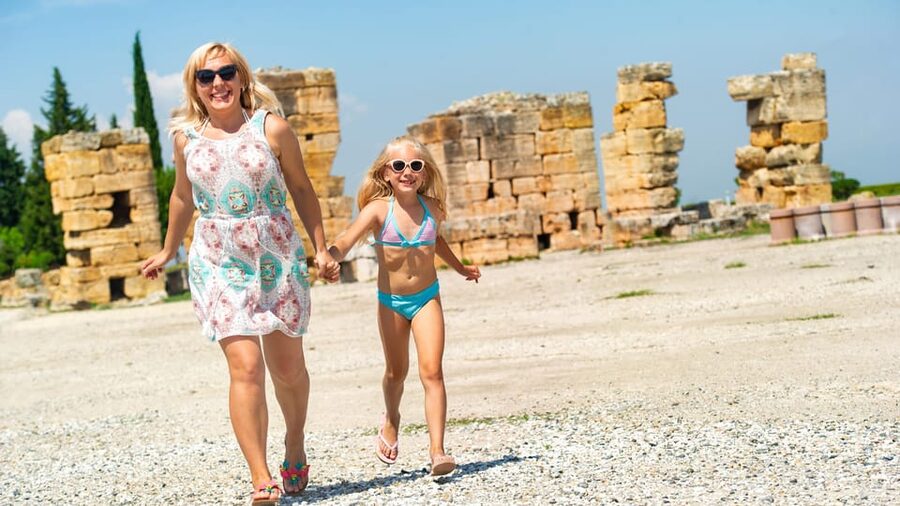
REVIEW · ANTALYA
Antalya: Pamukkale Hot Springs & Hierapolis Small Group Tour
The startling sight comes first in your imagination: Pamukkale’s white terraces, built by warm mineral water over thousands of years. Add the ruins of Hierapolis, a Roman spa city above the springs, and you have one of Turkey’s best nature-and-history day trips.
I like the way this tour combines two very different places, and I like the generous time set aside for walking, photographs, and the thermal pools area. Guides such as Mery, Melissa, Baran, and Sunay have been praised for clear explanations and a friendly manner. The catch is the long drive from Antalya, about 230 to 235 kilometers each way.
Key points
- Pamukkale and Hierapolis in one day: See the natural terraces, Roman theater, city gates, temples, and Necropolis without arranging separate transport.
- A full 12-hour outing: Early pickup and an evening return make this a long day, but the schedule gives you useful time at the archaeological site.
- Cleopatra’s Pool is currently closed: The swimming area is unavailable during renovation, so do not book this trip mainly for a swim.
- Lunch is included: Expect a buffet-style meal with several choices, including vegetarian food, though some past feedback suggests vegetarian options could be broader.
- Extra entrance cost: The €30 Pamukkale and Hierapolis admission is not included, and drinks are also extra.
- Comfortable walking matters: You will walk across a large ancient site and uneven ground, so bring sensible shoes, sun protection, and water.
Why Pamukkale deserves the long ride from Antalya
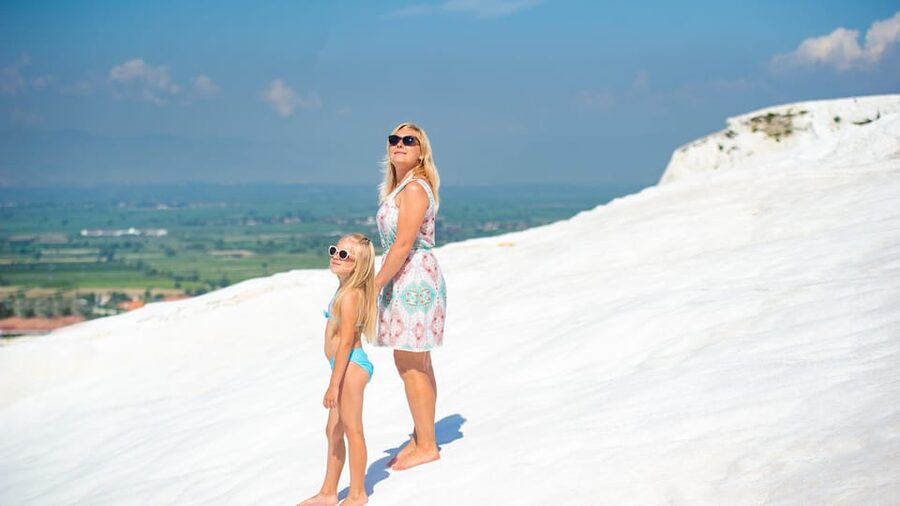
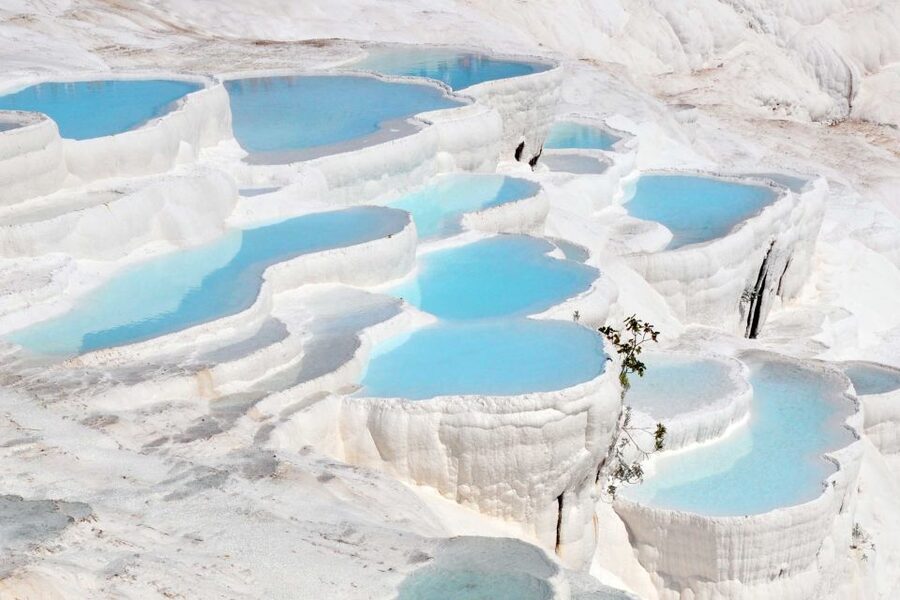
Pamukkale means cotton castle, a fitting name for the bright, rounded terraces that cling to the hillside above the town of Denizli. Warm spring water flows over the mineral deposits, creating the famous white shelves and shallow pools.
The color and shape change with the light. On a sunny day, the terraces can look almost dazzling. In cooler or wetter weather, the stone may appear softer and more gray. Either way, the setting is unusual enough to justify the journey.
You should know what this trip is not. It is not a quick photo stop close to Antalya. The drive takes roughly three hours each way, and the complete outing lasts about 12 hours. A December departure, for example, may begin around 6:30 in the morning and return to Antalya near 6 in the evening.
That is a serious time commitment. Still, the long road is softened by hotel pickup, a bilingual English-speaking guide, included lunch, and organized transport. If you have only a few days in Antalya, this is the sort of day trip that gives you a very different side of Turkey.
More Hot Springs in Turkey
- Antalya Pamukkale Hot Springs & Hierapolis Tour With Lunch
★ 5.0 · 1,092 reviews - Kusadasi: Pamukkale Hot Spring & Hierapolis Small-Group Tour
★ 4.7 · 256 reviews - Marmaris: Pamukkale, Hot Spring, Travertines Tour with Lunch
★ 4.3 · 107 reviews
The drive through Denizli Province
Pickup is offered from hotels in Antalya, including the Konyaaltı area. Exact departure times depend on availability, but you should prepare for an early start.
The vehicle takes you inland toward Denizli Province. The trip is long enough that comfort matters. Past departures have been described as comfortable and well timed, though one ride began 18 minutes late without an update, and one comment raised concern about hurried driving. These are useful reminders to allow some patience on a group excursion.
Your guide is an important part of the day. Names attached to recent departures include Mery, Melissa, Baran, Gamzee, and Sunay, although you cannot assume a particular guide will lead your tour. The strongest guide experiences combine site information with small pieces of Turkish culture, including local cotton production and the stone called sultanite.
A good guide also helps the day keep moving. You need context, but you also need time to see the ruins for yourself. The best balance described here is a clear walking tour followed by enough free time for photographs and personal exploring.
Walking across Pamukkale’s white terraces
At Pamukkale, the natural terraces are the main event. You will walk along the formation and stop for photographs before moving through the wider archaeological area.
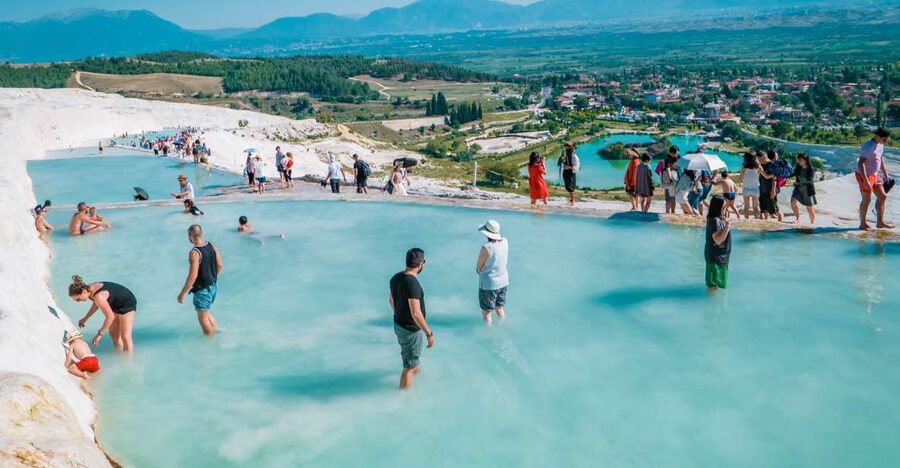
The lower pools and terraces can be sensitive, so follow the instructions given on site. Bring swimwear if you want to be ready for any permitted thermal-water access, but do not count on a full swimming session. Current information says Cleopatra’s Pool is closed for renovation, and the pool area cannot be entered at this time.
Some past departures included time to dip feet in warm water or use available small thermal pools, depending on weather and site conditions. The springs vary in temperature, with Pamukkale’s 17 hot springs ranging from about 30 to 100 degrees Celsius. That does not mean every pool is open for bathing. Treat the thermal water as part of the setting, not as a guaranteed spa treatment.
Local tradition assigns healing powers to the water for ailments such as rheumatism, skin problems, circulation, and digestion. Those claims belong to local lore, not a medical promise. The practical appeal is simpler: warm water, striking white stone, and a memorable place to pause.
Wear shoes that you can manage comfortably for several hours. Pack sunglasses, a sun hat, a T-shirt, swimwear, and a towel. The white terraces reflect strong light, and even a cool day can feel bright.
Hierapolis, the ancient spa city above the springs
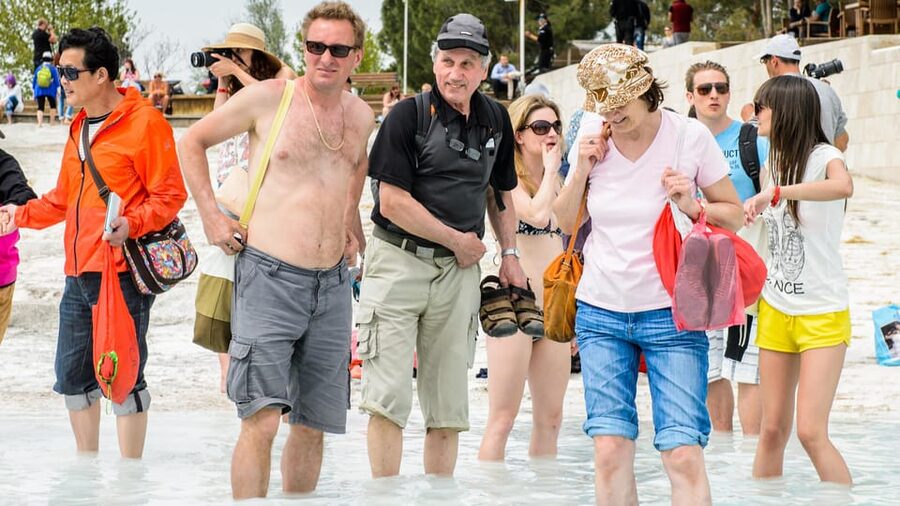
Hierapolis gives Pamukkale its historical weight. The city was founded in the second century BC by the king of Pergamon and later became part of the Roman province of Asia after Attalus III handed his kingdom to Rome.
The name is usually translated as Holy City. It grew beside the thermal springs as a spa settlement, and its long streets, public buildings, theaters, baths, and burial grounds show how important the water was to ancient life.
You will walk along the main streets and hear about the city’s changing Greek and Roman identity. The site covers a broad area, so the visit feels more like exploring an open ancient city than checking off one isolated ruin.
The city’s original name is linked in the tour information to the minting of bronze coins in the second century BC. Details like this are useful because they place Hierapolis in an economic and political setting, not just a religious one.
More Hot Springs in Antalya:
- Santorini: Volcanic Islands Cruise with Hot Springs Visit
★ 4.4 · 10,869 reviews - Bali: Mount Batur Sunrise Guided Hike and Natural Hot Spring
★ 4.8 · 9,284 reviews - Reykjavik: Sky Lagoon Entrance Pass With 7-Step Spa Ritual
★ 4.8 · 6,166 reviews - Krabi: Tiger Cave Temple, Emerald Pool and Hot Springs Tour
★ 4.8 · 3,616 reviews
The Theater, Apollo Temple, and Domitian Gate
The ancient theater is one of the most rewarding stops. Its rising seats and surviving decorative details give you a clear sense of how public performances once worked here. You will have time for photographs and a closer look after the guide explains the basic layout.
The Temple of Apollo brings a different mood. It was tied to the sacred side of Hierapolis and sits near the area associated with the city’s religious activity. The nearby Plutonium, known in ancient times as a dangerous place connected with poisonous gases, has also left a strong impression on past visitors.
At the Gate of Domitian, you see one of the city’s major entrances. The gate helps you picture Hierapolis as a functioning Roman settlement, with movement, trade, ceremonies, and formal roads rather than scattered stones in a field.
These stops are best understood together. The terraces explain why people came here, the city explains how they lived, and the monuments show how the Romans shaped the spa town.
The Necropolis, a city of the dead
The Necropolis is one of Hierapolis’s most striking areas. It stretches along the ancient approach to the city and contains tombs in several forms, reflecting the wealth and customs of the people buried there.
This is a large site, so you may not cover every corner. The guide-led walk helps you focus on the principal remains rather than spending your limited time wondering which road to take.
The Necropolis also makes the thermal springs feel more significant. Hierapolis was not simply a resort town. People came for treatment, worship, business, and ordinary city life, and many stayed long enough to be buried nearby.
Bring water and pace yourself. The combination of sun, uneven paths, and the size of the ruins can be tiring, especially after the drive from Antalya.
Cleopatra’s Pool and the current closure

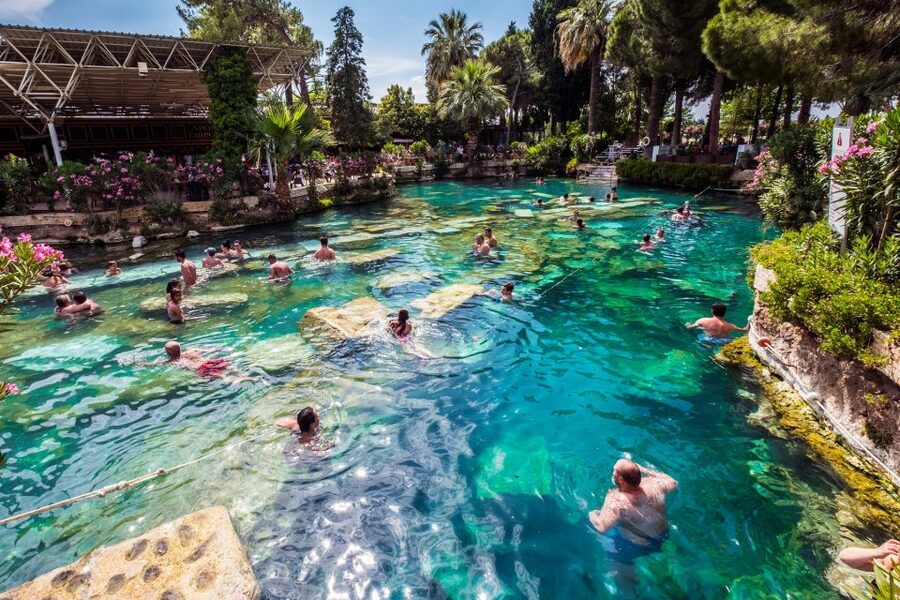
Cleopatra’s Antique Pool is normally one of the most talked-about parts of a Pamukkale visit. Its name suggests a link to the Egyptian queen, but the pool was not owned by Cleopatra. It is an artificial pool built over ancient columns and architectural pieces that fell during an earthquake.
When open, you can swim among submerged ruins, which gives the experience a memorable archaeological twist. Previous trips offered time to swim, and the covered pool area was described as warm even during cold weather.
The current update is important: the pool is temporarily closed for renovation, and access to the swimming area is not available. This may change later, but you should confirm the status close to your travel date.
The closure does not remove Pamukkale’s main attractions, since the terraces and Hierapolis remain the heart of the visit. It does change the value calculation if you were expecting a paid swim to be part of your day.
Lunch, shopping, and the return to Antalya
Lunch is included and is usually served buffet-style. The meal has been described as clean and generous, with a range of dishes and a vegetarian choice. If you eat vegetarian food, you should still ask what is available before filling your plate, since one past comment found the selection limited.
Drinks are not included, so budget for them separately. Bring your own water as well, particularly in warm weather.
The day may include a shopping stop in Denizli Province before the return journey. Shopping stops are common on organized day tours, and their appeal depends on your interests. Some people like the chance to browse local products; others would rather spend every available minute at the ruins.
The return to Antalya completes a demanding but well-packed day. Hotel drop-off is provided in Antalya and Konyaaltı. If you have onward travel, allow plenty of margin because road conditions and group timing can affect the arrival hour.
What the $50 price really covers
At $50 per person, this tour is priced attractively for a full-day trip that includes hotel pickup and drop-off, transport, lunch, and an English-speaking guide.
The key extra is the €30 entrance fee for Pamukkale and Hierapolis. Drinks are also separate. Since Cleopatra’s Pool is currently closed, you should not add a swimming charge to your budget at present, but check the latest conditions before departure because access may change.
The package makes financial sense if you want the convenience of organized transport. Hiring a private vehicle from Antalya would give you more control, but it would not normally match this price for one person. The trade-off is a fixed schedule and a long day in a shared vehicle.
Free cancellation up to 24 hours before departure and reserve-now, pay-later booking add flexibility. The more important choice is personal: can you handle about six hours on the road for several hours at one of Turkey’s major natural and archaeological sites?
Who will enjoy this Pamukkale day trip?
I would choose this tour if you are staying in Antalya and want to see Pamukkale without arranging a car, driver, entrance planning, lunch, and site interpretation on your own.
It suits:
- First-time visitors who want the main Pamukkale and Hierapolis sights in one day
- History fans interested in Roman streets, temples, theaters, baths, and tombs
- Photographers looking for the white terraces and ancient ruins
- People who prefer a guide to explain what they are seeing
- Budget-conscious visitors who value transport and lunch in the price
I would hesitate if you dislike long drives, want a slow stay in Pamukkale, or are booking mainly for Cleopatra’s Pool. The site is large, and the schedule can feel tight if you want both an extensive ruins walk and a swim when the pool reopens.
Comfortable shoes are essential. So are sunglasses, a hat, water, and sun protection. Take a towel and swimwear only if you are prepared for the possibility that no swimming will be available.
Should you book it?
Book this Antalya to Pamukkale tour if you want a practical, good-value introduction to the white terraces and Hierapolis, and you accept the long road day. The strongest parts are the two-site combination, included buffet lunch, hotel transfers, and guides who can make the ancient city easier to understand.
Wait or choose another arrangement if Cleopatra’s Pool is your main reason for going. With the pool closed for renovation, the trip is currently about the terraces, ruins, views, and thermal setting. For most people, that is still enough to make the journey worthwhile, especially when the €50 base price includes transport, lunch, and guiding.
FAQ
How long is the Antalya to Pamukkale tour?
The complete tour lasts about 12 hours. The distance from Antalya to Pamukkale is approximately 230 to 235 kilometers, with a long drive in both directions.
Where is pickup available?
Hotel pickup is provided from Antalya, including the Konyaaltı area. Drop-off is available in Antalya and Konyaaltı.
Is lunch included?
Yes. Lunch is included and is generally served buffet-style. Vegetarian food is available, though the range may vary.
Is the Pamukkale entrance fee included?
No. The €30 entrance fee for Pamukkale and Hierapolis is not included in the tour price.
Is Cleopatra’s Pool open?
No. The current information says Cleopatra’s Pool is temporarily closed for renovation, and access to the pool area is unavailable.
Can I swim in the thermal pools?
Swimming conditions depend on site access and weather. Cleopatra’s Pool is currently closed, while small thermal pools may be available at other times.
What should I bring?
Bring comfortable shoes, sunglasses, a sun hat, swimwear, a towel, a camera, a T-shirt, and water.
Can I cancel the tour?
Yes. You can cancel up to 24 hours before departure for a full refund. Reserve-now, pay-later booking is also available.
Just added around Antalya
- Discover Turkish Bath Bliss in Belek, Antalya & Kemer★ 3.5 · 6 reviews
- Antalya: Turkish Bath with Sauna, Scrub, Foam & Oil Massage★ 4.2 · 3 reviews
- Antalya: Turkish Bath with Separate Areas for Men and Women★ 4.3 · 12 reviews
- Antalya: Massage and Professional Skin Care Experience★ 5.0 · 6 reviews
- Antalya: Ladies Turkish Bath Hamam – Wellness Spa Center★ 4.2 · 40 reviews
- Antalya: Turkish Bath Experience with Oil Massage★ 4.1 · 67 reviews
- Kemer Traditional Turkish Bath Experience★ 3.8 · 75 reviews
- Antalya / Lara : Traditional Turkish Bath & Oil Massage & Spa★ 4.5 · 90 reviews
More spa days in Antalya.

Antalya Pamukkale Hot Springs & Hierapolis Tour With Lunch
Read our review →
Spa and Skin Care Experience with Massage and Drink
Read our review →
Traditional Turkish Bath & Spa Experience in Antalya
Read our review →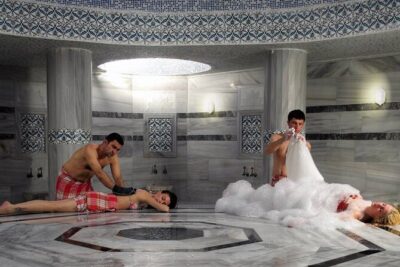
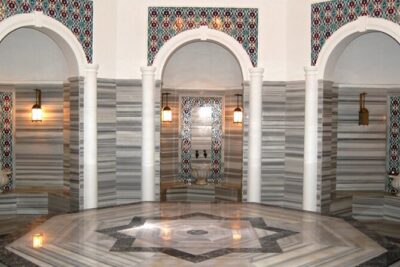
Traditional Turkish Bath, Sauna, Peeling & Massage
Read our review →
Turkish Bath, Scrub Foam & Oil Massage w/ Transfer
Read our review →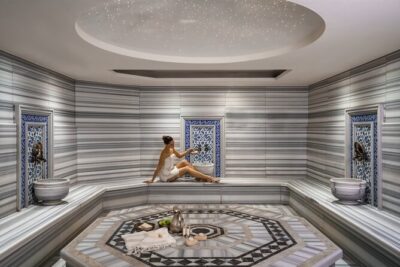
Lara : Traditional Turkish Bath & Oil Massage & Spa
Read our review →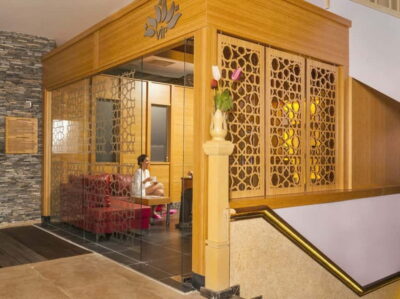
Other lists this one is on