
REVIEW · JAPAN
Kyoto: Traditional Concert at Townhouse or Bathhouse
The most memorable part of this Kyoto experience is the setting: you sit just a few feet from a professional musician in a traditional townhouse, or hear a duet ring through a former bathhouse hall. The music is paired with clear English and Japanese explanations, so you learn what you are hearing instead of simply sitting through an unfamiliar concert.
I especially like the very small audience, which makes the performance personal rather than formal. I also like the choice between a gentle solo concert with an optional koto lesson and a larger, more dramatic duet program. The main consideration is practical: the townhouse can be tricky to find, and the bathhouse option runs only on irregular Mondays.
Key points
- Two very different Kyoto venues: Choose a cozy townhouse for a solo concert, or a former bathhouse hall for a resonant duet performance.
- Four to five musical pieces: Programs mix classical Japanese works, contemporary arrangements, songs, and original selections.
- Small groups make a difference: The townhouse seats about 11 people, while the bathhouse hall holds about 30.
- The koto workshop is townhouse-only: You can sit at the instrument, learn basic technique, and play a short phrase with help.
- Bilingual explanations are built in: Learn about the instruments, picks, bridges, notation, materials, and musical traditions.
- Good value at $32: You get a concert, cultural explanation, questions with the musicians, photographs, and possibly a hands-on lesson.
Kyoto music without the concert-hall distance
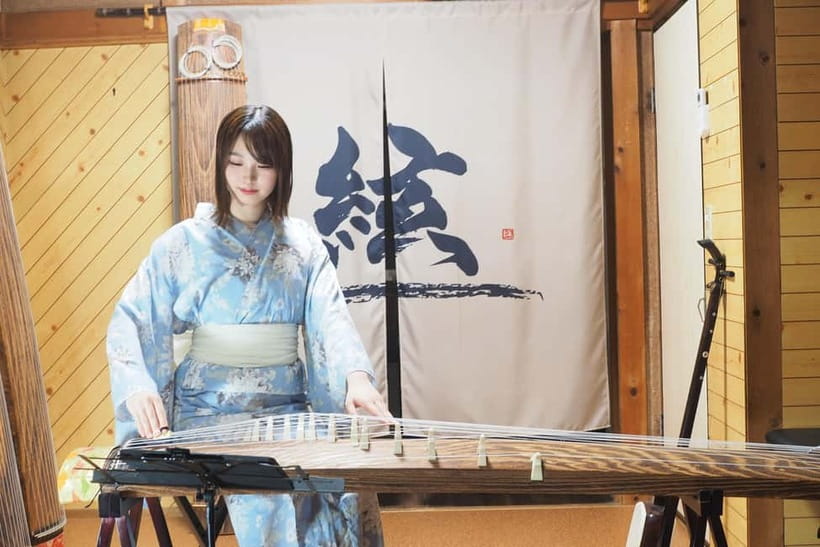
Kyoto has no shortage of temples, gardens, and formal cultural shows. This experience offers something smaller and more direct. You are not watching from the back of a theater. In the townhouse, the performer may be only a few steps away, close enough for you to notice the movement of the picks, the pressure on the strings, and the fine changes in tone.
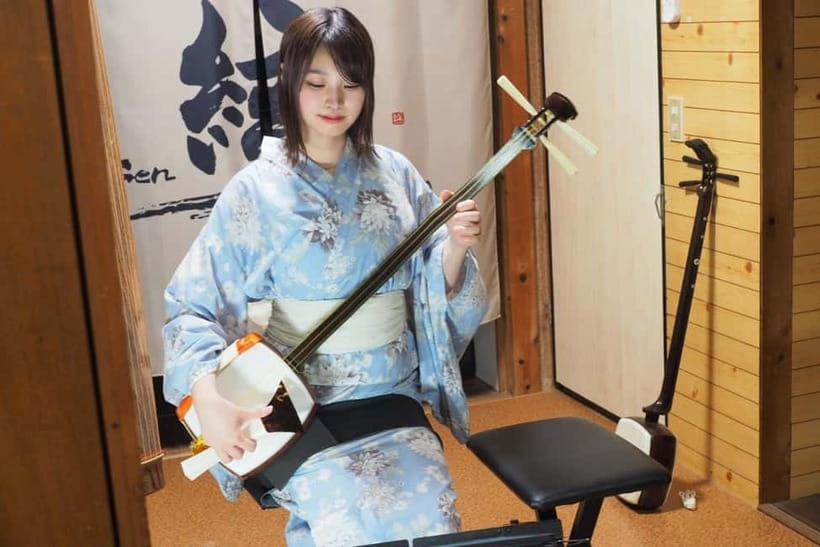
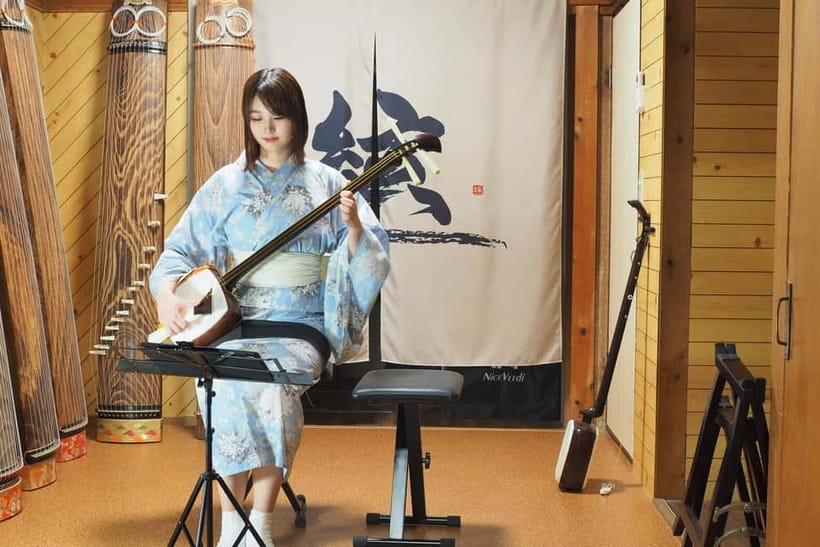
The music centers on the koto and shamisen. The koto is a long zither with movable bridges and stretched strings. The shamisen is a three-stringed instrument played with a large pick. Both can sound delicate, but they also have surprising force. Depending on the performer and program, you may hear singing, classical pieces, newer works, or a mix of traditional and contemporary styles.
The bilingual commentary is important. Without it, some pieces might blur together for a first-time listener. Instead, the host explains how the instruments are made, how they are played, and how Japanese musical notation differs from Western sheet music. Hosts have included Gen, Shohei, Samuel, and Sofia, while performers have included Furan, Aoi, and Kyoko. The exact artist depends on the date you book.
More Turkish Baths and Hammams in Japan:
- Istanbul: Private Turkish Bath, Massage, and Spa in Old City
★ 4.6 · 3,225 reviews - Hurghada: Luxury VIP Hammam & Spa with Transfer & Drink
★ 4.3 · 2,874 reviews - Marrakech: Spa Massage and Steam Hammam with Pickup
★ 4.6 · 2,873 reviews
Choosing between the townhouse and bathhouse
The two venues are not simply different rooms offering the same event. They create two distinct experiences.
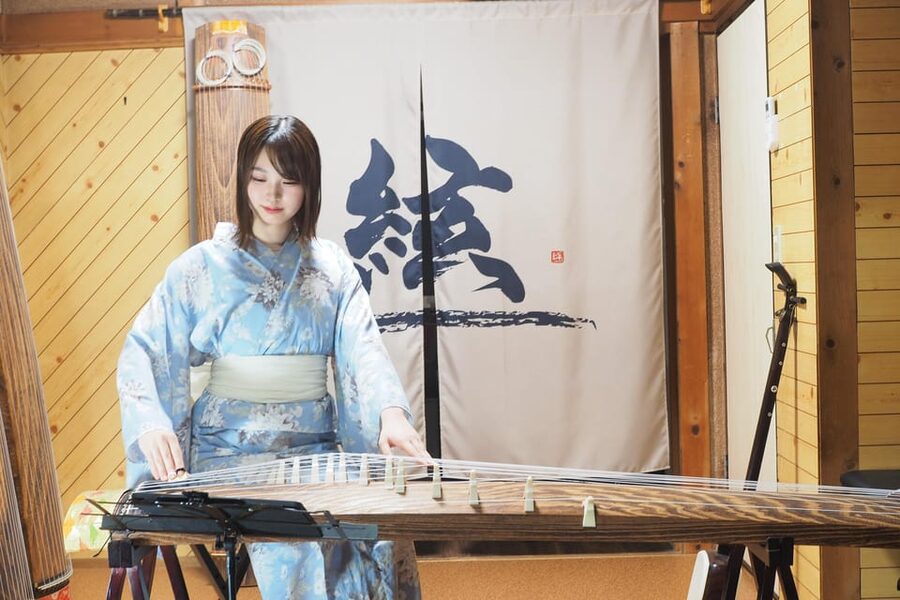
The traditional townhouse is the intimate choice. It seats up to about 11 people, though some sessions may be even smaller. The room feels more like a living room than a performance venue, with cushions or chairs and the performer nearby. It is a good match if you want to ask questions, see the instruments closely, or take part in the optional workshop.
The concert usually features a solo performer playing koto and shamisen across four or five pieces. Programs are artist-led, so the selection can change with the musician and season. You might hear pieces such as Kajimakura, Chidorino Kyoku, or Kaede no Hana, though these titles are examples rather than a fixed promise.
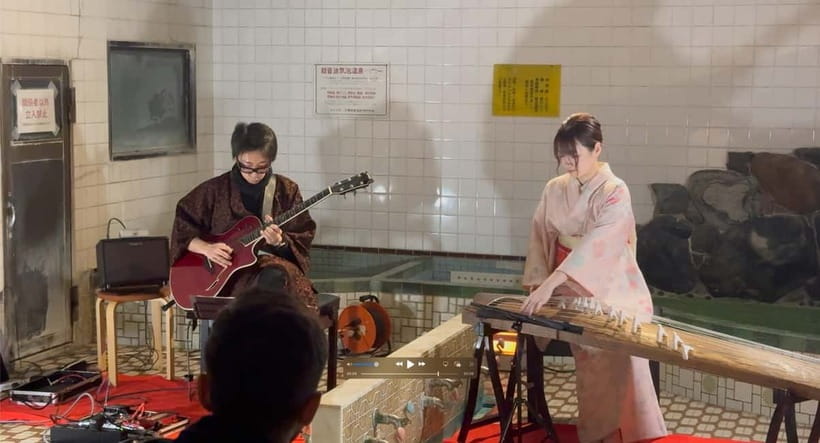
The historic bathhouse hall offers a different sound. Its tiled walls create natural reverberation, giving the music a bigger, more enveloping quality. The hall seats up to about 30 people, and the program usually pairs the koto with another instrument. Possible partners include shamisen, shakuhachi, taishōgoto, flute, or guitar.
This option can feel more like a small concert, while the townhouse feels like a private cultural meeting. The bathhouse program is offered irregularly on Mondays, so it requires more planning. Also, the booking is for music only. You do not bathe, eat, or use the bathhouse facilities.
What happens during the 45 to 105 minutes
The basic concert lasts about 45 minutes. Add the workshop and the visit can run as long as 105 minutes. That range matters when you are fitting the activity between sightseeing stops.
Check-in and seating
Allow about five to ten minutes to arrive, settle in, and hear a few notes about etiquette. In the townhouse, you may sit on cushions or chairs. In the bathhouse hall, seating is arranged in rows.
The townhouse is a small residential setting, so arriving on time helps the session begin smoothly. Several people found the address a little difficult to locate, and one useful tip is to use the map coordinates if the written address does not guide you clearly. Give yourself a little extra time rather than racing in from a train station.
Same place, a different way to unwind:
- From Osaka: Himeji Castle, Arima Onsen & Mt. Rokko Day Tour
★ 4.6 · 339 reviews - Osaka: Nara and Uji Day Trip with Deer Park and Hot Spring
★ 4.4 · 302 reviews - From Tokyo: Private Tour to Fuji/Hakone – Onsen, Art, Nature
★ 5.0 · 116 reviews - Mt. Fuji, Hakone Private Tour from Tokyo – Onsen, Arts and Nature
★ 5.0 · 79 reviews
Instrument introduction
The introduction lasts about 10 to 15 minutes. This is not filler. You learn how the koto and shamisen are built, where the strings and bridges sit, and how the musician uses picks or other playing tools.
You also get a look at Japanese notation. That is a particularly useful detail because the sheets do not look like the familiar five-line Western staff. The explanations are intended for beginners, and no previous knowledge of Japanese music is required.
The concert
The performance itself takes about 25 to 30 minutes and includes four or five pieces. The artist may explain each work before playing it, giving you a little context without turning the concert into a lecture.
The range of sound is one of the event’s strengths. Traditional melodies may be followed by a contemporary arrangement. A koto can sound calm and spacious, while the shamisen brings a sharper, more percussive edge. Some performers also sing, adding another layer to the program.
The townhouse puts every detail within easy reach. You can watch the musician’s hands and hear the attack of each string. In the bathhouse, the tiled room changes the effect. Notes hang in the air longer, and duet pieces can feel more dramatic.
Questions and photographs
After the music, allow five to ten minutes for questions and photographs. This is your chance to ask about a specific piece, the instrument’s materials, the performer’s training, or the differences between koto and shamisen.
The relaxed format helps here. In a large stage show, you would usually leave after the final bow. At this event, the musician and host remain available for conversation. Photography is permitted during the designated time, so you can take a keepsake without distracting from the performance.
The optional koto workshop
The workshop is available only with the traditional townhouse booking. It adds about 35 to 40 minutes and uses sanitized instruments with guidance from the team.
You learn how to sit, hold the pick, pluck the strings, and follow a short phrase. The goal is not to turn you into a koto player in one afternoon. It is to let you understand the instrument through your hands. Children and adults with no musical background can take part, and the staff adjust their help for beginners.
This is especially worthwhile if you are booking for a family or if you want more than a passive concert. It also gives you a new respect for the performer. Producing a clean, confident sound is harder than it looks.
Why the small group matters
The townhouse capacity of about 11 people is a real part of the experience, not just a number in the booking details. With fewer people, the host can answer individual questions, and the musician can explain small points that might disappear in a larger room.
Some sessions have had only a few people present. That can make the room feel almost private, though you should not assume you will have the place to yourself. The small scale also means that personal space is limited. If you prefer a formal stage, wide seating, and a large audience, the bathhouse hall may suit you better.
The intimate format has another benefit: silence feels natural. Kyoto can be crowded and noisy, particularly around major sights. Sitting quietly in a Japanese home while one musician plays can provide a welcome change of pace.
A closer look at the music
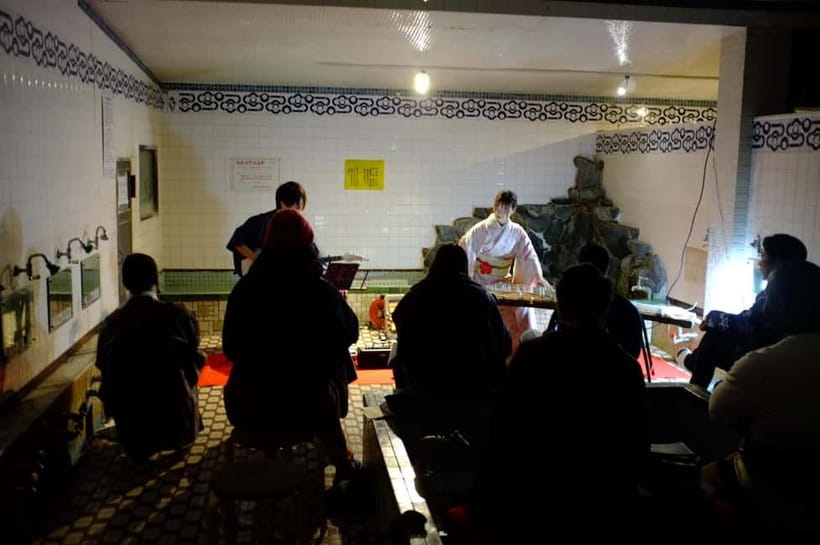
The program is not designed as a museum demonstration. These are professional musicians performing complete pieces, with the explanations used to help you listen more closely.
Furan has been featured as a koto and shamisen performer who also sings. Aoi has played programs combining older ballads with newer arrangements. Kyoko has performed traditional songs with both koto and shamisen. Since the artists rotate, the exact balance between the two instruments can change.
That variety is useful if you are unsure whether traditional Japanese music is for you. You are not committed to one narrow style for a long evening. Four or five pieces give you a manageable sample, and the commentary helps you notice the differences.
Do not expect a pop concert, a theatrical geisha performance, or a long historical lecture. The appeal is quieter. It is focused on close listening, seeing the instruments in use, and meeting the people who perform them.
Is $32 a fair price?
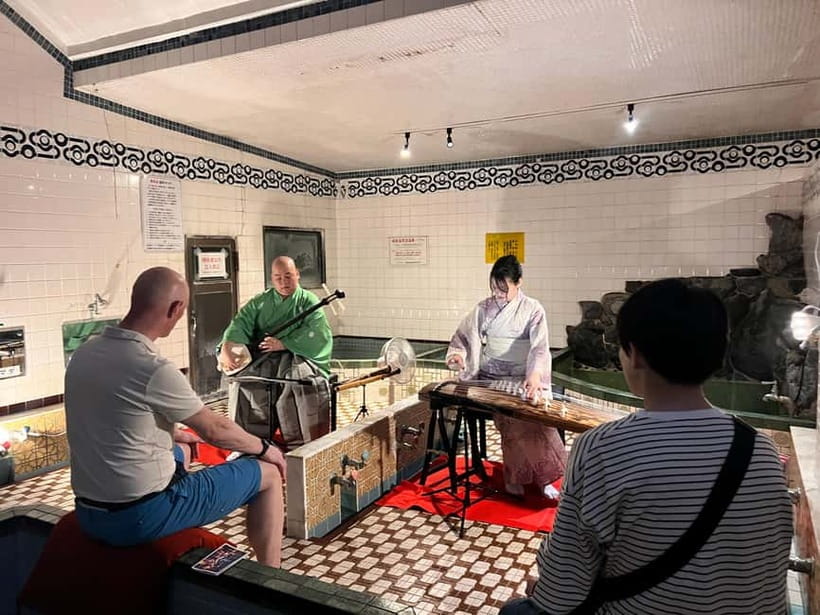
At $32 per person, the price is reasonable for the townhouse option, especially if you include the explanation, Q&A, and workshop access. A short concert alone might not justify the cost for every visitor, but this is more than a 25-minute recital. You receive a bilingual introduction, four or five pieces, time with the artists, and the chance to try the koto if that option is available.
The price is also easier to justify for a private or small-group booking. A small audience creates a level of access that you usually do not get at a standard cultural performance.
The value depends on what you want from Kyoto. If your priority is to visit as many landmarks as possible, you may prefer to spend the time at another temple or market. If you want a focused cultural activity that gives you a better understanding of Japanese instruments, this is a strong use of part of an afternoon or evening.
Food, drinks, transportation, and bathing are not included. Keep that in mind when comparing the total cost and planning your route.
Fitting the concert into a sightseeing day
The activity works well as an anchor between western and central Kyoto sights. From the Saiin area, Arashiyama takes about 25 minutes by walking to Saiin Station, taking the Hankyu Line to Katsura, and transferring to the Randen Line.
Nijō Castle is about 20 minutes away and can fit before or after the concert. Kinkaku-ji takes about 20 minutes, using a bus from Nishioji Sanjō followed by a short walk. Nishiki Market is about 25 minutes away by direct Hankyu service to Karasuma or Kawaramachi.
These times are approximate, and they do not include waiting or finding the venue. I would avoid scheduling the concert too tightly between major sights. The townhouse location can take a little patience to find, and the point of the experience is to slow down, not arrive breathless.
Who will enjoy this most
This is a good choice for first-time visitors who want a clear introduction to Japanese music. You do not need to read music, play an instrument, or know the difference between a koto and a shamisen.
It also suits:
- Couples looking for a calm cultural evening
- Families with children old enough to sit through a short concert
- Music lovers who want to see technique up close
- Visitors tired of large group activities
- Anyone who wants an experience built around conversation, not just sightseeing
The townhouse is best for people who enjoy closeness and participation. Choose the bathhouse hall if you care most about acoustics, a larger room, and duet performances.
Babies under one year are not suitable for the activity. If you are sensitive to floor seating, check the selected option carefully, since the townhouse may use cushions as well as chairs.
Booking and cancellation details worth knowing
The meeting point changes with the venue, so check the exact location for your chosen session. English and Japanese instruction is available, and private or small-group options may be offered.
You can cancel up to 24 hours before the activity for a full refund. The reserve-now, pay-later option is useful if your Kyoto plans are still shifting. The bathhouse schedule is irregular, while the townhouse is held almost every day, making the townhouse easier to fit into a short visit.
Should you book the Kyoto traditional concert?
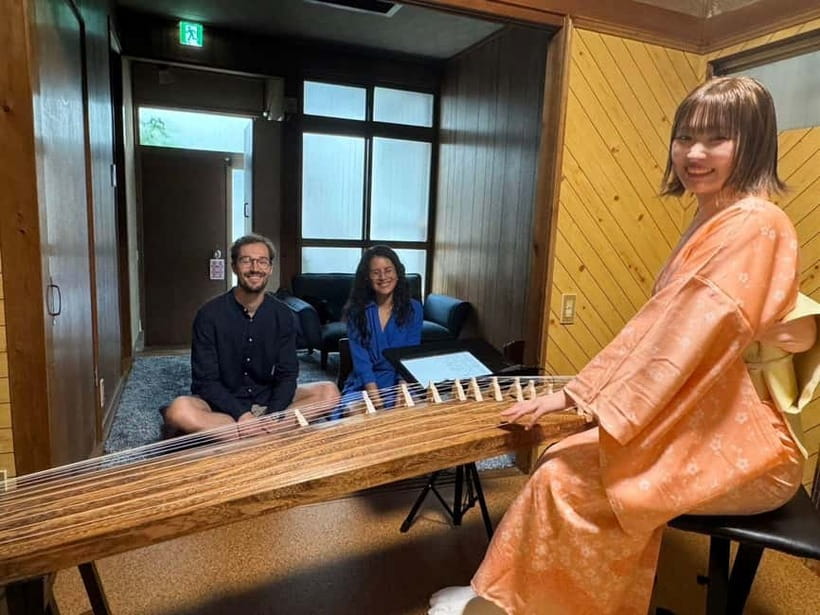
Book it if you want a quiet, human-scale encounter with Japanese music and like the idea of learning before you listen. The townhouse is my practical pick for most visitors because it is offered more often, keeps the audience small, and includes the optional koto workshop.
Choose the bathhouse hall if its date works and you want a more dramatic room with duet music. Just remember that it is a concert venue for this activity, not a bathing experience.
At $32, this is a sensible choice for anyone who values access, explanation, and atmosphere more than a long show. It will not replace Kyoto’s temples and gardens, but it adds something those sights cannot: a close look at living musical skill, performed by people who are happy to explain what they do.
FAQ
How long does the Kyoto traditional concert last?
The concert experience lasts from 45 to 105 minutes, depending on whether you choose the basic performance or add the optional koto workshop.
What is the difference between the townhouse and bathhouse options?
The townhouse seats up to about 11 people and offers solo koto and shamisen performances, plus the optional workshop. The historic bathhouse hall seats up to about 30 people and presents koto duets with instruments such as shamisen, shakuhachi, flute, guitar, or taishōgoto.
Is the koto workshop included?
The workshop is optional and available only with traditional townhouse bookings. It adds about 35 to 40 minutes and teaches basic koto techniques and a short phrase.
Do I need experience with Japanese music?
No. The activity is designed for beginners and includes explanations of the instruments, materials, playing methods, notation, and repertoire.
Is bathing included with the bathhouse concert?
No. The bathhouse option takes place in a historic hall, but bathing, food, drinks, and access to bathhouse facilities are not included.
Are the performances explained in English?
Yes. The mini-commentary and instruction are provided in English and Japanese. A host explains the instruments and repertoire, and you can ask questions after the performance.
Can I cancel the activity if my plans change?
Yes. You can cancel up to 24 hours in advance for a full refund. You can also reserve now and pay later, subject to the booking conditions.
Just added around Japan
- Kowakien Yunessun Hot Springs Entry Ticket★ 4.2 · 23 reviews
- Kobe Guided Tour Including Port Area and Arima Onsen Town★ 5.0 · 3 reviews
- Kobe: Arima Onsen Culinary Stroll & Food Tasting Tour★ 5.0 · 2 reviews
- Immersive facial treatment in a Japanese space★ 4.8 · 8 reviews
- Hiroshima: Acupuncture and Japanese unique massage treatment★ 5.0 · 7 reviews
- Hakone: Traverse the Hakone Caldera and Enjoy Onsen★ 4.6 · 8 reviews
- Mount Fuji – Hakone & Onsen Full Day Private Tour★ 3.8 · 6 reviews
- Fukuoka: Mt. Aso Volcano & Kurokawa Onsen Scenic Day Tour★ 3.8 · 37 reviews
More spa days in Japan.
Himeji Castle, Arima Onsen & Mt. Rokko Day Tour
Read our review →
Nara and Uji Day Trip with Deer Park and Hot Spring
Read our review →
Private Tour to Fuji/Hakone – Onsen, Art, Nature
Read our review →
Mt. Fuji, Hakone Private Tour from Tokyo – Onsen, Arts and Nature
Read our review →
From Fukuoka: Mount Aso, Kurokawa Onsen, and Shrine Tour
Read our review →
Private Nagano 1-Day Tour:Snow Monkeys,Zenko-ji,Obuse,Sake,Onsen
Read our review →
Mt Takao Tour with Ramen and Tattoo-Okay Hot Spring
Read our review →Other lists this one is on