
REVIEW · INDONESIA
Mount Rinjani: 3D/2N Trekking to Summit, Lake and Hot Spring
Mount Rinjani gives you a big mountain experience in just three days: rainforest on the way up, a crater lake and hot spring below, then a sunrise climb to the summit. I like the way this route combines several very different sights rather than making the whole trip only about reaching the top. The natural hot spring on Day 2 is a welcome reward after the first long stretch of walking.
I also like that the guide and porters carry the tent, cooking equipment, food, and water. That keeps your own load lighter, though you still need a good day pack with personal clothing and essentials. The main caution is the schedule: you may walk eight to nine hours per day, and the route includes steep, slippery sections. This is a serious trek, not a gentle nature walk.
Key points before you book
- Three major Rinjani sights: You visit the forest, Segara Anak Lake, the natural hot spring, crater rims, and the summit.
- Two nights under canvas: Camps are set at Senaru rim and Sembalun crater rim, with tent, mattress, sleeping bag, and toilet tent provided.
- A demanding summit morning: The final climb follows a light breakfast and leads to views of Lombok, Bali, Mount Tambora, Segara Anak Lake, and the four Gili Islands.
- Porters carry the shared gear: Cooking equipment, camping equipment, food, and water are included, but an extra porter is needed for your own luggage.
- A useful price comparison: The listed price is $150 per person, but the national park entrance fee is extra at IDR 200,000 per person per day.
- Good preparation matters: You need strong fitness, suitable shoes, warm layers, gloves, a head lamp, and protection from difficult weather and slippery ground.
What the $150 price really covers
At $150 per person, this trek offers a useful bundle for anyone who wants a guided Mount Rinjani experience without arranging every part separately. The price includes an English-speaking guide, professional porters, meals, drinking water, camping equipment, and trekking equipment such as gloves and poles.
The guide does more than lead the way. You receive a briefing at the meeting point before the trek, then walk with someone who can help you follow the route and manage the long days. The porters carry the cooking gear and camping equipment, which is especially valuable on a climb with two overnight camps.
Food and water are included, with three litres of mineral water per person per day. That is a practical inclusion, since carrying enough water is one of the less glamorous parts of a mountain trek. You still need to manage your own drinking throughout the day and bring a small day pack for items you want close at hand.
The price does not include the national park entrance fee. The stated fee is IDR 200,000 per person per day, so you should allow for that additional cost across the three-day program. You also pay separately for accommodation in Senaru or Sembalun before the trek, transfers after the trek, and any extra porter needed to carry your personal luggage.
That distinction matters. A porter carrying group camping supplies is included, but your suitcase or large personal bag is not automatically part of the service. Pack light, or ask about an extra porter before setting out.
More Hot Springs in Indonesia
- Bali: Mount Batur Sunrise Guided Hike and Natural Hot Spring
★ 4.8 · 9,284 reviews - Mount Batur Sunrise Hike and Natural Hot Spring Option
★ 5.0 · 1,927 reviews - Jakarta: Volcano, Tea/Rice Fields, Hot Spring, Local Food
★ 4.9 · 515 reviews
Day 1: From Senaru Village into rainforest
The trek begins after pickup in Senaru or Sembalun, with a briefing at the meeting point. The route described starts at Senaru Village and climbs toward Senaru rim through tropical forest.
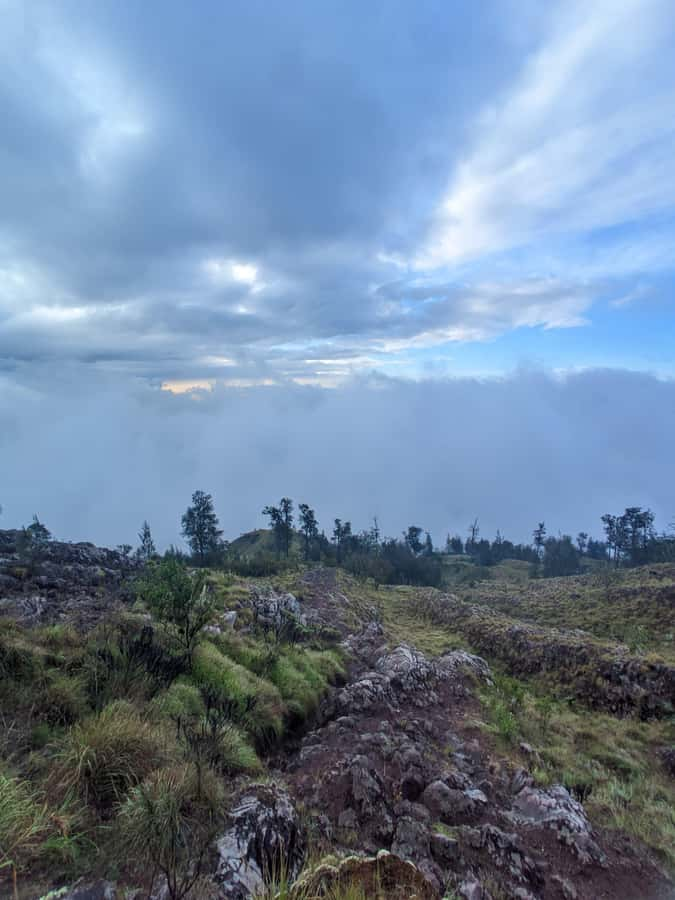
This first section is about steady effort rather than instant views. You walk through dense rainforest, passing plantations and tall trees. The shade should make the lower route more manageable than an exposed climb, but the day still involves a long uphill walk. You may spot black or brown monkeys near the route, especially during breaks.
I like this opening because it gives you time to settle into the pace. You are not thrown straight onto the bare crater slopes. Instead, the forest creates a gradual transition from village life to the high mountain camp.
Your guide and porters stop for breaks and snacks along the way. Use those pauses to drink, adjust your clothing, and check your feet. Small problems with socks, laces, or hot spots become much harder to fix later.
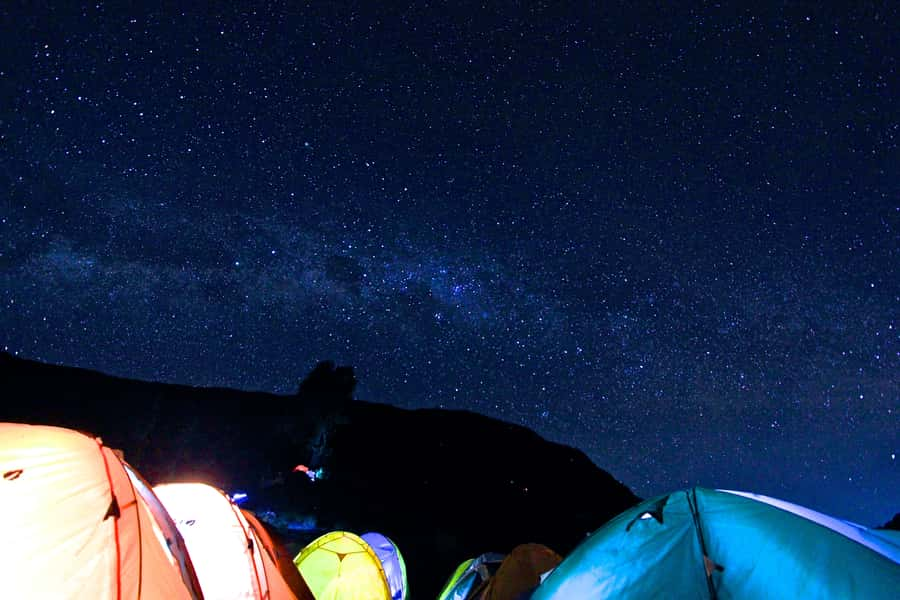
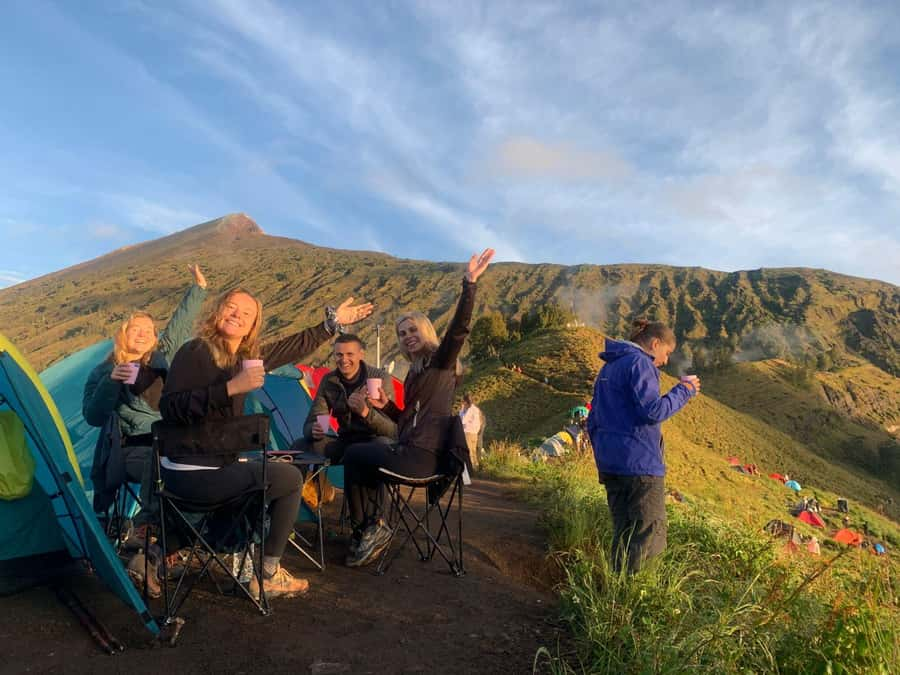
The goal is Senaru rim, where the first camp is set up. You sleep in a tent under the stars, with a mattress and sleeping bag provided. A toilet tent and toilet paper are also included, a modest but important detail on a two-night mountain trip.
Do not expect a hotel-style evening. The attraction is the setting and the sense of being away from roads and buildings. You should also expect limited comfort, a basic camp routine, and the need to keep your personal gear organized inside a small bag.
Day 2: Segara Anak Lake and the natural hot spring
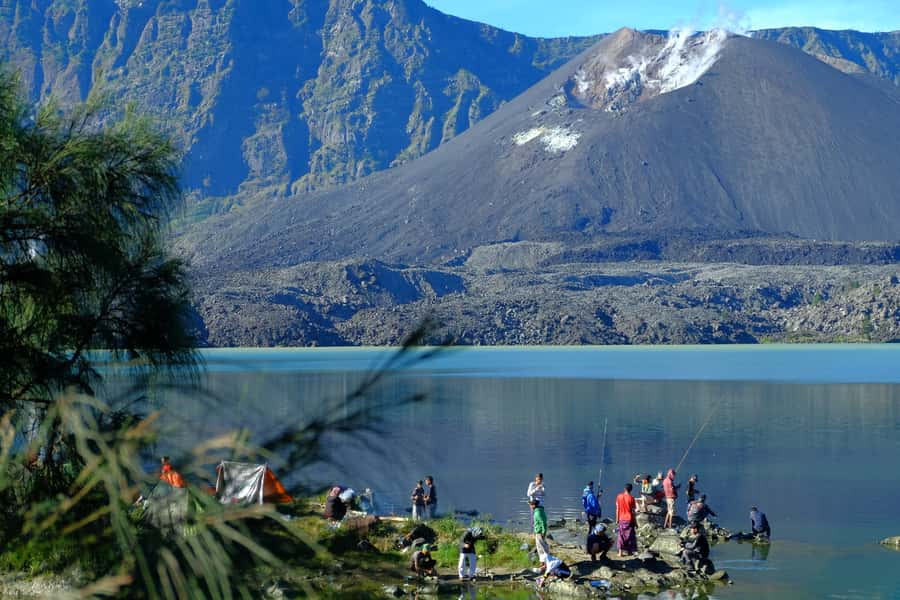
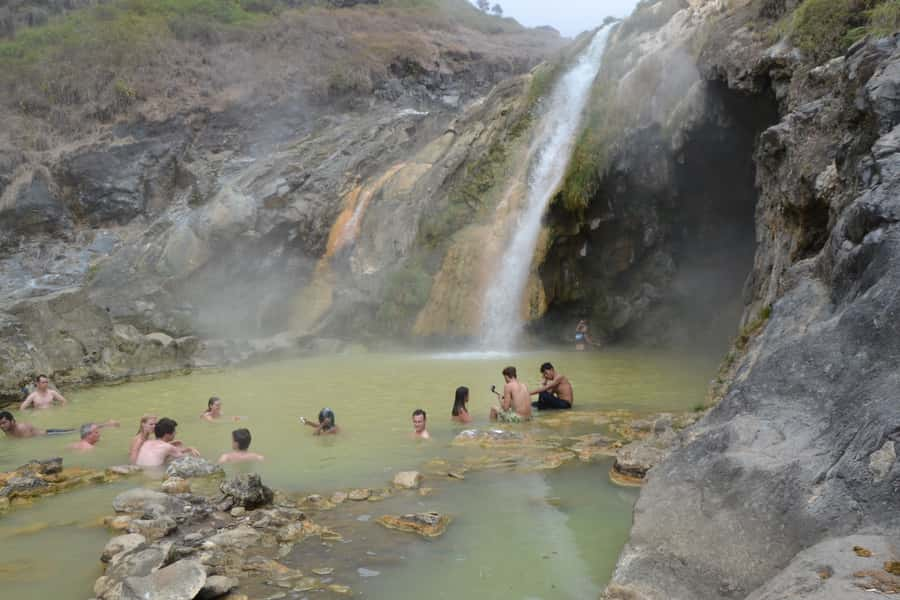
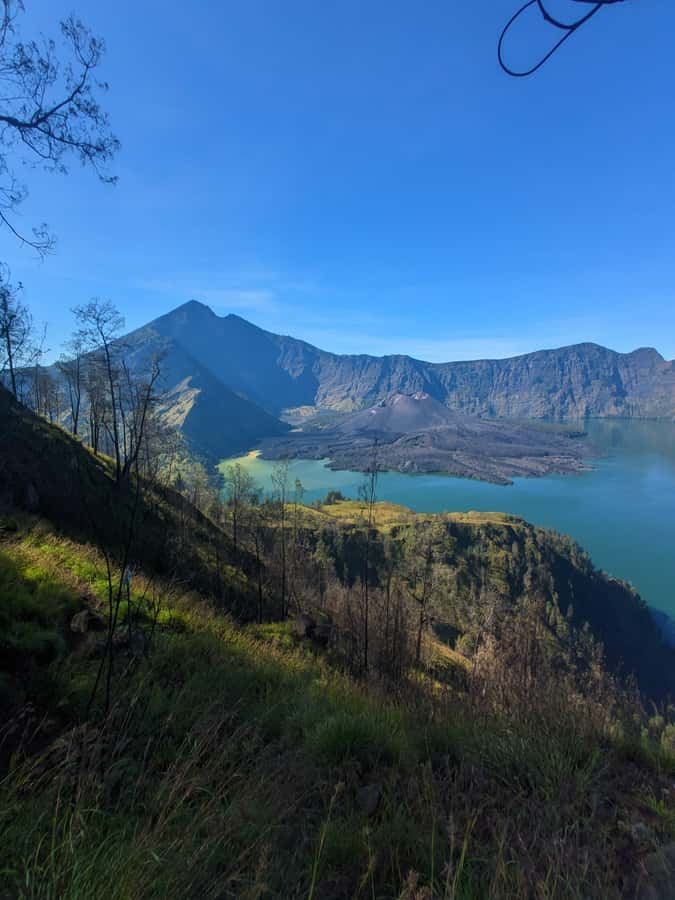
After a hot breakfast, you leave Senaru rim and hike down to Segara Anak Lake. This is one of the strongest parts of the route because the day changes from a forest climb to a crater setting, then adds time at a natural hot spring.
The lake gives the trek a slower visual moment after the effort of the first day. You have lunch beside the water, then take time for a dip in the nearby hot spring. The warm water can feel especially welcome after hours on foot, although you should still treat it as a short rest within a demanding day, not a full spa visit.
The hot spring is one of the details that makes this itinerary more complete. Many mountain routes offer a summit and little else. Here, you get a natural bathing stop and time by the lake before climbing again.
After lunch, the route rises toward Sembalun crater rim. This is a substantial second half to the day. You are not simply walking downhill to the lake, relaxing, and finishing early. You must climb back up to the next camp, so save energy and do not spend all your strength at the hot spring.
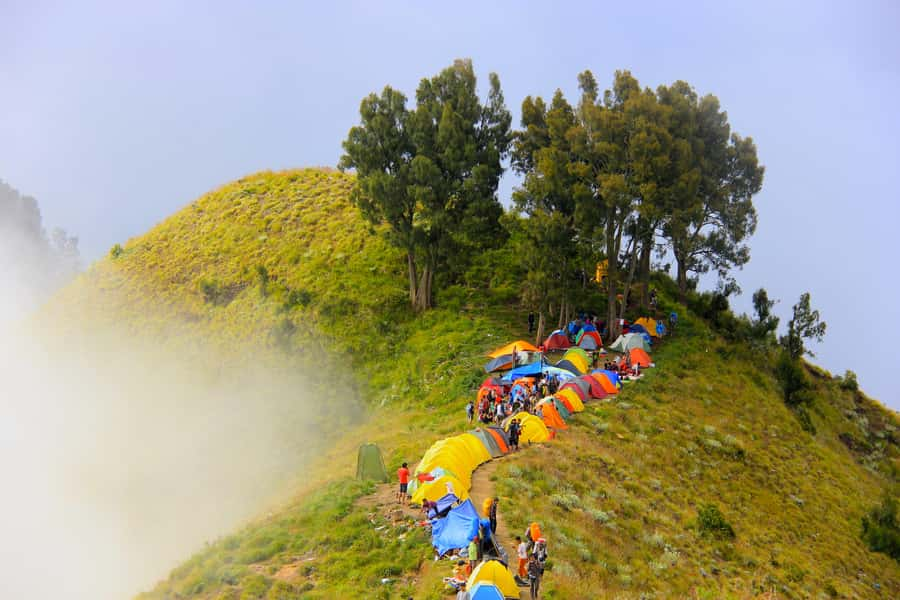
The camp at Sembalun crater rim is timed for sunset. That gives you a chance to watch the light change over the crater before the summit attempt. You camp overnight again, with the same basic equipment of tent, sleeping bag, mattress, and toilet tent.
This is likely the toughest psychological day for some people. You have already walked a long distance, enjoyed the lake, and may feel ready to stop. The climb to Sembalun rim asks you to keep going. A sensible pace is more useful than trying to stay with the fastest person in the group.
Day 3: Sunrise at the Mount Rinjani summit
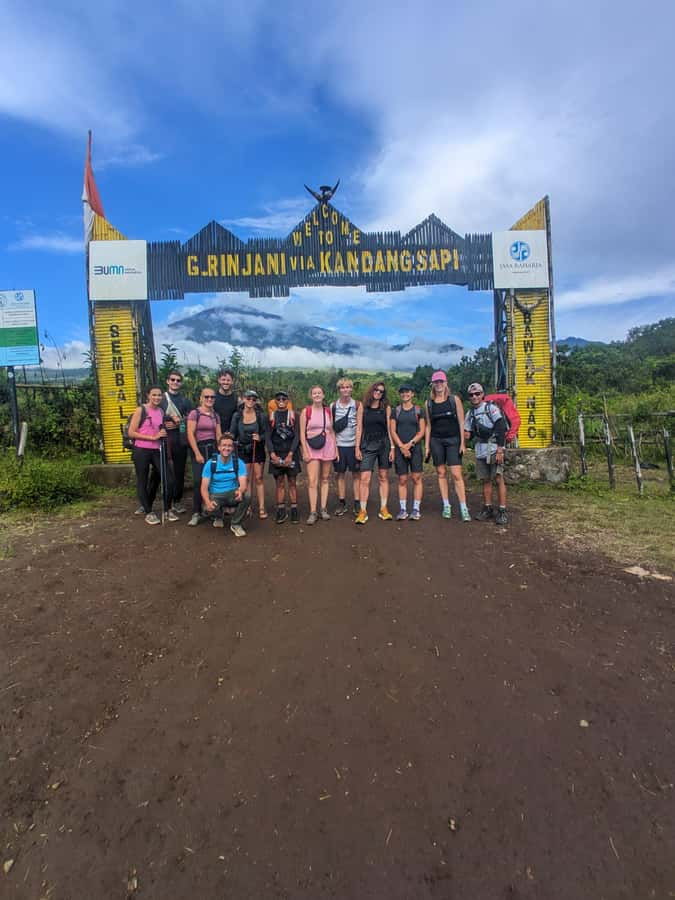
The final morning begins with a light breakfast and an early climb toward the summit. The exact starting time is not stated, so check availability and the guide’s briefing for the departure schedule. What is clear is that the route is planned around sunrise.
The summit section is the most challenging part of the trek. The route is steep, slippery, and physically demanding. You need a good level of fitness and the ability to walk long distances. This is not the place to discover that your shoes have poor grip or that you dislike early-morning cold.
At the top, the reward is a wide view over Lombok, Bali, Mount Tambora in Sumbawa, and Segara Anak Lake. The trip information also highlights views of the four Gili Islands. Sunrise gives these views a changing quality, with the first light making the early start feel worthwhile.
Keep your expectations practical. Reaching a summit is never guaranteed by enthusiasm alone. Weather, fatigue, and trail conditions can affect the experience, and the tour information specifically warns that the route can be steep and slippery. You should be prepared for a hard push rather than a guaranteed easy photo stop.
After the summit, you trek down to Sembalun crater for a hot breakfast and a rest. That meal comes at a useful point, since the summit effort is followed by more walking rather than an immediate vehicle pickup.
The final section takes you back to Sembalun Village. From there, the included portion ends at the meeting point, and transfers after the trek are not included. Arrange your next transport in advance if you need to catch a flight, ferry, or onward connection.
Same place, a different way to unwind:
- Body Massage Experience in Ubud Traditional Spa
★ 5.0 · 3,506 reviews - Active Volcano, Rice Field, Hot Spring, Fruit market, Tea Plantation with Lunch
★ 5.0 · 513 reviews - Mt Batur Sunrise, Breakfast & Natural Hot Springs
★ 5.0 · 458 reviews - Private Tour Mount Batur Sunrise Trekking and Natural Hot Spring
★ 5.0 · 431 reviews
Why the camping setup matters
The included camping gear saves you from bringing a full expedition kit. You receive a tent, sleeping bags, mattresses, a toilet tent, toilet paper, gloves, and trekking poles. The cooking gear is carried by the porters, along with the shared camping supplies.
That equipment makes the trek more accessible to people who do not already own mountain gear. You still need your own trekking shoes, long pants, clothing, and day pack. A head lamp or hand torch is not included, and it is one of the most important items to bring for the dark summit start.
The supplied information also lists a camera, comfortable clothes, climbing gear, goggles, gloves, and a downloaded app among the suggested items. Some of that list is broad, but the practical core is clear: bring proper footwear, warm layers, gloves, a light, and clothing that can handle sweat and changing conditions.
Do not bring a large suitcase onto the trail. The package does not include an extra porter for personal luggage. A small bag keeps the walking easier and lets you reach water, clothing, and personal items without searching through a heavy load.
Fitness, weather, and who should skip it
You need to be in good health and able to walk for long periods. The route includes steep and slippery ground, and the long daily schedule can be tiring even for people who exercise regularly.
The minimum age is 10. Babies under one year are not suitable for the activity, and the stated upper limit is 95 years. More important than age alone is your ability to handle the terrain and length of each day.
People who suffer from mountain sickness or height phobias are not permitted to join. Take that rule seriously. The crater rims and summit route are high, exposed mountain areas, and the itinerary is not designed for someone who wants to avoid steep ground.
The supplied information warns of extreme weather between January and March and refers to trail closures until the end of March 2018. That date is clearly old, so you should confirm current trail conditions and operating dates before booking. Mountain weather can change the plan, even when the calendar looks favorable.
The tour is best for an active adult or older child who wants a structured, guided challenge. It is a poor match for anyone seeking a relaxed walk, private comfort, or short sightseeing stops. You should also be comfortable with shared camping equipment and basic overnight conditions.
Practical strengths of the guide and porter team
The strongest praise for this experience centers on the guide and porter team. The package provides an experienced English-speaking guide and professional porters, and the positive feedback repeatedly focuses on that support.
That matters most on a route where the hours are long and the terrain changes each day. You need a guide who can keep the group moving, explain the plan, and help you manage breaks. You also benefit from porters who handle the heavy shared load while you focus on walking.
The guide’s role begins with the pre-trek briefing. Use that time to ask about the starting hour, meal timing, water, the summit pace, and what will happen with your luggage after the trek. Clear questions before leaving the village can prevent confusion on the mountain.
The experience holds a rating of 4.8 from 12 reviews, with specific praise for the guides and porters. One practical point also comes through clearly: the trek takes roughly eight to nine hours per day. Plan your expectations around that figure instead of assuming that the three-day label means three easy sightseeing days.
Meeting points, transport, and the final handoff
Pickup is available from your hotel in Senaru or Sembalun. The activity begins at the meeting point, where the briefing takes place, and ends back at that meeting point after returning to Sembalun Village.
The route starts in the Senaru area and finishes in Sembalun. That matters if you are arranging accommodation, storing luggage, or booking transport onward. Since post-trek transfers are not included, you need a clear plan for getting from the endpoint to your next destination.
A night of accommodation before the trek is also not included. Staying in Senaru or Sembalun before the start can make the early meeting easier, but you arrange and pay for that separately. Confirm which village is most convenient for your actual start time.
The booking terms offer free cancellation up to 24 hours before the activity for a full refund, and you can reserve now and pay later. Those terms give you some flexibility, but they do not replace checking the weather and trail status before you travel.
Should you book this Mount Rinjani trek?
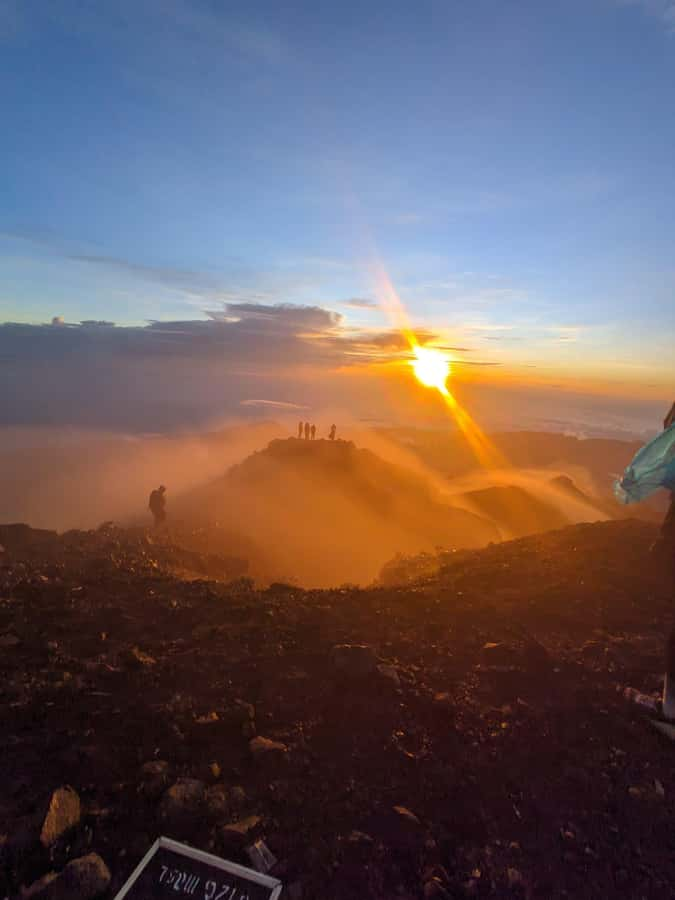
Book it if you want the full Rinjani combination: rainforest, crater camping, Segara Anak Lake, a natural hot spring, sunset, and a sunrise summit. The guide, porters, food, water, and camping equipment provide good value at $150, particularly if you do not own mountain gear.
Think twice if you dislike long walking days, steep trails, basic camping, or early starts. You also need to budget for the park fee, pre-trek accommodation, onward transport, personal luggage porter, suitable shoes, and a head lamp.
My advice is simple: choose this trip for the range of scenery and the strong guide and porter support, but book only after checking current trail conditions and honestly judging your fitness. If you can handle eight to nine hours of walking each day, the lake, hot spring, crater camps, and summit views make this a worthwhile three-day challenge.
FAQ
How long is the Mount Rinjani trek?
The program lasts three days and two nights. Check availability for the current starting time.
Where does the trek start?
Pickup is available from your hotel in Senaru or Sembalun. The route described begins at Senaru Village, after a briefing at the meeting point.
Where does the trek finish?
The trek finishes back at the meeting point after you return to Sembalun Village. Transfers after the trek are not included.
Is a guide included?
Yes. An experienced English-speaking guide is included, along with professional porters.
What do the porters carry?
The porters carry cooking gear and camping equipment. An extra porter is required if you want someone to carry your own luggage.
Is drinking water included?
Yes. The package includes three litres of mineral water per person per day, as well as food during the trek.
What camping equipment is provided?
A tent, toilet tent, toilet paper, sleeping bags, and mattresses are included. Gloves and trekking poles are also provided.
Is the national park entrance fee included?
No. The stated entrance fee is IDR 200,000 per person per day.
What fitness level do I need?
You need good health, a good level of fitness, and the ability to walk long distances. The route is steep, slippery, and challenging, with about eight to nine hours of walking per day noted in the tour information.
More Hikes and Treks in Indonesia
- Mount Batur Sunrise Hike, Breakfast & Hot Spring
★ 5.0 · 316 reviews - Bali: Mount Batur Sunrise Hike with Breakfast & Hot Spring
★ 4.7 · 146 reviews - Mount Batur Sunrise Trek & Natural Hot Spring Experience
★ 5.0 · 95 reviews - 3D/2N Rinjani trekking summit,lake and hot springs.
★ 5.0 · 85 reviews
Just added around Indonesia
- Sharing Mount Batur Sunrise Trekking And Natural Hot Spring★ 5.0 · 11 reviews
- VIP Ultimate Spa Experience & Tanah Lot Temple Visit (Private & All-Inclusive)★ 5.0 · 13 reviews
- Private Floating Breakfast Jungle Swing and Romantic Spa in Ubud★ 5.0 · 2 reviews
- Bali Swing Hot Spring And Waterfall Private Guided Tour★ 5.0 · 50 reviews
- TULA Wellness Taiwan Tea Ceremony★ 5.0 · 3 reviews
- Tanah Lot Sunset and Spa Tour from Bali★ 5.0 · 12 reviews
- Private full-day tour with hot spring★ 5.0 · 2 reviews
- TULA Wellness Balinese Exotic Fruit Ritual★ 5.0 · 35 reviews
More spa days in Indonesia.
Mount Batur Sunrise Guided Hike and Natural Hot Spring
Read our review →
Body Massage Experience in Ubud Traditional Spa
Read our review →
Mount Batur Sunrise Hike and Natural Hot Spring Option
Read our review →
Jakarta: Volcano, Tea/Rice Fields, Hot Spring, Local Food
Read our review →
Active Volcano, Rice Field, Hot Spring, Fruit market, Tea Plantation with Lunch
Read our review →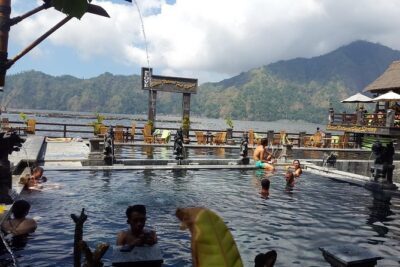
Mt Batur Sunrise, Breakfast & Natural Hot Springs
Read our review →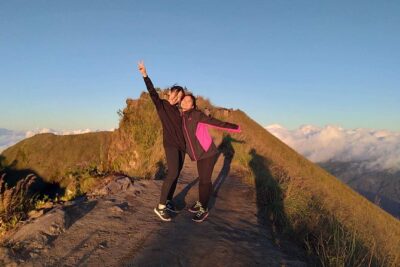
Private Tour Mount Batur Sunrise Trekking and Natural Hot Spring
Read our review →
Bandung: White Crater Hotspring Tea Plans And Lunch Included
Read our review →Other lists this one is on