
REVIEW · ROME
National Roman Museum and Diocletian Thermal Baths Walking Tour
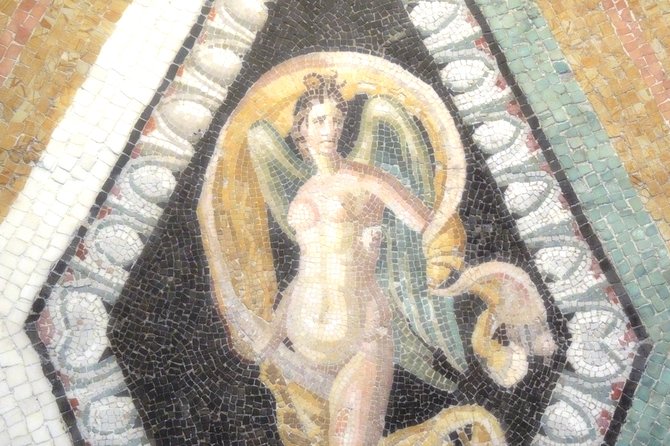
The surprising star here is not the Colosseum or Forum, but Palazzo Massimo alle Terme, a quiet museum packed with Roman frescoes, mosaics, coins, and superb sculpture. I like the rare chance to see works such as the Boxer at Rest without the crush of Rome’s headline sights. I also like the Diocletian Baths option, where Michelangelo turned part of an ancient bath complex into a church.
The main caution is the price: $323.21 per person is a serious outlay for two or three hours. One guest also found the guide late and the visit shorter than expected, so confirm the exact duration and whether the baths are included when booking.
Key points to know before you book
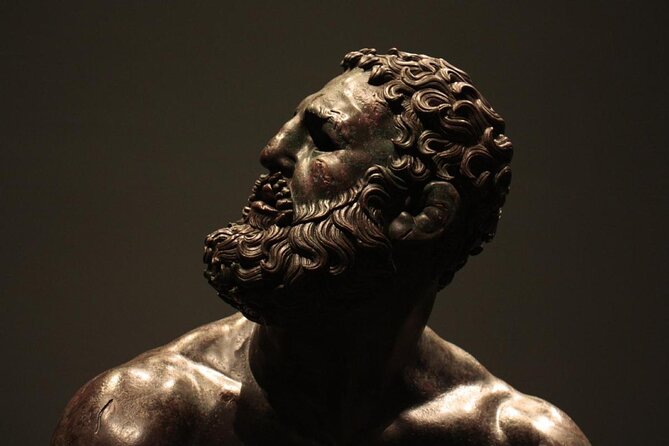
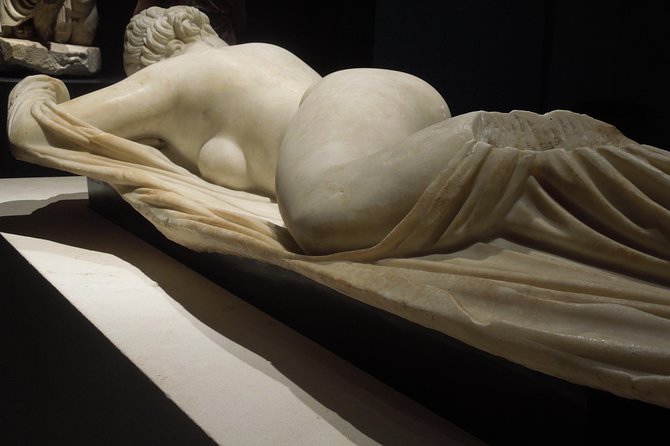
- Palazzo Massimo is the star attraction: See the Boxer at Rest, Discus Thrower, Sleeping Hermaphrodite, Roman coins, gold jewelry, mosaics, and vivid frescoes.
- The museum is often calm: You get time to look closely instead of being pushed along by heavy crowds.
- The Baths of Diocletian add major scale: This was Rome’s largest bath complex, built in 298 AD for as many as 3,000 people at once.
- Michelangelo’s church is part of the story: Basilica of St. Mary of the Angels occupies part of the ancient bath structure.
- Private guiding makes the art easier to read: Guides including Matteo, Mattia, Serena, and Damiano earned especially warm praise for clear English and lively explanations.
- The cost suits a serious art visit: It offers personal guidance and skip-the-line access, but casual museum visitors may find the price hard to justify.
Why Palazzo Massimo deserves your Rome time
Rome has no shortage of ancient stones. Palazzo Massimo gives you something different: the objects, colors, and daily-life details that once filled those ruins.
The National Roman Museum occupies four floors and covers Roman art from the second century BC through the fifth century AD. That long span lets you watch Roman art change over time, from Greek-influenced sculpture to works shaped by the empire’s own tastes and customs.
I especially like this museum for travelers who have already seen the Forum or plan to visit it soon. Ruins can leave you guessing about how Roman spaces looked when they were complete. Here, frescoes still carry their color, mosaics show careful floor patterns, and sculptures give human form to the people and ideals behind the empire.
The museum also tends to feel far less frantic than Rome’s best-known sights. That matters. You can spend a few minutes looking at a face, a fold in a robe, or the tiny pieces in a mosaic without someone pressing behind you. For art lovers, that calm is part of the value.
Your guide is the key to making the visit work. This is not simply a ticket with an audio device. A good guide links the pieces together, explains what you are seeing, and gives the objects a place in Roman life. Several guides received particular praise: Matteo was described as friendly and enthusiastic, Mattia was noted for his clear English and attention to detail, Serena connected the museum to modern Rome, and Damiano brought academic experience in art to the visit.
Guide assignments can change, so do not book solely around one name. Still, the repeated pattern is useful: this tour depends heavily on the person leading it, and the strongest guides appear to bring real passion to Roman art.
More Thermal Baths in Italy
- Chianciano Terme: Theia Thermal Pools Entrance Ticket
★ 4.4 · 185 reviews - Merano: Terme Merano Pools and Sauna Entry Ticket
★ 4.5 · 133 reviews - Milan: De Montel Thermal Bath Entrance Ticket
★ 4.6 · 89 reviews
The first hour at Palazzo Massimo
You meet at the ticket office at Largo di Villa Peretti, 2, just a few steps from Republic Square. The guide helps you collect your skip-the-line ticket, so you avoid the entrance queue that can snake around the building.
The exact timing can vary, but the museum portion is listed at about one hour. That is enough for a focused route through the major works, not enough for every room at a slow pace. If you love ancient art, tell your guide early. One person felt the museum visit was cut short in favor of the baths, and this is the main practical tradeoff of combining both sites.
The collection covers sculpture, painted walls, mosaics, coins, jewelry, and goldsmith work. Each category offers a different window into Roman life. Sculpture shows ideals of the body and public identity. Coins reveal rulers and political messages. Jewelry points to wealth and personal display. Mosaics and frescoes tell you how private rooms were decorated.
The museum’s most famous pieces give the guide natural stopping points. The Boxer at Rest is especially powerful because it feels less like an idealized god and more like a battered human being. The Discus Thrower presents the athletic body in a more controlled, classical form. Together, they help you see how Roman collections drew on Greek artistic traditions while developing their own tastes.
The Sleeping Hermaphrodite adds another kind of interest. The sculpture is designed to surprise you as you move around it, and a guide can explain how its viewpoint affects the experience. This is the sort of work that benefits from context rather than a quick glance.
Do not rush past the painted rooms. The frescoes associated with Empress Livia are among the museum’s most memorable sights. Their decoration gives you a sense of the comfort and fantasy of elite Roman interiors, far removed from the bare walls and broken columns you see at outdoor archaeological sites.
The mosaics deserve similar attention. Look for how patterns, figures, and borders work together. A guide can point out details that blend into the larger design when you are looking alone. This is one reason the tour may appeal even if statues are not your favorite part of Roman history.
What the Diocletian Baths add
The optional Baths of Diocletian visit changes the tour from a museum visit into a study of Roman public life and later reuse.
Built in 298 AD, the baths were the greatest thermal complex in Rome. The facility included gyms, libraries, and a swimming pool, and could accommodate as many as 3,000 people at one time. That figure helps you understand the scale, but the surviving rooms make the point even better.
The baths were not just places to wash. They were social centers where Romans could exercise, read, meet friends, and spend part of the day. Your guide can connect the architecture to those habits, showing how the complex served a large population rather than a small circle of wealthy users.
You might find the baths more striking for their size than for a long list of individual objects. The museum rewards close inspection. The baths give you a sense of Rome’s engineering and the sheer ambition of imperial construction.
The most unusual part is the Basilica of St. Mary of the Angels. Michelangelo incorporated part of the bath complex into the church in 1561. You are not simply looking at an ancient building next to a later church. You are seeing two periods occupy the same structure.
The church gives the ancient rooms a new purpose, while the surviving bath architecture remains visible in the enormous spaces and structural forms. This blend of Roman engineering and Renaissance design is one of the tour’s strongest moments. Several people found Michelangelo’s work here just as memorable as the museum’s sculpture.
The baths also help explain why Rome can feel like several cities layered together. Ancient public buildings were not always left as ruins. Later generations reused them, changed them, and gave them new religious or civic meaning. That is a more useful way to understand Rome than treating each period as a separate stop.
If your main interest is sculpture, you may prefer more time at Palazzo Massimo. If you want architecture and the long story of Rome, include the baths.
Private guiding and the pace of the visit
The activity is described as a private tour, meaning only your group participates. The wider description also refers to a choice between private and small-group formats, so check the option you select at booking. The listed inclusions specify a private tour and a local guide.
Private guiding is valuable in a museum where your interests may not match another group’s. You can ask why a statue looks a certain way, spend longer with a mosaic, or move more quickly through a display that does not appeal to you. One guide, Mattia, was praised for allowing time for photographs while keeping a suitable pace.
That flexibility matters more here than at a simple sightseeing stop. Palazzo Massimo has four floors, and ancient art can become tiring if every object receives equal attention. A skilled guide edits the visit for you.
The drawback is that a private tour does not automatically guarantee a long visit. The stated duration is approximately two to three hours, and the itinerary assigns about an hour to each main stop. One account described a late guide and a shorter tour, though the guide was still considered well informed. Arrive ready to speak up if you want more time in the museum.
English is the listed language. The strongest guide comments describe clear English, enthusiasm, and an ability to explain both the basic facts and the stories behind individual works.
Same place, a different way to unwind:
- Milan: QC Termemilano Spa Admission Ticket
★ 4.6 · 685 reviews - Ischia: Giardini Poseidon Thermal Park Official Entry Ticket
★ 4.8 · 464 reviews - Day Pass to the QC Termetorino Luxury Spa in Turin
★ 3.0 · 207 reviews - Pre Saint Didier Luxury Evening Spa Entry Ticket
★ 3.0 · 179 reviews
Is $323.21 per person a fair price?
At $323.21 per person, this is not a budget museum outing. The value depends on how much you want personal guidance and how many people share the booking.
For a couple or small family deeply interested in Roman art, the price can make sense. You are paying for a private guide, skip-the-line entry, a focused route through an important collection, and the chance to add the Baths of Diocletian. You also avoid spending time figuring out the museum’s highlights on your own.
The price is harder to defend if you mainly want to pop in, see the famous statues, and leave. Palazzo Massimo is often peaceful, and a self-guided visit may be enough for an independent museum fan who enjoys reading labels.
Group discounts are available, which may improve the calculation for a larger party. Children must be accompanied by an adult. Most people can take part, and the meeting point is near public transportation, but hotel pickup and drop-off are not included.
The skip-the-line feature has practical value, especially if the entrance queue is long. It does not add extra museum time, though. The real benefit is avoiding uncertainty at the door and having a guide take charge of the first steps.
How to plan the visit
Allow two to three hours for the full experience. The museum and bath complex are both substantial, so avoid scheduling another tightly timed activity immediately afterward.
The start point is Palazzo Massimo alle Terme at Largo di Villa Peretti, 2, near Republic Square. The activity information says the tour ends back at the meeting point, while the route description places the farewell at the Baths of Diocletian. Confirm the end point with the operator if you have a train, reservation, or other fixed appointment afterward.
Since hotel pickup is not provided, plan your route to the meeting point before the day begins. The location is near public transportation, which makes it a practical stop during a day around Republic Square and Rome’s central railway area.
Wear comfortable shoes. The visit involves a large museum and a substantial historic complex, and you will get more from the guide if you are not distracted by fatigue. Bring a camera if you like, but listen for any museum rules about photography during the visit.
The cancellation terms are straightforward: you can receive a full refund if you cancel at least 24 hours before the start time. Changes or cancellations within 24 hours are not accepted for a refund.
Who should book this Rome museum tour?
I would choose this for someone who wants more than a checklist of Rome’s biggest sights. It suits you if ancient sculpture, mosaics, frescoes, coins, and Roman architecture all sound appealing.
It is also a strong choice if you have already visited the Forum and want to understand the art that once filled Roman houses and public spaces. The combination of Palazzo Massimo and the Baths of Diocletian gives you both close-up detail and grand architecture.
Families can benefit from the private format because the guide can adjust explanations and pace. Children still need adult supervision, and the subject matter may be best for older children with an interest in stories, statues, or ancient life.
I would be more cautious if your Rome schedule is packed or if you prefer outdoor sights. The museum is focused, and the tour asks you to spend several hours with ancient art. The price also makes this a deliberate choice, not a casual stop.
Should you book it?
Book this tour if you want a guide to make Roman art readable and you value a quieter museum setting. Palazzo Massimo has exceptional works, and the Baths of Diocletian add a sense of scale and a memorable connection to Michelangelo.
Before paying, confirm that your selected option includes the baths, check whether the private format applies to your booking, and make sure two to three hours fits your schedule. If the cost feels high, visit the museum independently. If personal explanation, skip-the-line access, and a tailored route matter to you, this is one of Rome’s better specialist tours.
FAQ
Where does the tour begin?
It begins at the Palazzo Massimo alle Terme ticket office at Largo di Villa Peretti, 2, near Republic Square in Rome.
How long does the tour last?
The experience takes approximately two to three hours. The listed itinerary allows about one hour for Palazzo Massimo and one hour for the Baths of Diocletian.
Is skip-the-line entry included?
Yes. The tour includes guaranteed skip-the-line access to the museum.
Is the tour private?
The listed activity is a private tour, with only your group participating. The wider tour description also refers to private and small-group choices, so check the option selected at booking.
What language is offered?
The tour is offered in English.
Are the Baths of Diocletian included?
The Baths of Diocletian are included when you choose the option with the baths. The tour information also lists admission to that stop as free.
Is hotel pickup provided?
No. Hotel pickup and drop-off are not included. You meet the guide at Palazzo Massimo.
What is the cancellation policy?
You can cancel for a full refund up to 24 hours before the experience begins. Cancellations or changes made less than 24 hours before the start time are not accepted for a refund.
More Walking Tours in Italy
- From Krakow: Slovakia Treetop Walk, Zakopane & Thermal Spa
★ 4.7 · 110 reviews - Kinabalu Park & Poring Hot Spring & Canopy Walk
★ 4.5 · 80 reviews - Arenal Hanging Bridges, Guided Walk, Hot Springs Optional
★ 5.0 · 80 reviews - Sofia: Seven Rila Lakes Snowshoe Walk & Thermal Spring Pools
★ 3.9 · 79 reviews
More Museum Visits in Italy
- From Sofia: Rila Monastery and Optional Museum, Cave or Spa
★ 4.6 · 270 reviews - Budapest Card: Free Public Transport, Spa & Museums with Delivery
★ 3.5 · 241 reviews - Full Day Ice Museum and Chena Hot Springs Tour
★ 4.4 · 32 reviews
Just added around Italy
- Hot spring and Temple★ 5.0 · 3 reviews
- Florence: Admission to the Della Calza Wellness Center★ 5.0 · 2 reviews
- ARGILLARIUM EXPERIENCE – RITUS OTIUM (90 minutes)★ 4.7 · 4 reviews
- CastelBrando: Relax at a Spa inside an ancient castle★ 4.9 · 52 reviews
- Castiglione Thermal Park 1-Day Access Ticket★ 3.8 · 12 reviews
- Private Spa program in Sicily Caltanissetta★ 5.0 · 2 reviews
- From Civitavecchia: Saturnia Hot Springs Ticket and Transfer★ 4.4 · 9 reviews
- Bari, Wellness massage, from the feet to the face at studio★ 5.0 · 2 reviews
More spa days in Rome.
From Civitavecchia: Saturnia Hot Springs Ticket and Transfer
Read our review →Other lists this one is on