
REVIEW · JAPAN
Osaka: Solaniwa Onsen Hot Spring Visit
Solaniwa Onsen turns a hot bath into a small Osaka escape, with natural spring water from 1,000 meters underground and a rooftop garden filled with seasonal plants, torii gates, and waterfalls. You can move between the baths, garden, and footbath at your own pace rather than follow a fixed tour schedule.
I like the mix of serious bathing and playful Japanese design. The nine bath types give you reasons to stay awhile, while the Tenku Garden offers fresh air and room to wander. The main catch is the strict tattoo policy: visible tattoos, tattoo stickers, and tattoo paint are not allowed, so check this before booking.
- Underground spring water: Bathe in slightly alkaline water known as Beautiful Hada no Yu, drawn from 1,000 meters below ground.
- Nine bath types: Use indoor and outdoor options, including a garden-view bath and carbonated spring bath.
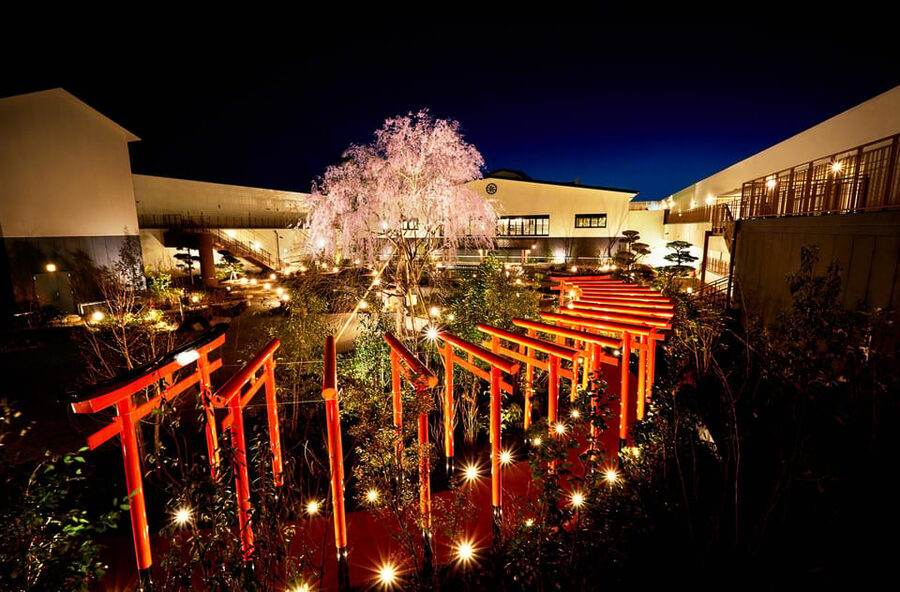
- Tenku Garden: Walk through a 3,000-square-meter rooftop space with seasonal trees, flowers, waterfalls, and a thousand torii gates.
- Ryokan atmosphere: Enjoy a traditional hot spring town setting inside Osaka Bay Tower without leaving the city.
- Useful full-day ticket: The pass is valid for one day, making it easy to stay for a short soak or several hours.
- Important restrictions: A 150-yen Osaka city bathing tax is paid separately, and people with visible tattoos cannot use the facility.
A Hot Spring Town Inside Osaka Bay Tower
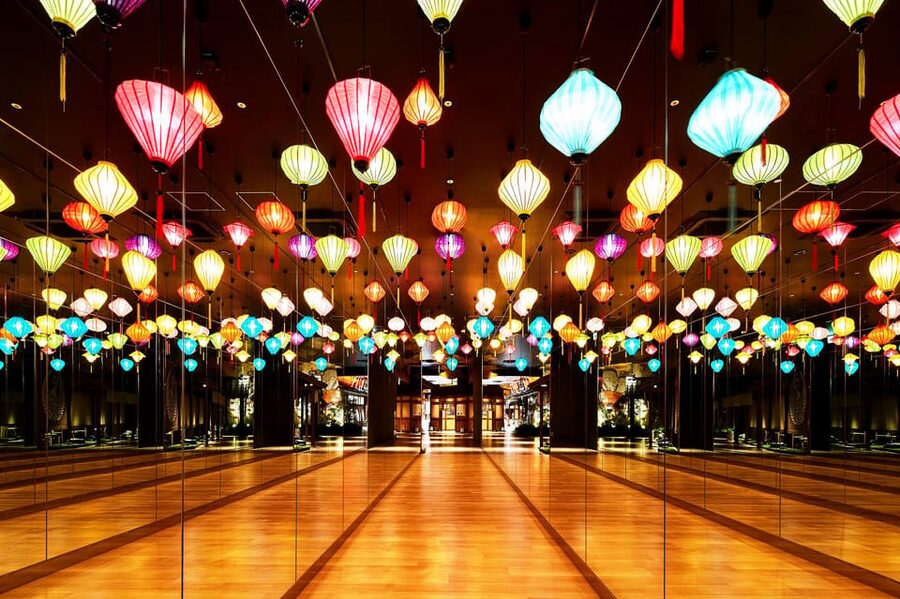
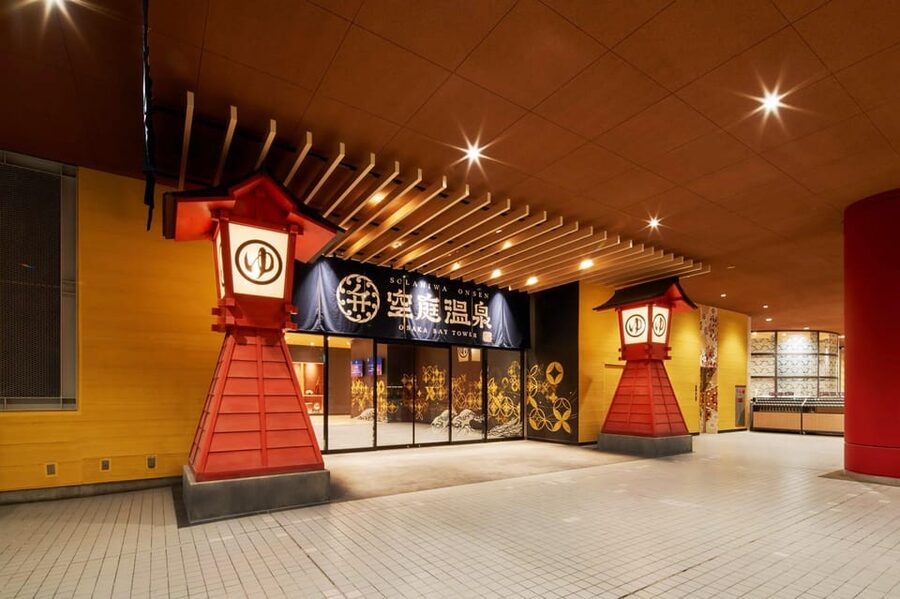
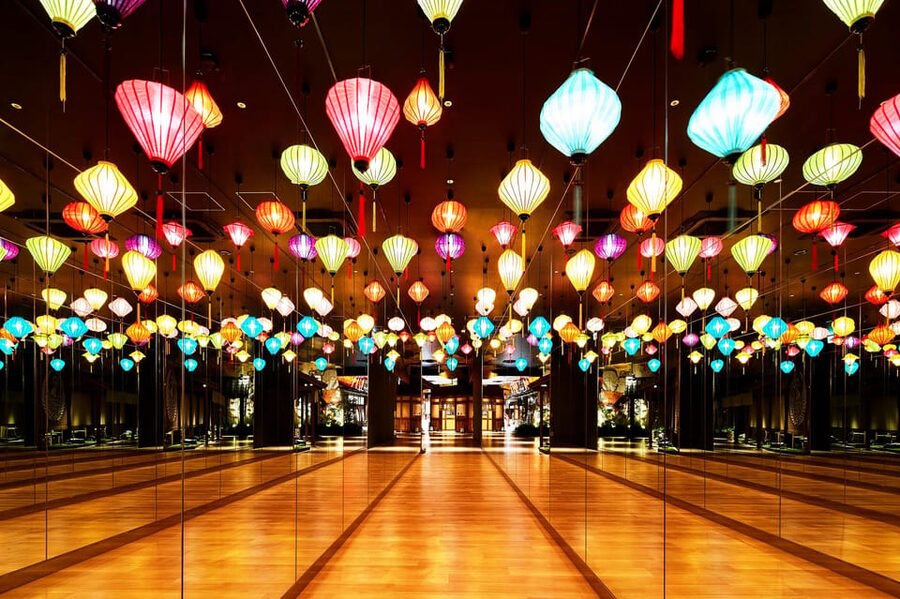
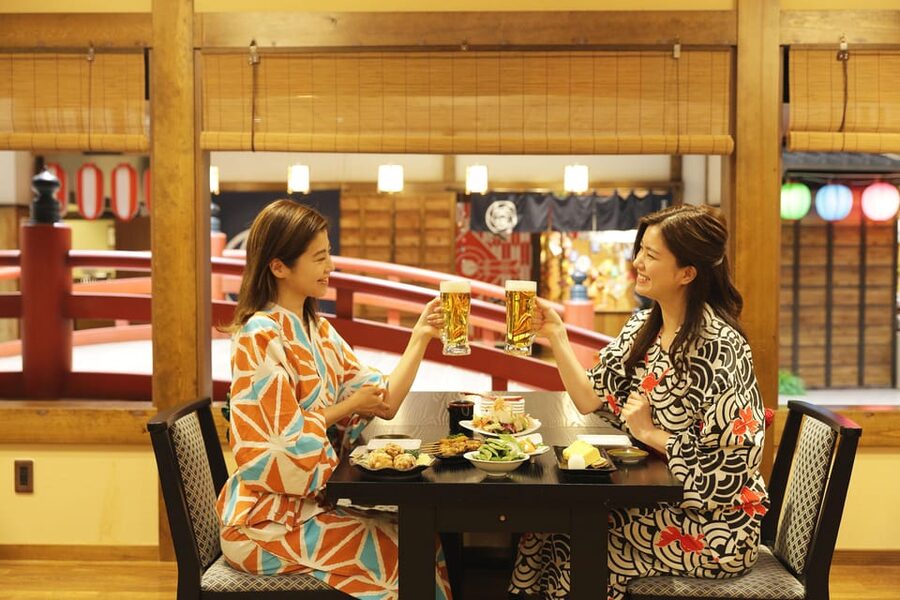
Solaniwa Onsen gives you a taste of a Japanese hot spring town without sending you into the countryside. The setting is Osaka Bay Tower, at 1-2-3 Benten, Minato-ward, Osaka City. Inside, the design aims for a traditional ryokan-style atmosphere, with spaces that make an ordinary city visit feel more like a short retreat.
This is not an overnight ryokan stay. You are buying day access to a large bathing and relaxation facility with traditional touches. That distinction matters. If you want a quiet rural inn with a private room and a multi-course dinner, this is not that experience. If you want a convenient place to try Japanese bathing culture during an Osaka holiday, it fits much better.
The facility is built around two main areas: the hot bath zone and the Tenku Garden. You can spend your time moving between them, although temporary exits and re-entry are not allowed. Plan to finish your other Osaka sightseeing first, then enter when you are ready to stay.
Nine Baths, From Open Air to Carbonated Water
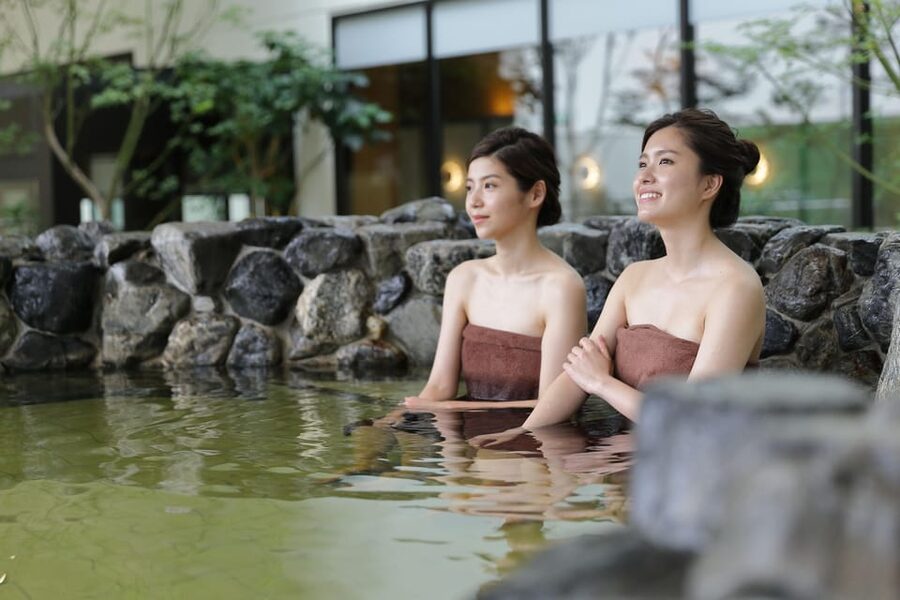
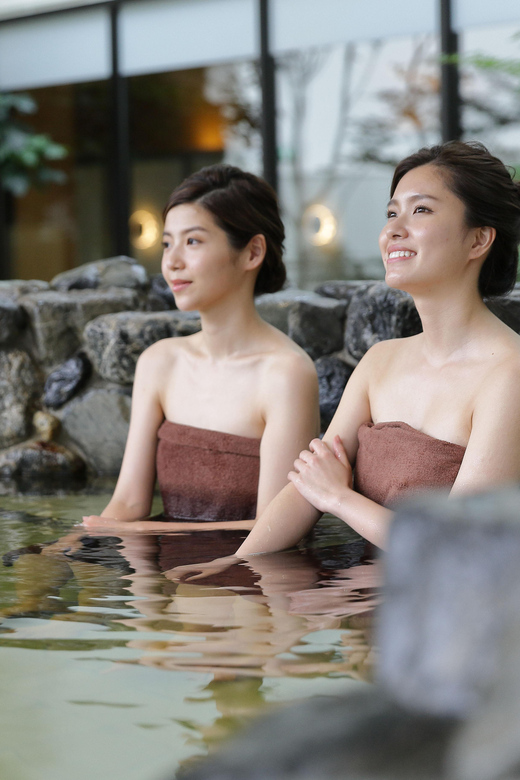
The bathing area is the heart of the visit. You get access to nine types of baths, with options that include an open-air bath, a garden-view bath, and a carbonated spring bath. The variety makes the admission more useful than a single pool or basic public bath, especially if you plan to stay for more than a quick soak.
The slightly alkaline natural spring water is called Beautiful Hada no Yu. It comes from 1,000 meters underground, giving the bath experience a clear connection to the local geology rather than making it only a themed attraction. The water is presented as gentle and relaxing, though you should still take normal care with hot baths and step out if you feel uncomfortable.
I like the way the different baths let you set your own pace. You might begin with a regular soak, try the outdoor setting, then spend time in the carbonated spring bath. The garden-view option also gives the bathing area a stronger sense of place than an enclosed urban spa.
The exact experience can change by season, since some areas may not be accessible at certain times. If one particular bath or garden feature is important to you, check conditions before you go.
More Hot Springs in Japan
- Osaka: Nara and Uji Day Trip with Deer Park and Hot Spring
★ 4.4 · 302 reviews - Tokyo: Mt Takao Tour with Ramen and Tattoo-Okay Hot Spring
★ 5.0 · 69 reviews - [Seasonal Limited] Mt. Fuji 5th Station &Hot Spring Day Tour
★ 4.5 · 53 reviews
Saunas and Scrubbers Add More Time to the Visit
Your ticket also includes the saunas and scrubbers. These features make Solaniwa more than a place to sit in hot water for 20 minutes. You can build a longer bathing routine around soaking, cooling down, using the sauna, and returning to the baths.
The word scrubbers may refer to the facility’s bathing and body-cleaning services, but the supplied details do not specify the exact treatment menu. Ask at the facility if you want to know what is available on your date. Do not assume that every service is included beyond the access described in your ticket.
The best value comes when you use the facility as a half-day break rather than a quick stop. At $14 per person, the base price is modest for access to nine baths, saunas, the rooftop garden, and the footbath area. You also pay a separate 150-yen Osaka city bathing tax on-site, so allow for that extra charge.
If your schedule is packed with Osaka Castle, Dotonbori, and other major sights, you may not have enough time to enjoy the full range of facilities. In that case, the price can feel less attractive. The ticket makes more sense when you can slow down and stay awhile.
Tenku Garden Gives the Visit Fresh Air
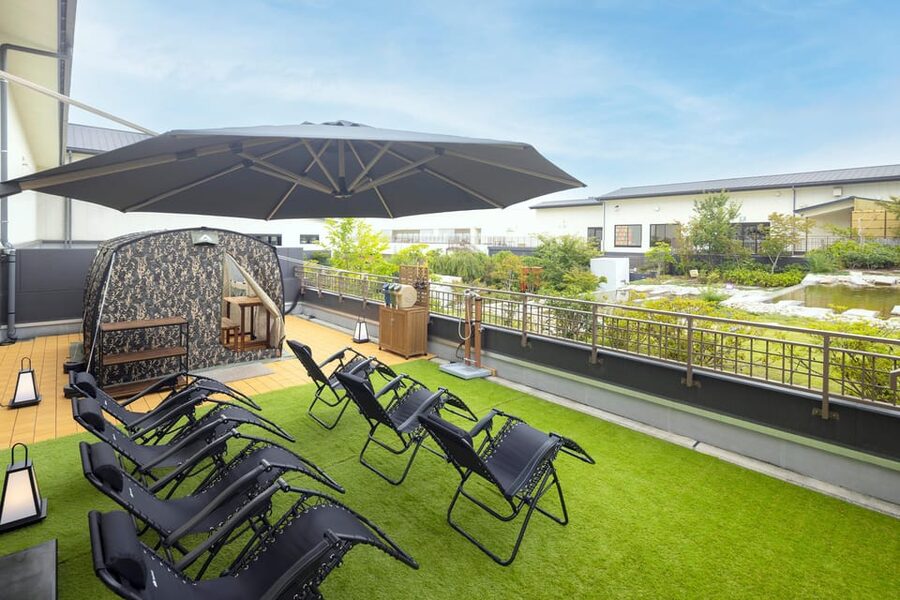
The Tenku Garden covers 3,000 square meters on the rooftop. That is a sizeable open area for a city bathhouse, and it changes the mood of the visit. Instead of spending your entire time indoors, you can walk among seasonal trees and flowers, pause at the footbath, and look at the garden displays.
The design includes a thousand torii gates and waterfalls. These elements create a traditional Japanese visual setting, but they are also part of a modern entertainment facility. I would treat the garden as a carefully built atmosphere rather than a historic shrine or an old temple complex.
The footbath is likely the easiest way to enjoy the garden without committing to another full soak. You can sit, look at the plants, and let your feet rest while still feeling connected to the outdoor setting. This may be especially useful if you want a break from hot water but are not ready to leave.
Seasonal trees and flowers mean the garden can feel different at different times of year. The details provided do not promise a particular bloom or seasonal display, so do not plan around one specific flower. Think of the garden as a pleasant outdoor section that adds variety to the bath visit.
What the Traditional Osaka Setting Really Means
Solaniwa Onsen aims to recreate the feeling of a hot spring town in Osaka. You get the visual language of a ryokan and onsen district, along with baths, garden spaces, and places to pause. This gives you some of the ceremony and atmosphere of Japanese bathing culture in a location that is easier to reach than a mountain resort.
Still, you should keep your expectations grounded. This is a city facility with a themed traditional setting, not an old hot spring town that grew naturally over centuries. The value is convenience. You can try a familiar part of Japanese leisure culture without spending a night outside Osaka.
For first-time onsen users, the setting may make the experience feel more approachable. You can explore several baths and outdoor areas rather than worry about finding a remote inn or arranging an overnight stay. For people already familiar with Japanese bathhouses, the rooftop garden and number of bath options are the stronger reasons to visit.
More Onsen Experiences in Japan:
- From Osaka: Himeji Castle, Arima Onsen & Mt. Rokko Day Tour
★ 4.6 · 339 reviews - From Tokyo: Private Tour to Fuji/Hakone – Onsen, Art, Nature
★ 5.0 · 116 reviews - Mt. Fuji, Hakone Private Tour from Tokyo – Onsen, Arts and Nature
★ 5.0 · 79 reviews - Tokyo: Mount Fuji 5th Station & Onsen Day Trip
★ 4.3 · 75 reviews
A Practical Schedule for Your Day
You have one day of validity, with starting times based on availability. Since no fixed tour itinerary or guide is involved, you decide how long to stay. A sensible visit could begin with the reception desk, followed by the hot bath area, a sauna session, and time in the garden footbath.
Next, return to the baths and try one or two options you missed. The open-air bath, garden-view bath, and carbonated spring bath each offer a different setting, so you do not need to rush through them in one circuit.
Leave time for the Tenku Garden rather than treating it as a quick photo stop. The 3,000-square-meter space is one of the main features, and the torii gates, waterfalls, trees, and flowers are what give the facility its hot spring town character.
You cannot leave and come back in on the same ticket. That makes timing important. Do not enter early in the day if you plan to spend several hours sightseeing elsewhere and return later.
Who Will Get the Most From the $14 Price
At $14, plus the 150-yen bathing tax, this is good value if you want a flexible day at a bath and garden facility. The admission covers the key areas rather than charging separately for the main baths, saunas, scrubbers, and Tenku Garden.
I see it working particularly well for:
- Families looking for a relaxed activity: The setting is designed to be family-friendly, though age limits apply after certain evening hours.
- First-time onsen users: The range of bath types gives you an easy introduction without requiring an overnight stay.
- Couples or friends: You can spend time in the baths, garden, and sauna areas at your own pace.
- Visitors needing a slower Osaka day: The garden and footbath offer a change from indoor sightseeing and crowded streets.
- Budget-conscious bath fans: The full-day access can be worthwhile if you stay long enough to use several areas.
It is less suitable if you have a visible tattoo, need to bring a stroller, or want to leave the facility and return. Alcohol and drugs are not allowed, and you cannot use the service while under the influence of alcohol.
Age, Tattoo, and Access Rules Matter
People under 16 may use the facility only until 7:00 PM when in a group. Groups under 18 may use it until 10:00 PM. These rules may affect families planning an evening visit, so check your timing before you book.
The tattoo policy is strict. Visible tattoos are not accepted, and the restriction also applies to tattoo stickers and tattoo paint. People with gang affiliations cannot use the facility. This is not a place to assume that covering a tattoo will solve the issue, so contact the facility directly if you need clarification.
The facility is wheelchair accessible, which is useful information for visitors who need step-free access. Baby strollers and baby carriages are not allowed, however. Those two facts should be considered together when planning a visit with a small child.
At reception, present your reservation screen. The ticket cannot be combined with other discounts or services. Weather can also affect availability, and if the facility closes temporarily because of bad weather, transportation costs are not reimbursed.
What to Know Before You Set Out
Bring enough time, not just enough money. The admission price is low, but the experience earns its value through lingering. A rushed visit may leave you using only one bath and missing the rooftop garden, which would reduce the point of paying for the wider access.
Keep the 150-yen bathing tax separate from the advertised price. Also remember that the ticket is for facility access, not every possible food or add-on purchase. A mix-up with a lunch purchase has caused confusion for at least one visitor, so confirm how any meal or food arrangement works before ordering or leaving the reception area.
The activity has free cancellation up to 24 hours before the scheduled visit, and you can reserve without paying immediately. That helps if your Osaka plans are still shifting. The facility can also become unavailable without prior notice, so check the latest operating information before setting out.
Should You Book Solaniwa Onsen?
I would book Solaniwa Onsen if you want a convenient Japanese bath experience with more variety than a single public bath. The strongest reasons are the nine bath types, the underground spring water, and the Tenku Garden with its footbath, seasonal plants, torii gates, and waterfalls.
I would skip it if you have a visible tattoo, need stroller access, or want a historic countryside onsen rather than a modern facility with traditional design. I would also avoid squeezing it into a tight sightseeing schedule. Give it several hours and use the baths, sauna, and garden, and the $14 price becomes easy to justify.
FAQ
Where is Solaniwa Onsen located?
It is at Osaka Bay Tower, 1-2-3 Benten, Minato-ward, Osaka City, Osaka, 552-0007. The listed coordinates are 34.67035789999999, 135.4595476.
How much does admission cost?
The listed price is $14 per person. You must also pay a separate 150-yen Osaka city bathing tax on-site.
How long is the ticket valid?
The ticket is valid for one day. Available starting times depend on the date you choose.
What is included in admission?
Admission includes access to the Tenku Garden, the hot bath area with nine bath types, saunas, and scrubbers.
What baths are available?
The nine bath types include an open-air bath, a garden-view bath, and a carbonated spring bath. Other bath types are not specified in the supplied details.
Is the facility wheelchair accessible?
Yes, the facility is wheelchair accessible. Baby strollers and baby carriages are not allowed.
Are tattoos permitted?
No. People with visible tattoos, tattoo stickers, or tattoo paint cannot use the service. People with gang affiliations also cannot use it.
Can I leave and return later?
No. Temporary exits and re-admission are not allowed. Plan to complete your visit in one entry.
Just added around Japan
- Kowakien Yunessun Hot Springs Entry Ticket★ 4.2 · 23 reviews
- Kobe Guided Tour Including Port Area and Arima Onsen Town★ 5.0 · 3 reviews
- Kobe: Arima Onsen Culinary Stroll & Food Tasting Tour★ 5.0 · 2 reviews
- Immersive facial treatment in a Japanese space★ 4.8 · 8 reviews
- Hiroshima: Acupuncture and Japanese unique massage treatment★ 5.0 · 7 reviews
- Hakone: Traverse the Hakone Caldera and Enjoy Onsen★ 4.6 · 8 reviews
- Mount Fuji – Hakone & Onsen Full Day Private Tour★ 3.8 · 6 reviews
- Fukuoka: Mt. Aso Volcano & Kurokawa Onsen Scenic Day Tour★ 3.8 · 37 reviews
More spa days in Japan.
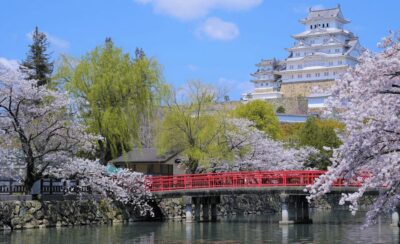
Himeji Castle, Arima Onsen & Mt. Rokko Day Tour
Read our review →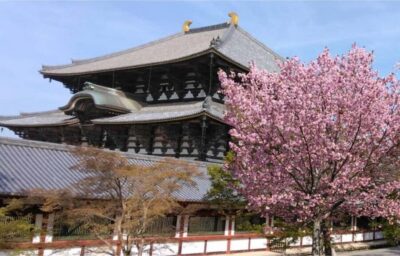
Nara and Uji Day Trip with Deer Park and Hot Spring
Read our review →
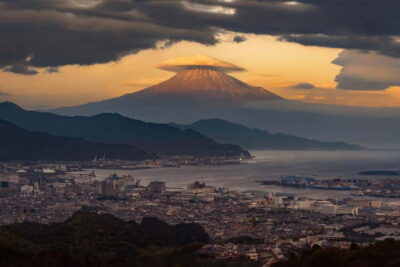
Private Tour to Fuji/Hakone – Onsen, Art, Nature
Read our review →
Mt. Fuji, Hakone Private Tour from Tokyo – Onsen, Arts and Nature
Read our review →
From Fukuoka: Mount Aso, Kurokawa Onsen, and Shrine Tour
Read our review →
Private Nagano 1-Day Tour:Snow Monkeys,Zenko-ji,Obuse,Sake,Onsen
Read our review →Other lists this one is on