
REVIEW · OSAKA
Osaka Temple :Warm Bamboo Oil Massage – Deep Restore〈90min〉
The unusual part here is the setting: you receive a full-body oil massage with warm bamboo and myofascial release inside an Osaka temple. The treatment is paired with incense, meditation, a yukata, matcha, and Japanese sweets, so this feels like a small cultural program as much as a spa appointment.
I like the calm, carefully paced welcome, and I like that the tea ceremony explains the meaning behind what you are doing instead of treating matcha as a quick photo prop. The main consideration is timing: the booking lasts two hours, while the massage portion is listed as 90 minutes, so this is not a two-hour massage.
Key Points
- Warm bamboo massage: Bamboo tools and hands are used with oil for full-body work and myofascial release.
- Temple setting: Incense offering, bell meditation, and kneaded incense give the visit a quiet ritual shape.
- Cultural extras: You change into a simple yukata, learn about Japanese worship customs, and take a smartphone photo.
- Matcha and sweets: The tea ceremony includes cultural and historical explanation, plus original Japanese sweets.
- Small group size: Sessions are limited to three people, though meditation may be shared unless you request private treatment.
- Practical value: The $129 price covers massage, temple activities, tea, clothing, and photos, not just bodywork.
A Temple Visit That Begins With the Body
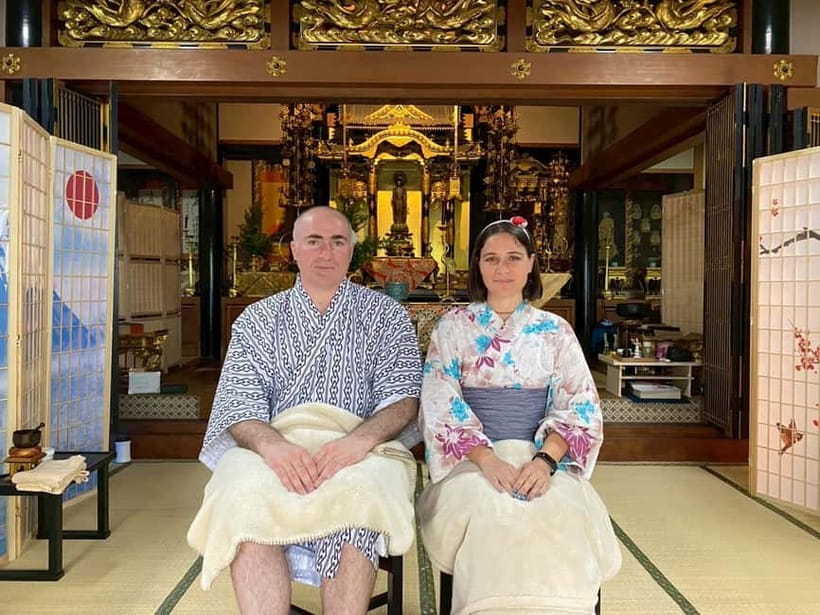
Many Osaka spa treatments focus on the massage and little else. This experience takes a different route. You arrive at a temple, change into a simple yukata, and move through a gentle sequence of worship, meditation, foot care, massage, and tea.
That order matters. You are not expected to walk in, drop onto a massage table, and switch off at once. The incense and bell help mark a change from sightseeing to rest. The temple introduction also gives you a basic explanation of Japanese worship culture, which makes the setting feel more meaningful than a decorative backdrop.
The treatment itself is called Warm Bamboo Oil Massage, Deep Restore. It combines oil massage with warm bamboo and myofascial release. Bamboo can provide a firm, smooth pressure different from hands alone, while the oil allows long strokes across the body. The experience description also explains reiki as a non-contact Japanese energy practice intended to support relaxation and emotional balance. If that element matters to you, ask how it fits into your particular session, since the listed sequence focuses mainly on massage, meditation, and temple activities.
More Full Body Massages in Osaka:
- Osaka Temple :Warm Bamboo Oil Massage – Deep Restore〈60min〉
★ 4.9 · 19 reviews - Osaka Reiki Healing and Aroma Massage At The Temple<120min>
★ 5.0 · 2 reviews - Body Massage Experience in Ubud Traditional Spa
★ 5.0 · 3,506 reviews
What Happens During the Two Hours
The full appointment lasts two hours. The massage and foot treatment are listed as 90 minutes, with the remaining time used for arrival, changing, temple activities, and tea.
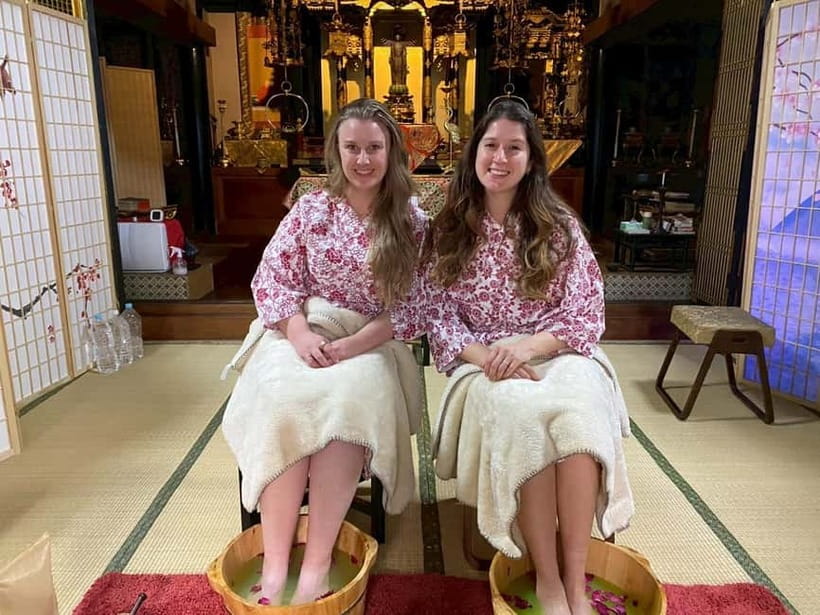
You begin with a welcome drink and change into a simple yukata. This is a practical part of the experience, not only a costume moment. Changing clothes helps separate the appointment from the rest of your day, and the loose garment suits the relaxed pace.
Next comes the temple visit. You make an incense offering and receive an introduction to the temple’s background and Japanese worship customs. You do not need to arrive with religious knowledge. The point is to explain what you are doing and why, so the ceremony feels respectful rather than staged.
The meditation includes a bell and kneaded incense. These small sensory details give the session a clear rhythm. The bell marks the shift into silence, while the scent of incense helps hold your attention. Zen meditation may be shared with other people unless you request a private arrangement, so do not assume that every moment will be completely solitary.
Foot Bath, Scrub, and Warm Bamboo Work
The hands-on treatment starts with a foot bath and scrub massage. This is a useful transition after walking around Osaka, especially if your day has included a lot of city sightseeing. It also gives the treatment a gradual start instead of moving straight into firm bodywork.
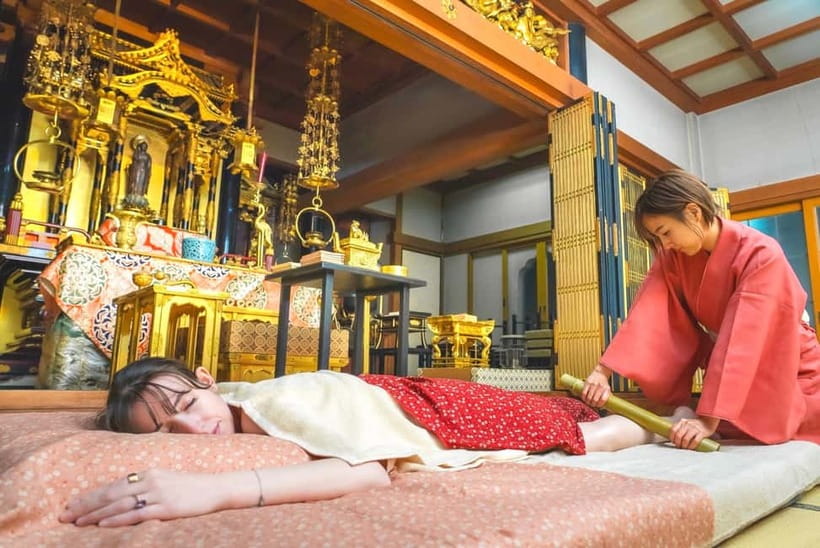
The main massage uses oil, hands, and warm bamboo. The listed focus includes full-body work and myofascial release, so the treatment is intended to feel restorative rather than purely light and cosmetic. Warm bamboo can give the masseuse a way to apply steady pressure across larger areas, while hand massage allows more detailed work.
You should tell the practitioner what kind of pressure you prefer. The information provided does not promise a particular pressure level, and bodies respond differently to myofascial techniques. If you want a gentle session, say so at the start. If you are seeking firmer work, explain that too.
Arisa is one of the masseuses associated with the experience, and her treatment style has been described as both talented and calming. You may not receive Arisa specifically, so treat her name as useful information rather than a guarantee. The staff are women, and the overall approach is presented as warm and personal.
The massage is the strongest reason to book if you want physical relaxation. The temple and tea elements make the appointment more memorable, but they do not replace the bodywork. If your only aim is a long massage, a standard spa may offer more treatment time for less money.
Matcha, Sweets, and a Lesson in Japanese Hospitality
After the massage, the tea ceremony gives the experience a second act. You receive matcha and original Japanese sweets, with an explanation of the ceremony’s cultural and historical background.
This is more than a drink break. Matcha preparation has a set rhythm, and the explanation helps you notice the small movements and objects involved. You do not need to know tea etiquette in advance. The activity is designed as an introduction, not an examination.
The sweets are part of the presentation and help balance the bitter matcha. This section will suit you if you enjoy learning through food and ritual. It may feel less important if you prefer to spend every minute on massage, but the tea ceremony is what gives this appointment its cultural character.
I particularly like the contrast between the massage and the tea. The first part asks you to let your body go soft. The second asks you to pay attention to small details. That change keeps the experience from becoming one long passive treatment.
A few more spa visits around Osaka worth a look
- From Osaka: Himeji Castle, Arima Onsen & Mt. Rokko Day Tour
★ 4.6 · 339 reviews - Osaka: Solaniwa Onsen Hot Spring Visit
★ 4.6 · 51 reviews - Himeji Castle, Arima Onsen & Mt. Rokko: 1-Day Bus Tour from Osaka
★ 4.0 · 28 reviews - Osaka Temple Head Spa &Matcha Facial – Refresh & Glow〈90min〉
★ 5.0 · 24 reviews
The Yukata Photo and the Temple Atmosphere
The yukata photo is included as a smartphone keepsake. It is a simple touch, but it gives you something tangible to take away besides the memory of a relaxed afternoon.
Keep your expectations realistic. This is a complimentary smartphone photo, not a professional portrait session. The value is in recording the setting and the yukata, not in receiving a styled photo shoot.
The temple atmosphere does much of the work here. Incense, quiet meditation, traditional clothing, tea, and sweets create a setting that feels distinctly Japanese. At the same time, the experience is not a full temple tour. The temple visit is part of the treatment sequence, with an introduction to its history and worship culture rather than an extended sightseeing program.
Is $129 a Fair Price?
At $129 per person, this is not a budget massage. The price makes more sense when you count the whole package: a 90-minute treatment, foot bath and scrub, welcome drink, yukata, incense offering, meditation, matcha, Japanese sweets, cultural explanation, and smartphone photos.
For a couple, the experience can work well as a shared break from sightseeing. One couple described booking it together as a relaxing part of their trip, and the small group limit helps keep the mood personal. For a solo visitor, the appointment offers a structured way to experience several Japanese customs without arranging separate activities.
The value depends on what you want. I would call it good value for a cultural wellness experience, but only fair value for massage alone. You are paying for the setting, teaching, hospitality, and sequence as well as the bodywork.
The perfect audience is someone who wants a calm cultural activity with hands-on treatment. It is less suited to someone looking for a clinical therapy appointment, a long luxury spa session, or a large temple tour.
Finding the Correct Meeting Point
Pay close attention to the meeting instructions. When using Google Maps, search for Japanese Massage -the one&only- rather than the temple name. Entering the temple name may take you to the back entrance, where it is easy to get lost.
If you cannot find the location, search for the restaurant Tossa de coracao. The meeting point is right next to it. This is exactly the sort of small Osaka detail that can save you from starting a relaxing appointment in a mild panic.
The provider is japanese massage 唯一無二 -the one&only-. Instruction is available in English and Japanese. The group is limited to three participants, but meditation can be shared with other people unless you request a private experience.
Reservations for three people are available by email. If you are booking for that number, arrange it directly rather than assuming the standard booking path will handle the group automatically.
Who Will Enjoy This Most?
I would recommend this to you if you:
- Want a quiet break during a busy Osaka itinerary
- Enjoy Japanese food, tea, clothing, and customs
- Prefer small groups to large organized tours
- Want a massage in a setting with cultural meaning
- Are comfortable with a mixed program rather than nonstop treatment
- Like having a simple photo to remember the experience
Couples are a natural fit, especially if you want an activity you can share without spending the whole day on your feet. Solo visitors should also find the format manageable, with English and Japanese instruction available.
This may not be right for you if you dislike oil massage, do not want to change into a yukata, or prefer complete privacy. Meditation may be shared, and the two-hour visit includes several non-massage sections. You should also speak with the practitioner before treatment if you have concerns about pressure or myofascial work.
The experience has received a perfect 5 rating from 14 verified bookings, and the most consistent strengths are clear: the massage, the kindness of the staff, the calm atmosphere, and the tea ceremony. One person enjoyed it enough to return to the temple for another treatment and book a facial for the following day. That suggests the setting is not simply a one-time photo stop. For some people, it becomes a place they want to revisit.
Booking Flexibility and Timing
You can cancel up to 24 hours in advance for a full refund. A reserve-now, pay-later option is also available, which helps if your Osaka schedule is still shifting.
Starting times depend on availability. Since the activity lasts two hours, leave enough space before your next reservation. Rushing from the tea ceremony to a dinner booking would undercut the whole point.
If you are traveling with two other people, contact the provider about the three-person reservation. If privacy matters, request a private meditation arrangement before you arrive rather than assuming it is automatic.
Should You Book the Osaka Temple Massage?
Book it if you want a peaceful cultural experience built around a real massage, not just a quick temple visit or a standard spa appointment. The combination of warm bamboo bodywork, meditation, incense, yukata, matcha, sweets, and a small group gives you a lot in two hours.
Skip it if you want the longest possible massage for your money, or if you prefer a fully private and purely therapeutic setting. For everyone else, the $129 price is reasonable when you value the cultural instruction and thoughtful pacing. Follow the meeting-point directions carefully, request the pressure you want, and allow the full two hours. This is best enjoyed as a slow reset in the middle of an active Osaka trip.
FAQ
How long does the Osaka Temple massage experience last?
The full activity lasts two hours. The included massage and foot treatment are listed as 90 minutes, with the remaining time used for the welcome, changing, temple activities, meditation, and tea ceremony.
What is included in the massage?
The treatment includes a foot bath, scrub massage, warm bamboo work, hand massage, oil massage, and myofascial release.
Is the massage full-body?
Yes. The experience includes a full-body oil massage using hands and warm bamboo.
Is a yukata provided?
Yes. A simple yukata is included, and you change into it during the experience.
Is meditation private?
Not necessarily. Zen meditation may be shared with other participants unless you request a private experience.
Is matcha included?
Yes. The experience includes a traditional Japanese tea ceremony with matcha, original Japanese sweets, and cultural and historical explanation.
Can I receive instruction in English?
Yes. Instruction is available in English and Japanese.
How many people are in each group?
The experience is limited to three participants. Reservations for three people are available by email.
Where should I go for the meeting point?
Search Google Maps for Japanese Massage -the one&only-. Do not search only for the temple name, since that may take you to the back entrance. You can also search for the restaurant Tossa de coracao, which is right next to the meeting point.
Can I cancel for a refund?
Yes. You can cancel up to 24 hours in advance for a full refund. A reserve-now, pay-later option is also available.
Just added around Osaka
- Solaniwa Onsen: Osaka Bay Tower★ 5.0 · 4 reviews
- Private Car Day Trip to the Kobe Mountains, Gardens and Hot Springs from Osaka★ 4.5 · 16 reviews
- Osaka:Bamboo Healing Massage at the Temple <90-min>★ 5.0 · 9 reviews
- Kobe Night View Mt Rokko Kitano Ijinkan Arima Onsen Day Trip★ 5.0 · 5 reviews
- Osaka Reiki Healing and Aroma Massage At The Temple<120min>★ 5.0 · 2 reviews
- Osaka: Nara, Todaiji, Uji Matcha, and Hot Spring Tour★ 4.0 · 7 reviews
- ZEN therapy | Shiatsu-style massage, EnergyTherapy & Japanese Tea★ 5.0 · 5 reviews
- Osaka: Tennen Onsen Naniwa-no-Yu, the famous hot spring spa★ 4.7 · 19 reviews
More spa days in Osaka.
Himeji Castle, Arima Onsen & Mt. Rokko Day Tour
Read our review →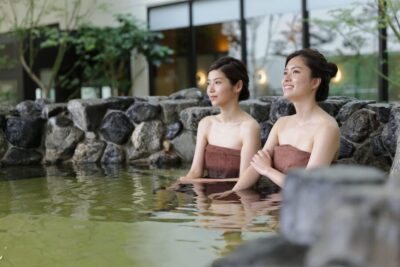
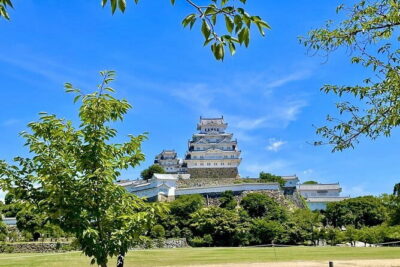
Himeji Castle, Arima Onsen & Mt. Rokko: 1-Day Bus Tour from Osaka
Read our review →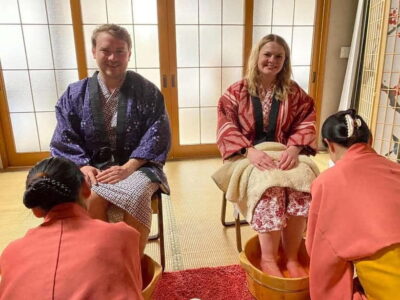
Osaka Temple Head Spa &Matcha Facial – Refresh & Glow〈90min〉
Read our review →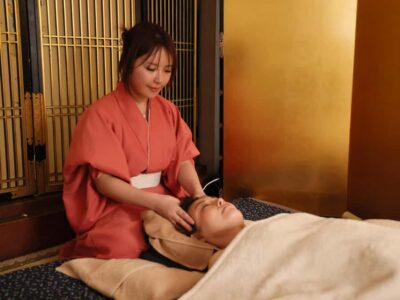
Osaka Temple :Warm Bamboo Oil Massage – Deep Restore〈60min〉
Read our review →
Tennen Onsen Naniwa-no-Yu, the famous hot spring spa
Read our review →
Private Car Day Trip to the Kobe Mountains, Gardens and Hot Springs from Osaka
Read our review →
Japanese Zen Massage and Facial at the Temple/180-min
Read our review →Other lists this one is on