
REVIEW · KATHMANDU
5-Day Annapurna Base Camp Trek with Natural Hot Springs
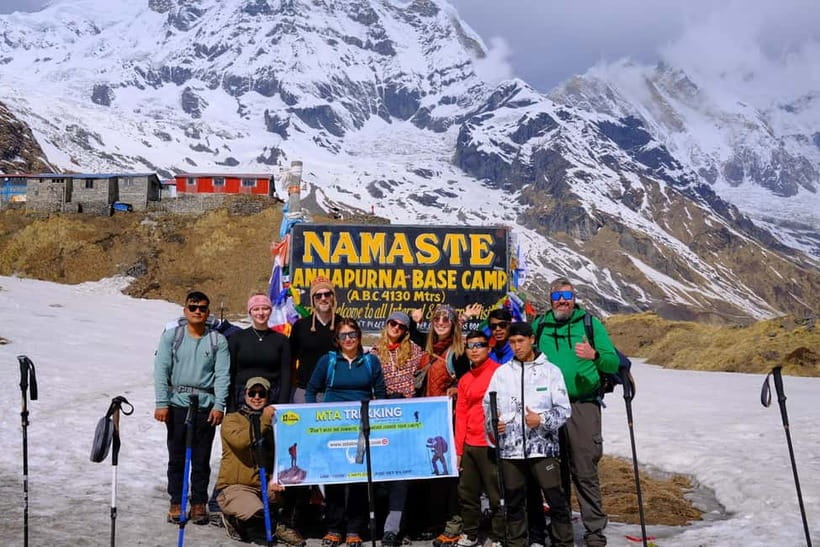
Annapurna Base Camp is the prize here: after days of forest trails, stone steps, villages, and rising mountain walls, you reach a high bowl at 4,130 meters. The five-day plan moves quickly, but it gives you a real Himalayan walk without committing to a two-week circuit.
I like the mix of Gurung village life and changing scenery, from terraced fields to alpine ground. I also like the practical setup: private transport, permits, tea-house lodging, guide service, and luggage storage in Pokhara are included. The tradeoff is the pace. Reaching base camp in five days means long walking days and limited time to adjust to altitude, so this is not a casual stroll.
Key points to know before booking
- Annapurna Base Camp at 4,130 meters: The high point is reached on day three, with Machhapuchhre Base Camp along the way.
- Natural hot springs at Jhinu: You can stop for an optional soak on the return journey.
- Private five-day format: Transport and guiding are arranged for your private group rather than a large shared party.
- Gurung villages and tea houses: The route gives you contact with local mountain communities and simple overnight lodging.
- Fast but achievable schedule: Walking days run about four to six hours, though terrain and altitude make the effort greater than the times suggest.
- $320 per person: The price covers core trekking services, but food, porter hire, drinks, showers, Wi-Fi, insurance, and rescue need careful checking.
Why Annapurna Base Camp makes a strong five-day trek
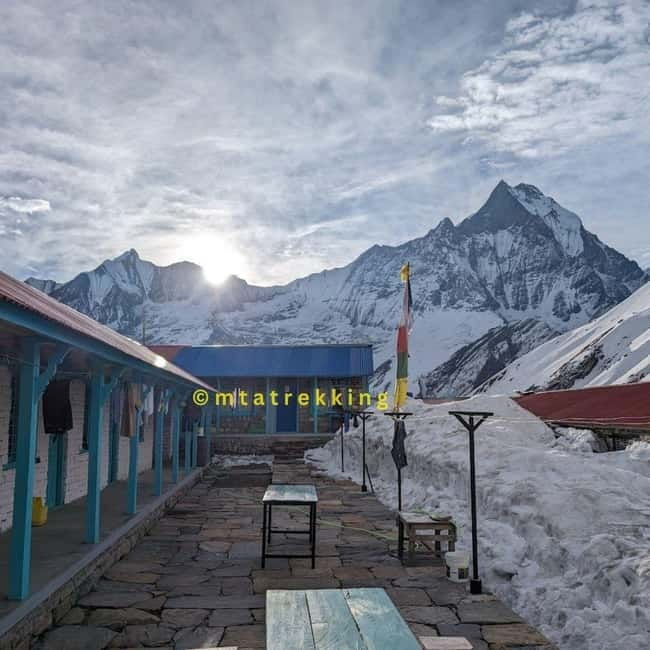
This route gives you a clear goal each day. You start near Pokhara, walk into the hills, pass through forest and village country, and finish among the high peaks of the Annapurna Massif. The scenery changes often enough to keep the walking interesting.
The route is also a good introduction to Nepalese trekking culture. You stay in tea houses rather than isolated camps, and you pass through traditional Gurung communities. That means your experience is not only about taking mountain photographs. You see how people live along a trail shaped by farming, tourism, and daily foot traffic.
Still, five days is a brisk timetable. The plan reaches Annapurna Base Camp on day three, then returns to Bamboo on day four. You should arrive with a reasonable level of fitness and a willingness to walk uphill for several hours at a time.
More Hot Springs in Nepal
- POON HILL HOT SPRING – 10 Days Trek
★ 5.0 · 3 reviews - Lower Mustang Jomsom Muktinath Hot Spring Tour in 4 WD Jeep
★ 4.5 · 2 reviews - Pokhara: 5 Day Annapurna Base Camp Trek & Natural Hot Spring
★ 4.9 · 44 reviews
Day one: Pokhara to Lower Sinuwa through Jhinu
Your pickup begins at a hotel in Pokhara’s Lakeside area or at Pokhara International Airport. A private jeep or SUV takes about three hours toward Siwai, described as the last road point for this trip. The road transfer saves your legs for the trail, although mountain roads can be tiring in their own way.
From the road end, you begin walking toward Sinuwa. The trek takes roughly five to six hours, depending on the exact pace and route. The trail passes through Jhinu, a well-known stopping point because of its natural hot springs.
Jhinu is more than a name on the schedule. It gives you an early taste of the route’s blend of walking and rest. The hot springs are listed as an optional stop, and the return-day plan also includes time for them. Since the first day already includes a long drive and a substantial hike, ask your guide whether a soak fits comfortably into your timing.
Lower Sinuwa sits at about 2,300 meters. Your overnight tea house is a simple mountain base, not a resort. Tea-house rooms and facilities can be basic, and hot showers, Wi-Fi, laundry, mineral water, and drinks cost extra. Bring cash for these small purchases because personal expenses are not covered.
The best part of day one is the gradual change from Pokhara’s lakeside setting to a quieter mountain route. You may see terraced fields, forest, and village life without having to wait several days for the setting to feel remote.
Day two: Sinuwa to Deurali through changing forest
Day two is listed at about six hours and takes you to Deurali at approximately 3,200 meters. This is the day when the trip begins to feel more like a serious Himalayan trek. You gain height, the air becomes cooler, and the trail moves through more rugged country.
The route is valuable because it does not offer only one kind of view. You pass through dense forest and open sections, with mountain scenery appearing as the route gains elevation. Your guide can help you read the pace of the day and decide when to stop for food, water, photographs, or rest.
Deurali is a scenic overnight point, but the altitude deserves attention. The itinerary gives you only one night between Sinuwa and base camp, so pay attention to headache, nausea, unusual tiredness, or poor coordination. Altitude sickness is described as uncommon here, but it remains possible at this elevation and becomes more relevant before the next day’s climb.
You should not treat the four to six-hour estimates as a promise of easy walking. Trail conditions, uphill sections, weather, and your group’s pace all affect the day. Comfortable shoes are essential, and clothing that can handle both warm lower sections and cold high ground is more useful than one heavy outfit.
Day three: Deurali to Machhapuchhre Base Camp and Annapurna Base Camp
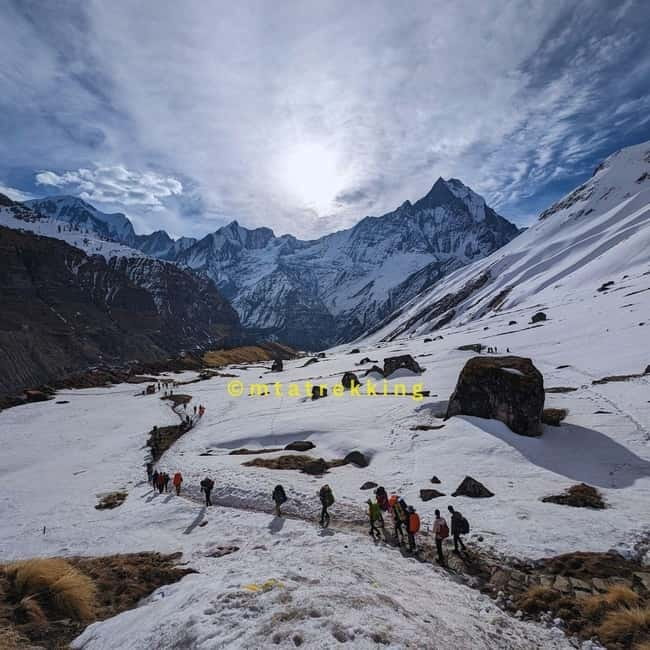
This is the main event. The walk from Deurali to Annapurna Base Camp takes about four hours on the stated schedule, with Machhapuchhre Base Camp on the way. The route reaches 4,130 meters, so the short time estimate does not mean the day is effortless.
Machhapuchhre, also called Fishtail, is one of the visual highlights of the approach. The detour to its base gives you a different view of the peak before the trail continues toward Annapurna Base Camp. At the final destination, you are surrounded by the Annapurna peaks rather than simply looking at them from a distant viewpoint.
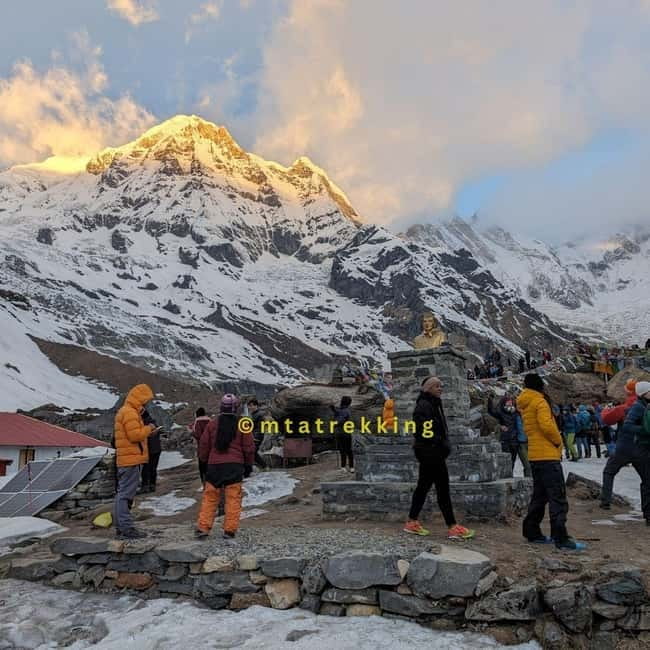
Plan to take your time at base camp. The stop includes photographs, guided sightseeing, overnight lodging, and sunset views. The early morning light is especially important. One guest described sunrise at base camp in front of Annapurna South as unforgettable, and the schedule includes sunrise as part of the stay. If the weather is clear, this is the moment that justifies the demanding pace.
The high point also brings the trip’s main risk. Cold, wind, clouds, and altitude can affect how long you want to stay outside. Listen to your guide if conditions change, and do not force yourself to continue if you feel unwell. The trip is designed to be achievable for a range of trekkers, but that does not remove the need for preparation.
More Hot Springs in Kathmandu:
- Santorini: Volcanic Islands Cruise with Hot Springs Visit
★ 4.4 · 10,869 reviews - Bali: Mount Batur Sunrise Guided Hike and Natural Hot Spring
★ 4.8 · 9,284 reviews - Reykjavik: Sky Lagoon Entrance Pass With 7-Step Spa Ritual
★ 4.8 · 6,166 reviews - Krabi: Tiger Cave Temple, Emerald Pool and Hot Springs Tour
★ 4.8 · 3,616 reviews
Day four: Annapurna Base Camp down to Bamboo
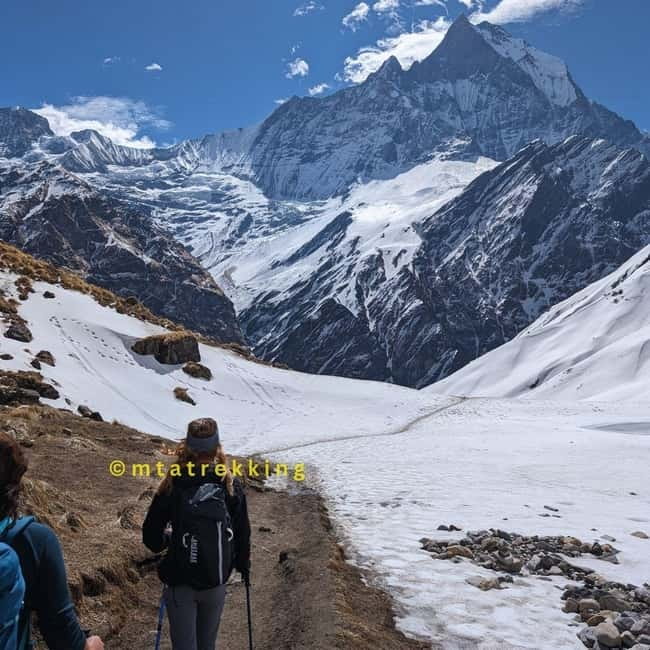
After the sunrise and morning views, you descend to Bamboo, around 2,400 meters. The listed walking time is about six hours. Descending does not always feel easy. Knees and ankles take more strain on steep downhill paths, especially after the previous day’s high-altitude effort.
The reward is a major drop in elevation and a more comfortable sleeping height. Bamboo provides a welcome change after the colder, more exposed conditions near base camp. Your tea-house night here includes time for rest, food, photographs, and the surrounding scenery.
This is also where the trip’s schedule shows its compressed nature. You reach base camp, enjoy the high-altitude stop, and then make a long descent the next day. If you prefer slow mornings and extra acclimatization, a longer Annapurna Base Camp itinerary may suit you better. If your holiday time is limited, this five-day design gives you the main route in a compact form.
Day five: Bamboo, Jhinu hot springs, and Pokhara
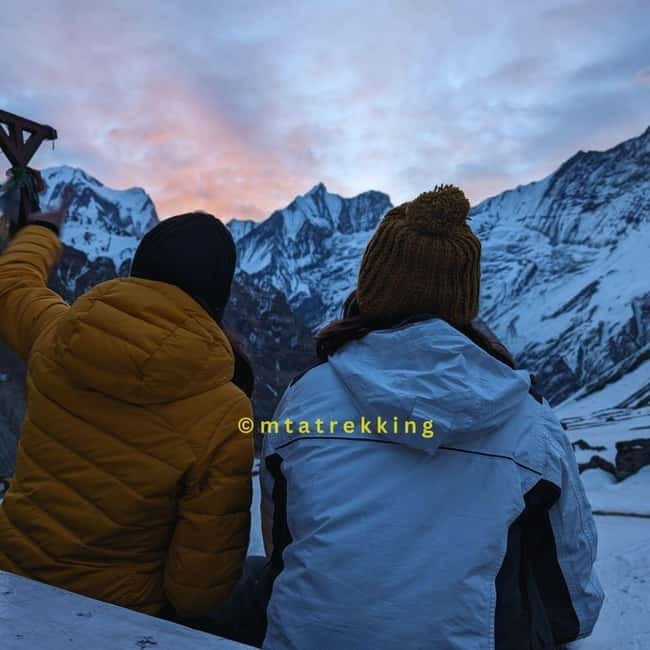
The final day takes you back toward Jhinu, followed by private road transport to Pokhara. The exact walking and driving sequence should be confirmed before departure, since the overall plan includes about three hours in a jeep or SUV after the trail.
The hot springs at Jhinu are optional. They can be a pleasant way to loosen tired legs, but you may also prefer to keep moving if the group has a tight schedule. Bring a change of clothes if you plan to use them. That item is specifically recommended for the trek and is practical here.
The return to Lakeside marks the end of the activity at the original pickup area. You do not need to arrange a separate transfer from the trailhead, and the operator also provides luggage storage in Pokhara during the trek. That is useful if you are carrying only what you need for five days.
What the $320 price covers
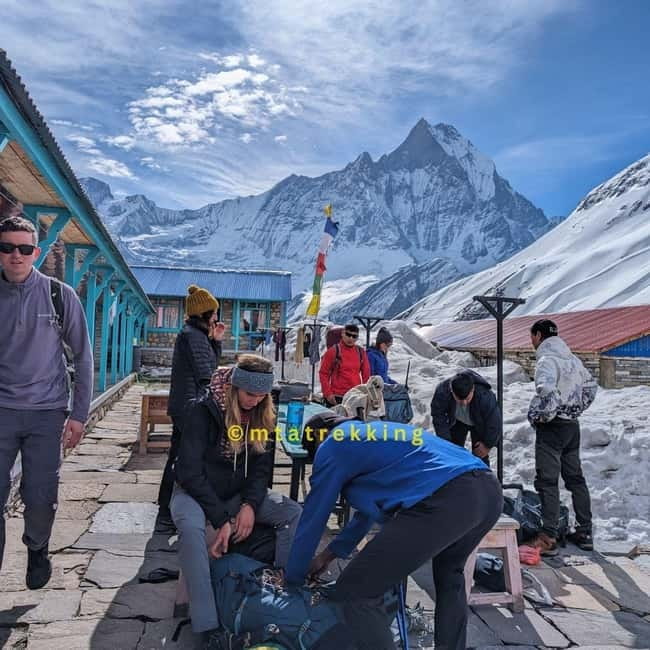
At $320 per person, this trip offers fair value if you want the main logistics handled. The price includes tea-house accommodation, private transport between Pokhara and Siwai, the return transfer, an Annapurna Conservation Area permit, government permits, TIMS, taxes, a registered trekking guide, first-aid equipment, pickup and drop-off, and luggage storage in Pokhara.
Meals require closer attention. The information says to choose the full-board option if you want meals included. Do not assume the basic price includes every breakfast, lunch, and dinner. Check the exact booking option before paying, because food on a five-day trek can add up quickly.
The listed price does not include a porter. Porter service costs $20 per day, so decide in advance whether you want that help. A porter can make the route more comfortable, particularly on the long uphill and downhill sections, but you should confirm how much luggage the service covers and how it is handled.
You also pay separately for hot showers, Wi-Fi, drinks, mineral water, laundry, and other personal costs. Rescue and insurance are excluded. Insurance is not an optional luxury for a high-altitude trek. Arrange coverage that specifically includes trekking at 4,130 meters and understand how emergency evacuation works before you go.
The guide and the private-group advantage
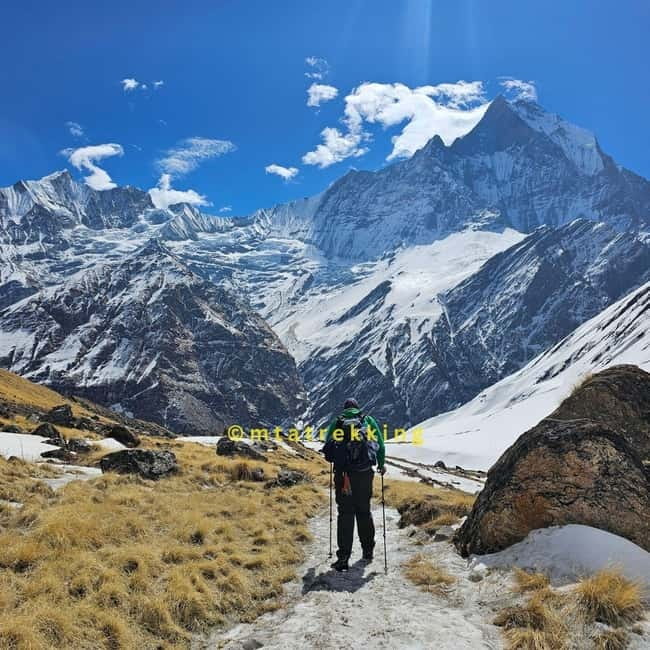
The activity is offered with a live English-speaking guide and a private group. That matters on a route where walking speed, rest stops, and response to altitude can vary widely. A private format lets you discuss the pace directly instead of matching a large group’s timetable.
One guide named in the supplied feedback is Ramit, who was praised for explaining the natural features, handling travel times, and allowing sensible rest along the route. You should ask whether Ramit will lead your departure, since guide assignments can vary.
A registered guide is useful for more than navigation. You can ask about Gurung culture, village life, trail conditions, weather, and when to slow down. The experience is strongest when you use the guide as a bridge to the place rather than treating the person as someone who simply points out the next turn.
Fitness, weather, and practical preparation
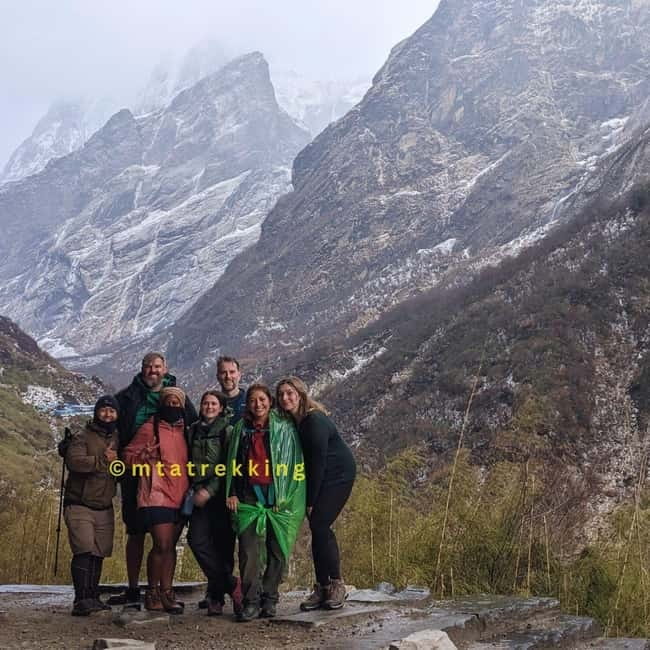
The trip is presented as suitable for beginners as well as experienced hikers, but beginner-friendly does not mean physically easy. You need to manage repeated uphill and downhill walking, several hours on your feet, and a rapid rise from low altitude to 4,130 meters.
Pack comfortable shoes with reliable grip, comfortable clothing, spare clothes, cash, and a passport or identity card. A copy of your passport or ID is accepted. You should also have clothing for changing conditions, since the route moves from warmer lower terrain to cold high country.
Monsoon season, especially June through August, brings a serious complication. Heavy rain can make trails wet and weather unpredictable. Leeches may appear on lower sections, particularly during the monsoon. Long trousers tucked into gaiters and insect repellent can help.
The activity is not suitable for pregnant women, people with mobility impairments, wheelchair users, people with visual impairments, people with altitude sickness, or people over 70. Those limits are blunt but useful. This route includes uneven mountain trails and a demanding altitude profile.
Free cancellation is available up to 24 hours before the start, and you can reserve now and pay later. Those terms help if your Nepal schedule is still shifting, but they do not replace travel insurance or medical planning.
Who should book this Annapurna Base Camp trek?
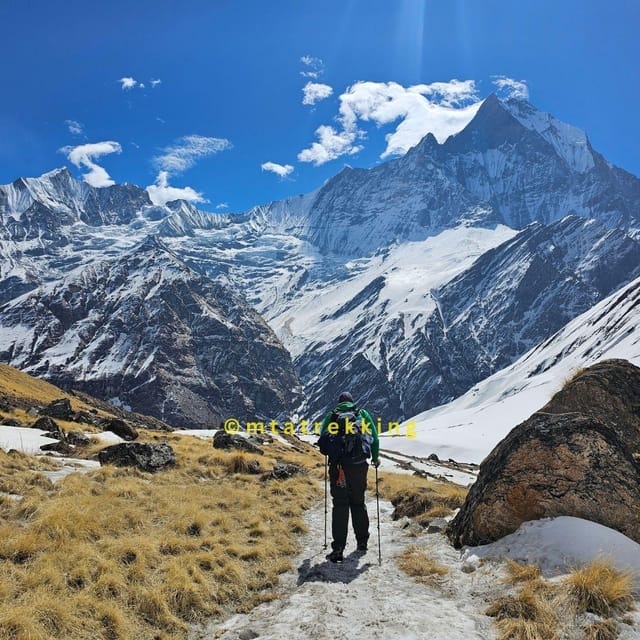
I would choose this trip if you have five days, want a private guide, and care about reaching the base camp itself rather than collecting a series of road-accessible viewpoints. The Gurung villages, tea-house nights, high mountain bowl, and optional hot springs give the trek a satisfying range.
It also suits you if you want core arrangements taken care of. Pickup, permits, transport, guiding, accommodation, and luggage storage remove several chores from your plate. The private format is another plus for couples, families with suitable fitness, and small groups of friends.
I would think twice if you dislike early starts, simple lodging, long downhill walks, or uncertain weather. I would also compare longer Annapurna Base Camp routes if you want more time to adjust to altitude. Five days is efficient, but it leaves little spare time if you feel slow or the weather disrupts the plan.
Should you book it?
Book this trek if the five-day schedule fits your strength and you want a practical, private route to Annapurna Base Camp for $320 before optional costs. The strongest features are the direct mountain goal, the changing scenery, the Gurung villages, the hot springs at Jhinu, and the support of a registered English-speaking guide.
Before confirming, ask two questions: Are all meals included in the price you are selecting, and will Ramit guide your departure? Then budget for a porter, personal drinks and showers, insurance, and possible rescue costs. If you accept the brisk pace and prepare properly for altitude, this is a focused way to reach one of Nepal’s great mountain destinations.
FAQ
How long does the Annapurna Base Camp trek last?
The activity lasts five days and four nights. It begins and ends in Pokhara, with overnight stays at Lower Sinuwa, Deurali, Annapurna Base Camp, and Bamboo.
What is the highest point on the trek?
Annapurna Base Camp is the highest point, at 4,130 meters or 13,550 feet.
Where does pickup take place?
Pickup is available from hotels and locations in Pokhara’s Lakeside area, as well as Pokhara International Airport.
Is transport included?
Yes. Private transport by jeep or SUV is included from Pokhara to Siwai and back to Pokhara. The road journey is listed at about three hours each way.
Are meals included in the price?
Meals are included only when you choose the full-board option. Check the exact option before booking.
Is tea-house accommodation included?
Yes. Tea-house accommodation is included for the overnight stops on the trek.
Is a porter included?
No. Porter service costs $20 per day and is an additional expense.
Are hot springs included?
The hot springs at Jhinu are optional. Personal expenses connected with the stop are not included.
Is the trek suitable for beginners?
The five-day plan is described as suitable for trekkers of different levels, including beginners. You still need to manage several hours of mountain walking and an ascent to 4,130 meters.
What happens if I need to cancel?
You can cancel up to 24 hours in advance for a full refund. The activity also offers a reserve-now, pay-later option.
More Five-Day Trips in Kathmandu
- From Pokhara: 5-Day Annapurna Basecamp Trek with Hot Springs
★ 4.9 · 26 reviews - Pkr/Kathmandu: 5-Day Annapurna Base Camp & Hot spring Trek
★ 5.0 · 6 reviews - Pokhara: 5-Day Trek to Annapurna Base Camp and Hot Springs
★ 5.0 · 4 reviews - Pokhara: 5-Day Annapurna Base Camp Trek with Hot Spring
★ 5.0 · 3 reviews
More Hikes and Treks in Kathmandu
- Short Day Trip Hiking with 1 Hour Spa Massage in Kathmandu
★ 5.0 · 11 reviews - 5 Days Hiking, Tour, Meditation and Yoga Retreat in Kathmandu, Nepal
★ 5.0 · 10 reviews - Ghorepani Ghandruk Wellness Yoga Trek
★ 5.0 · 3 reviews - Mount Batur Sunrise Hike and Natural Hot Spring Option
★ 5.0 · 1,927 reviews
Just added around Kathmandu
- Trekkers & Hikers Spa Package by Heritage Spa★ 5.0 · 9 reviews
- Unlimited Sauna Steam and Jacuzzi★ 5.0 · 2 reviews
- Lower Mustang Jomsom Muktinath Hot Spring Tour in 4 WD Jeep★ 4.5 · 2 reviews
- Spa and Massage Therapy for a Relaxing Experience in Avata, Kathmandu★ 5.0 · 3 reviews
- Short Day Trip Hiking with 1 Hour Spa Massage in Kathmandu★ 5.0 · 11 reviews
- Retreat day tour : Massage and Yoga★ 5.0 · 2 reviews
- POON HILL HOT SPRING – 10 Days Trek★ 5.0 · 3 reviews
- Singing Bowl Therapy + Full Body Massage at Ayurveda Health Home★ 5.0 · 2 reviews
More spa days in Kathmandu.
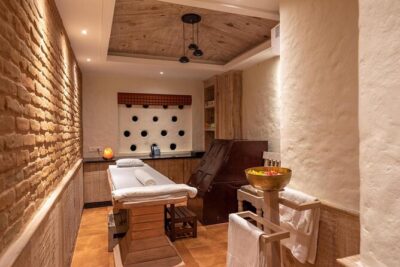
Shirodhara and Sound Healing Spa Experience in Kathmandu
Read our review →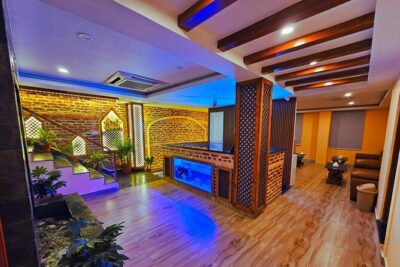
6 Hours Spa Package in Kathmandu (Massage, Sauna, Steam, Jacuzzi)
Read our review →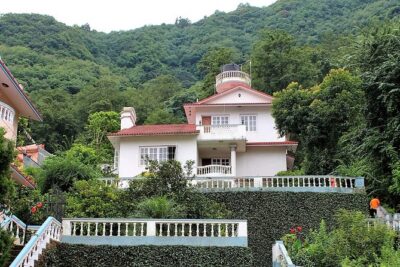
21 days Himalayan yoga retreat in Nepal in Kathmandu
Read our review →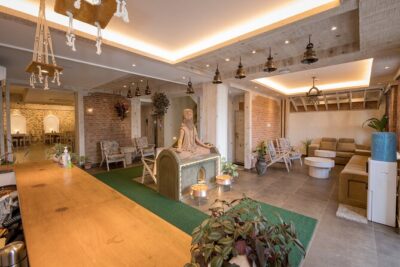
10 Days Ayurveda & Yoga Retreat in Kathmandu, Nepal
Read our review →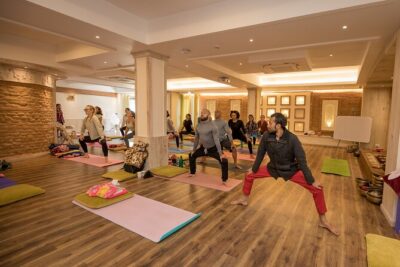
21 Day Ayurveda & Yoga Retreat in the Himalayan country, Nepal
Read our review →
29 Day Ayurveda & Yoga Retreat in Kathmandu, Nepal
Read our review →
Other lists this one is on