
REVIEW · NEPAL
Pokhara: 7-Day Annapurna Base Camp Via PoonHill & Hot Spring
The big draw here is the rare combination of Poon Hill sunrise and Annapurna Base Camp in one compact seven-day route. You rise through rhododendron forest, pass mountain villages, reach 4,130 meters, then finish with a long soak at Jhinu Dada Hot Spring.
I like the route’s variety: sunrise from Poon Hill gives you a dramatic early payoff, while ABC provides the trek’s real high-altitude goal. I also like the practical setup, with private groups, hotel pickup, permits, meals on the full package, and jeep transfers included.
The catch is the pace. You have several six-hour trekking days, a high point of 4,130 meters, and steep sections on both ascent and descent. This is a serious trek, not a gentle sightseeing walk, and a porter costs extra.
Key points to know before booking
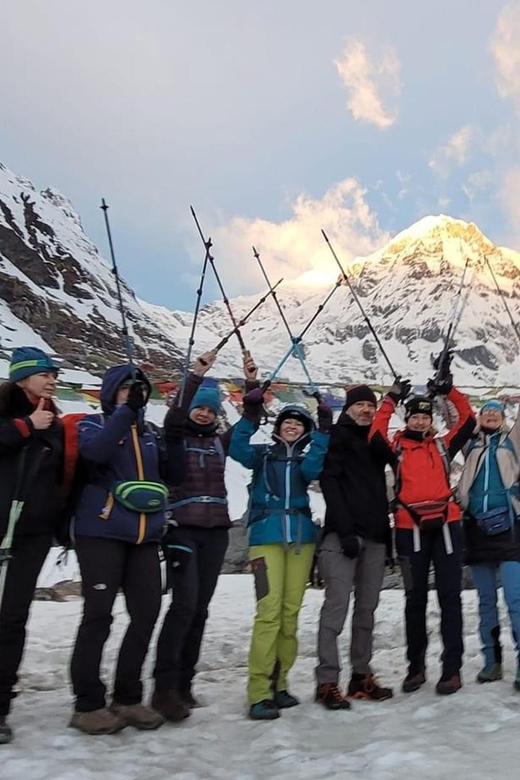
- Poon Hill at 3,210 meters: Start early for sunrise and views of the Annapurna range.
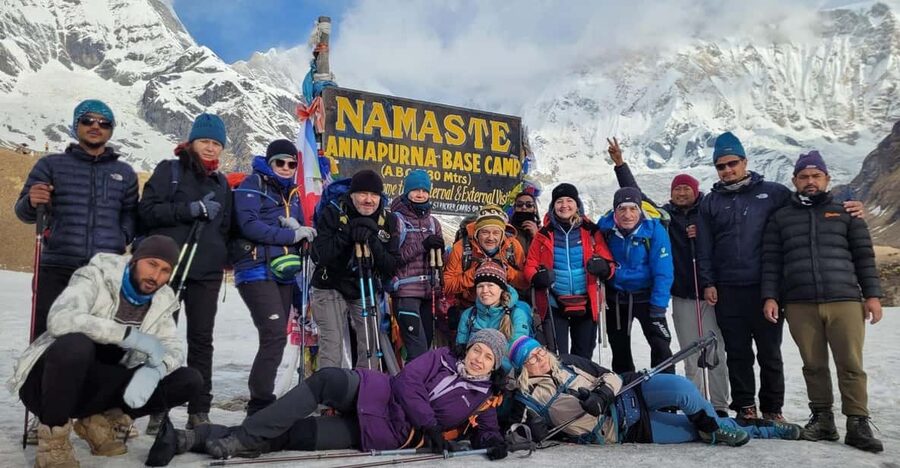
- Annapurna Base Camp at 4,130 meters: The main achievement comes after several demanding walking days.
- A private seven-day schedule: The route suits you if your time is limited but you want two famous Annapurna viewpoints.
- Jhinu Dada Hot Spring: Finish with about two hours in natural hot water before returning to Pokhara.
- Guide-led mountain travel: English, Hindi, and Nepali are available, with guides such as Mahesh and Prakash named among the team members.
- $267 per person: The price includes permits, accommodation, transport, guide costs, and meals on the full package, but not a porter or personal expenses.
Why this Pokhara to ABC route works
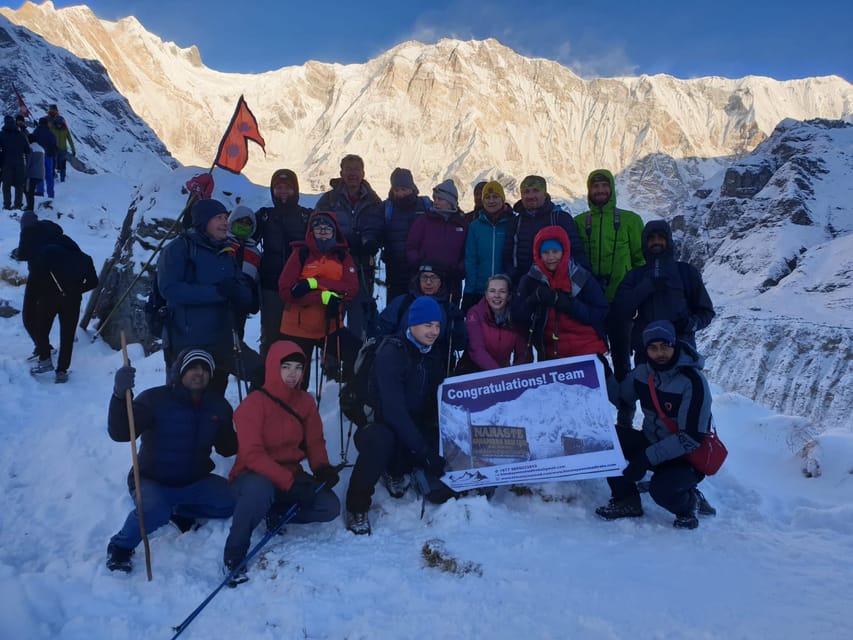
This trek gives you two very different rewards. Poon Hill is a sunrise viewpoint reached near the start, while Annapurna Base Camp is the main mountain destination reached after days of walking.
That order matters. You get an early taste of high mountain scenery, then continue into the Modi River valley toward the base camp. The route also avoids ending at the highest point. After ABC, you descend to Bamboo and then Jhinu, where hot water offers a welcome finish.
At 4,130 meters, ABC is high enough to demand respect. The itinerary does not present the trek as easy, and it should not be treated that way. You need comfortable shoes, warm clothing, sunglasses, sunscreen, trekking gear, and a sleeping bag.
The private-group format is useful here. A guide can adjust the pace within the planned route, and the named guides have received especially strong praise for answering questions, caring for trekkers, and adapting the route to individual ability and expectations. Mahesh and Prakash are two names connected with the guiding team, while porters Bishal, Avinesh, and Sujal have also been singled out for their help and company.
More Hot Springs in Nepal
- Pokhara: 5 Day Annapurna Base Camp Trek & Natural Hot Spring
★ 4.9 · 44 reviews - From Pokhara: 5-Day Annapurna Basecamp Trek with Hot Springs
★ 4.9 · 26 reviews - Pokhara: 7-Day Annapurna Base Camp Trek & Natural Hot Spring
★ 5.0 · 11 reviews
Day 1: Pokhara to Ulleri and Ghorepani
Your first day combines a long jeep ride with a substantial walk. From Pokhara, you drive to Nayapul, then continue by four-wheel-drive jeep through small villages, beside streams, and into rhododendron forest.
The drive to Ulleri takes about three hours. This saves you from starting the trek lower down, but mountain roads can make the transfer feel like part of the adventure. Once at Ulleri, you walk for about four hours to Ghorepani, at 2,840 meters.
Ghorepani is a practical overnight stop and an important staging point for Poon Hill. Accommodation is in a tea house, where you can rest before the pre-dawn start. The first day is not the hardest day of the route, but the mix of driving and uphill walking can still leave your legs tired.
Keep your jacket, water, and headlamp or flashlight easy to reach. The morning departure for Poon Hill comes quickly, and you will not want to unpack your entire bag in a cold room.
Day 2: Poon Hill sunrise, Tadapani, and Chuile
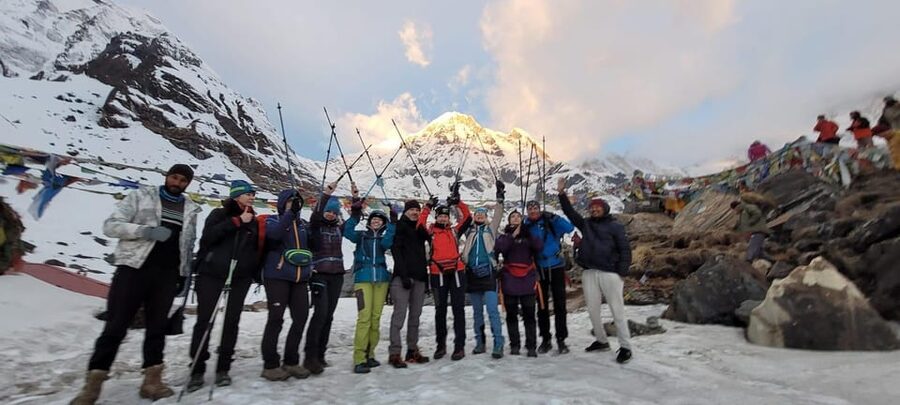
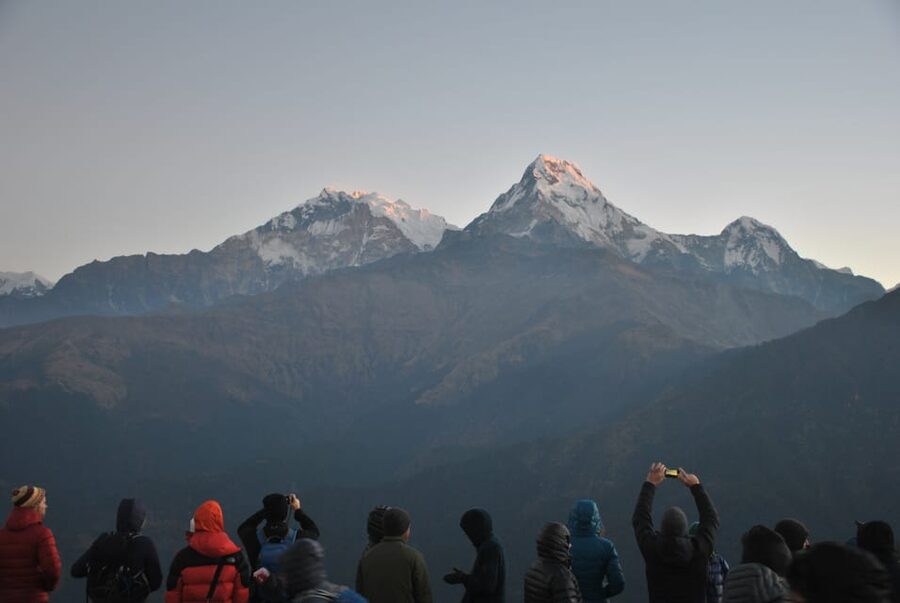
This is one of the most memorable days because it begins with the trek’s classic view. You climb from Ghorepani to Poon Hill at 3,210 meters for sunrise and mountain scenery, then return for breakfast before continuing toward Tadapani and Chuile.
The early climb is short compared with the rest of the day, but the hour and altitude add effort. The reward is a broad view of the Annapurna range and surrounding peaks. Clear weather matters, of course, so the sunrise is not guaranteed to be dramatic every morning.
After breakfast, the route descends and continues through forest toward Tadapani and Chuile. The full walking time is about six hours. This is a day of changing direction and changing scenery: uphill before sunrise, downhill afterward, then onward through woodland and village paths.
You stay in a hotel in Chuile. The lower altitude, about 2,400 meters, gives you some relief after Poon Hill. Still, do not mistake the descent for an easy day. Downhill walking can be hard on knees, especially after the early climb.
Day 3: Chuile to Sinuwa beside the rivers
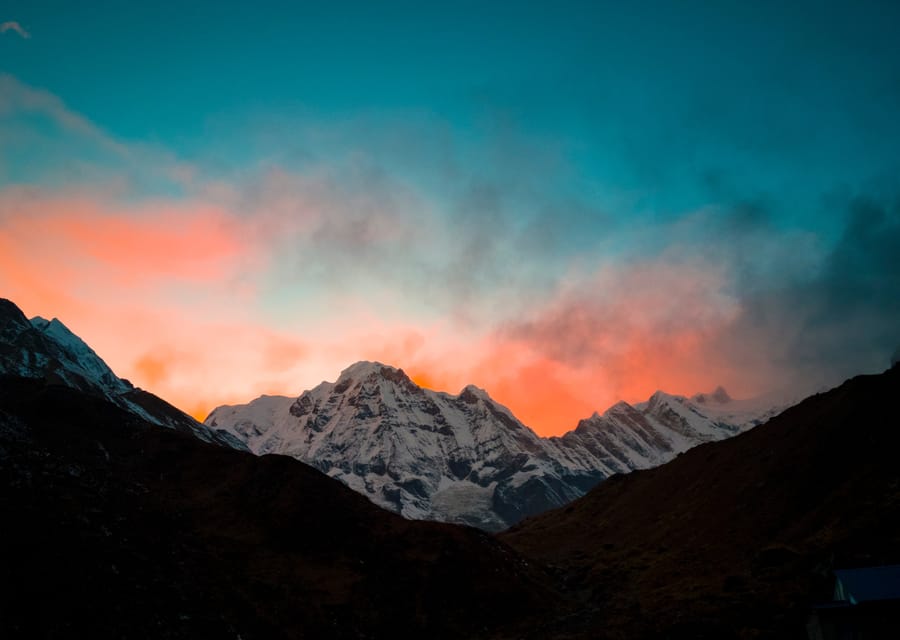
The third day points directly toward Annapurna Base Camp. You walk toward Sinuwa, crossing the meeting point of the Kumrung and Modi Rivers and spending much of the day near the water.
The route takes about five hours. Compared with the previous and following days, this is a shorter walking day, which helps the route build toward the higher sections ahead.
The river setting gives the trek a different mood. You are no longer simply moving between mountain villages and viewpoints. The water becomes a steady guide through the valley, while the route gradually brings you closer to the high country.
Sinuwa sits at about 2,170 meters. That lower overnight altitude is useful before the next two days, when you climb toward Deurali and then ABC. You should still pace yourself, eat properly, and follow your guide’s advice. The route ahead becomes more demanding as the air gets thinner.
Same place, a different way to unwind:
- Whole Day Massage & Spa With Lunch
★ 5.0 · 54 reviews - Shirodhara and Sound Healing Spa Experience in Kathmandu
★ 5.0 · 52 reviews - 6 Hours Spa Package in Kathmandu (Massage, Sauna, Steam, Jacuzzi)
★ 5.0 · 43 reviews - 21 days Himalayan yoga retreat in Nepal in Kathmandu
★ 5.0 · 28 reviews
Day 4: Sinuwa through Dovan to Deurali
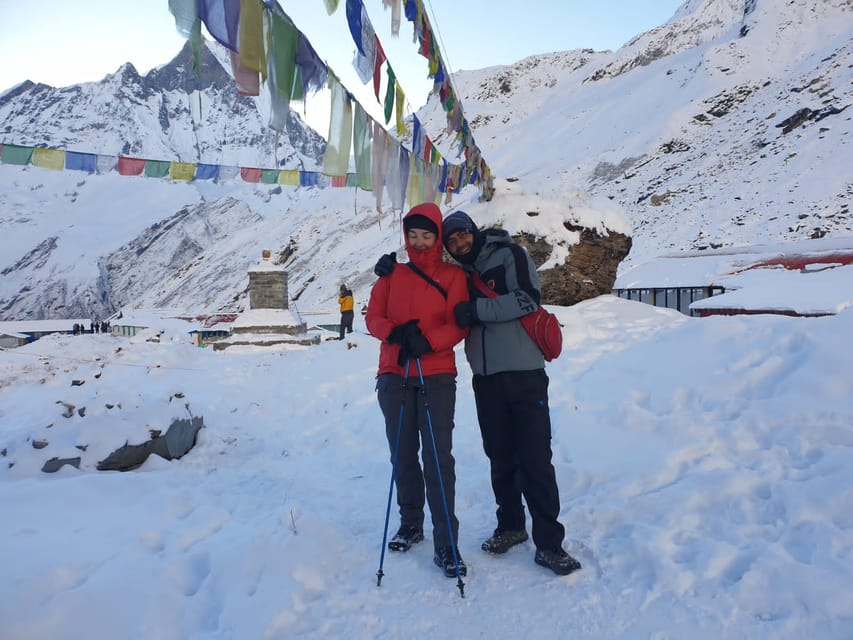
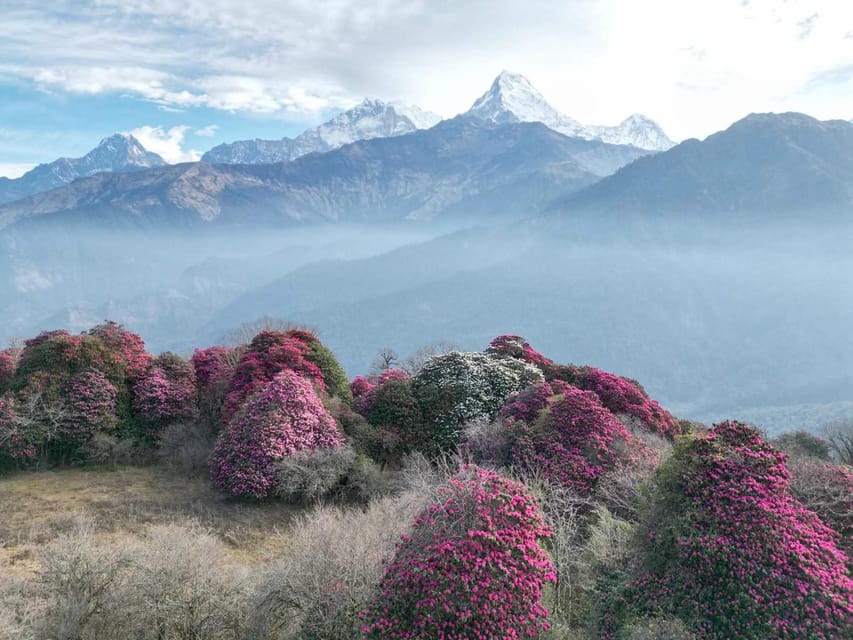
From Sinuwa, you walk for about six hours toward Deurali at 3,200 meters. The route passes through rhododendron and bamboo forest, with stops and settlements including Dovan along the way.
This is a steady mountain day rather than a single dramatic climb. Forest cover gives way gradually as you gain height, and views of Annapurna and Machhapuchhre become more important. Machhapuchhre, often called Fishtail, is one of the most recognizable peaks in the region.
Deurali is a key overnight stop because it places you close to ABC. It also marks the point where altitude becomes a more serious concern. At 3,200 meters, you may feel the effects of the climb more than you did at Ghorepani or Chuile.
Keep the pace comfortable. The goal is not to race to Deurali. You want enough energy for the next day, when the route reaches 4,130 meters. Your guide’s role is particularly useful here, since the itinerary is private and the pace can be managed around your group’s ability.
Day 5: Deurali to Annapurna Base Camp at 4,130 meters
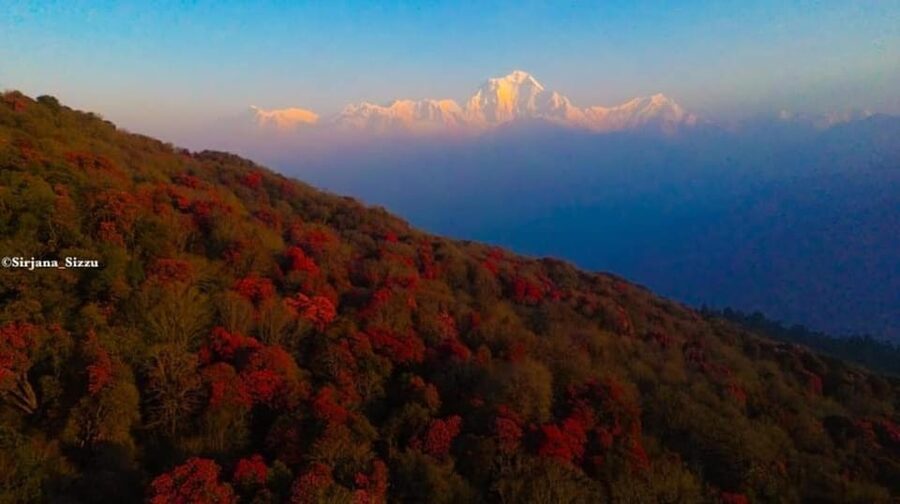
This is the main day of the trek. From Deurali, you walk for about six hours to Annapurna Base Camp, entering a huge mountain bowl surrounded by snow-covered peaks and dramatic glacial terrain.
The approach is the payoff for the previous four days. At ABC, you are surrounded by the Annapurna range rather than simply viewing it from a distant ridge. The setting feels enclosed, high, and severe, with the mountain walls giving the base camp its famous amphitheater shape.
You should expect this to be a demanding day. The altitude is the biggest factor, and the route has already required several long walking days. Take your time, drink water, and tell your guide if you feel unwell. The included guide expenses cover salary, accommodation, meals, insurance, equipment, and transportation, so your guide remains responsible for the trek’s practical support.
Overnight accommodation is included during the trek, though the specific standard can vary along the route. You should expect mountain accommodation rather than resort comfort. The purpose of this night is the location and the achievement, not luxury.
Day 6: Descending from ABC to Bamboo
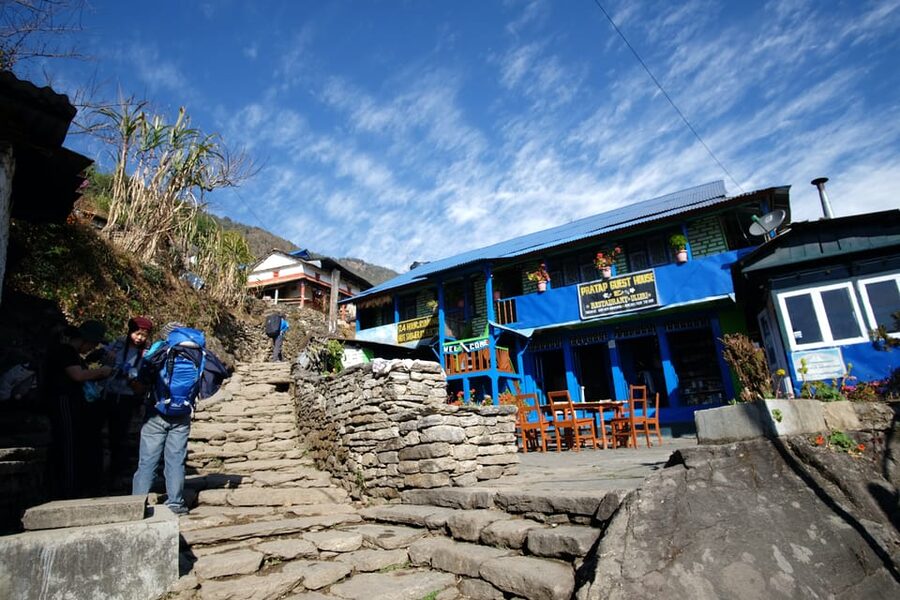
After time at Annapurna Base Camp, you retrace the route to Bamboo, at about 2,300 meters. The walking time is listed at six hours.
The return gives you another look at the valley and peaks, this time while descending. That sounds easier, but long downhill sections can be tiring. Your knees and feet may feel the effort, especially after the high point of the trek.
The major benefit is altitude loss. By Bamboo, you are far lower than ABC, and the air should feel more comfortable. The overnight stop also breaks up the long return to the road.
This day is a good reason to keep your personal bag light. A porter is available for purchase, but is not included in the stated price. If you prefer to carry your own things, bring only what you can manage comfortably for a week of changing altitudes and repeated walking.
Day 7: Bamboo to Jhinu Dada Hot Spring and Pokhara
The final day combines about five hours of trekking, a hot spring stop, and a 2.5-hour drive back to Pokhara.
You descend from Bamboo to Jhinu Dada, then spend about two hours at the natural hot spring. This is more than a decorative extra. After several days of climbing and descending, warm water gives your muscles a chance to relax before the final transfer.
From Jhinu, you trek for about 30 minutes to Samrung, where you board a jeep. The road transfer takes you back to Lakeside Pokhara. It is a practical end to the route, since continuing on foot would add more time without offering the same reward as the earlier sections.
Bring a towel and suitable clothing for the hot spring if you plan to use it. The information provided confirms the two-hour soak, but does not specify whether towels or other personal items are supplied.
What the $267 price really covers
At $267 per person, the trip has good value for a guided private trek, provided you choose the full package for meals. The price includes hotel pickup and drop-off, trekking permits, necessary paperwork, the Trekkers’ Information Management System fee, government taxes, accommodation during the trek, and four-wheel-drive transport as required by the schedule.
It also covers the guide’s meals, accommodation, salary, equipment, insurance, and transportation. That matters because guide costs can otherwise appear as small extras that quickly add up.
On the full package, breakfast, lunch, and dinner are included during the trek. Drinks are not included, and you pay separately for soft drinks, hard drinks, bottled or boiled water, showers, battery charging, laundry, phone calls, and bar bills.
A porter is available at an additional cost. For many people, that is worth considering. Carrying your own gear for several six-hour days, especially near 4,130 meters, changes the feel of the trek. Ask about the porter cost before departure so you can compare the full price fairly.
The price does not include travel insurance or rescue insurance. You need to arrange those yourself, along with international flights and the Nepalese visa fee. It also does not cover extra nights in Pokhara caused by an early arrival, late departure, or an unscheduled early return.
Guides, language, and personal attention
This is a private group with live guiding in English, Hindi, or Nepali. That setup suits you if you want the route handled around your own group instead of walking with a large mixed party.
The strongest praise attached to this experience concerns the guides. Mahesh is described as attentive, flexible, and ready to answer questions. Prakash is praised for his mountain knowledge and care, and Sujal is noted as a good companion on the trail. Bishal and Avinesh are also named for their work as porters.
Those details matter because a guide on a high-altitude trek does more than lead the way. You need clear pacing, practical advice, and someone who notices when the group is struggling. The route also involves several overnight changes, road transfers, permits, and different types of accommodation, so organization has real value.
The available score is 5 out of 5 from six verified bookings. That is a small sample, so I would not treat it as a guarantee. Still, the praise is consistent: the guiding, care, communication, food, and organization receive the most attention.
What to pack for this seven-day trek
The required packing guidance is sensible but brief. You should bring:
- Passport or identification card
- Comfortable shoes and trekking gear
- Warm jacket and comfortable clothes
- Sunglasses and sunscreen
- Sleeping bag
You also need to plan for personal costs. Bottled or boiled water, showers, phone use, laundry, drinks, and battery charging are excluded. If you want a porter, arrange that as an extra rather than assuming it is part of the $267 price.
A sleeping bag is specifically requested, so do not rely only on the accommodation to provide all the warmth you need. The route reaches 4,130 meters, and temperatures can feel sharply different from Pokhara.
Who should book this route
I would choose this trek if you have limited time and want both Poon Hill and Annapurna Base Camp. The route packs a sunrise viewpoint, forest walks, river valleys, high mountain scenery, a base camp finish, and a hot spring into seven days.
It suits people who are comfortable walking for up to six hours on several days and handling steep uphill and downhill sections. It is not suitable for pregnant women, and anyone concerned about high altitude should take the 4,130-meter destination seriously.
This is also a good match for you if you value support over independence. You get an authorized local guide, permits, accommodation, road transport, and the option of adding a porter. If you prefer to travel without fixed daily stages or want plenty of spare time, the schedule may feel tight.
Free cancellation is available up to 24 hours before the activity for a full refund, and you can reserve now and pay later. Pickup from your hotel is optional, with a request to wait in the lobby 10 minutes before the scheduled time.
Should you book the Annapurna Base Camp via Poon Hill trek?
Book it if you want a busy but rewarding seven-day mountain route and understand that the final goal sits at 4,130 meters. The combination of Poon Hill sunrise, ABC, and Jhinu Hot Spring gives the trip a strong beginning, middle, and end.
I would pay close attention to the porter option, insurance, water costs, and your own fitness before confirming. If you prepare for long walking days and accept basic mountain accommodation, the $267 price covers a substantial amount of the practical work.
Choose this trek for range and efficiency, not for a slow holiday. You will trade comfort and free time for two major Annapurna highlights and the satisfaction of reaching base camp.
FAQ
How long is the Annapurna Base Camp via Poon Hill trek?
The trek lasts seven days, including the return to Pokhara on the final day.
What is the highest point on the route?
Annapurna Base Camp is the highest point at 4,130 meters. Poon Hill reaches 3,210 meters.
Is Poon Hill included in the itinerary?
Yes. You climb Poon Hill from Ghorepani for sunrise on the second day.
Is transportation from Pokhara included?
Yes. Hotel pickup and drop-off are included, along with four-wheel-drive jeep transport specified in the schedule. The final drive from Samrung to Pokhara takes about 2.5 hours.
Are meals included?
Breakfast, lunch, and dinner are included during the trek on the full package. Soft drinks, hard drinks, bottled or boiled water, and other personal purchases are not included.
Is accommodation included?
Yes. Available accommodation during the trek is included. The first night is in a tea house at Ghorepani, and other nights are in available mountain hotels or similar accommodation.
Is a porter included?
No. A porter is available for purchase, but the stated price does not include one.
Which languages can the guide speak?
Live guides are available in English, Hindi, and Nepali.
Can I cancel the booking?
You can cancel up to 24 hours in advance for a full refund. Reserve now and pay later is also available.
More Week-Long Trips in Nepal
- 7 Days Thai Yoga Massage Training and Retreat in Begnas Nepal
★ 5.0 · 6 reviews - Pokhara: Amazing 7-Day ABC Trek with Natural Hot Spring
★ 5.0 · 5 reviews - Pokhara: 7-Day Annapurna Base Camp Trek & Hot Spring
★ 4.0 · 3 reviews - 7 Days Annapurna Base Camp Trek from Pokhara with Hot Spring
★ 5.0 · 2 reviews
Just added around Nepal
- 1-Hour Swedish Massage in Pokhara with Pick Up★ 5.0 · 2 reviews
- 7 Days Annapurna Base Camp Trek from Pokhara with Hot Spring★ 5.0 · 2 reviews
- Facial Treatment with Fruits in Pokhara with Hotel Pickup★ 5.0 · 3 reviews
- Trekkers & Hikers Spa Package by Heritage Spa★ 5.0 · 9 reviews
- Unlimited Sauna Steam and Jacuzzi★ 5.0 · 2 reviews
- Lower Mustang Jomsom Muktinath Hot Spring Tour in 4 WD Jeep★ 4.5 · 2 reviews
- Spa and Massage Therapy for a Relaxing Experience in Avata, Kathmandu★ 5.0 · 3 reviews
- Short Day Trip Hiking with 1 Hour Spa Massage in Kathmandu★ 5.0 · 11 reviews
More spa days in Nepal.
Shirodhara and Sound Healing Spa Experience in Kathmandu
Read our review →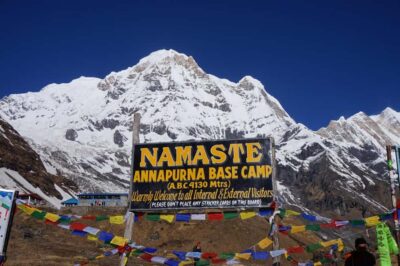
5 Day Annapurna Base Camp Trek & Natural Hot Spring
Read our review →
6 Hours Spa Package in Kathmandu (Massage, Sauna, Steam, Jacuzzi)
Read our review →
21 days Himalayan yoga retreat in Nepal in Kathmandu
Read our review →
10 Days Ayurveda & Yoga Retreat in Kathmandu, Nepal
Read our review →
21 Day Ayurveda & Yoga Retreat in the Himalayan country, Nepal
Read our review →Other lists this one is on