
REVIEW · NEPAL
7 Days Thai Yoga Massage Training and Retreat in Begnas Nepal
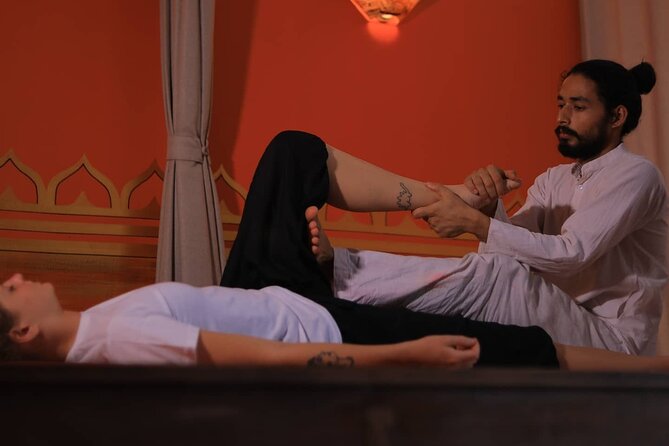
Thai yoga massage training is part bodywork class, part moving meditation. Over seven days in Pokhara, you learn a full basic sequence, practice energy lines known as nadis, and work with breath, stretching, pressure, and awareness. The setting is Karmayogi Yoga Retreat and School on Lakeside Road, with the course beginning at noon and ending back at the same place each day.
I like two things right away: the hands-on format gives you real practice instead of a lecture-only course, and the daily mix of yoga and meditation helps explain why Thai massage is done with more than just the hands. Raj is described as a patient teacher, and the course may include help from his sister and brother.
The main catch is practical: $487 covers the teaching and course materials, but not food, accommodation, or transport. You will need to arrange your own place to sleep and plan for a long daily schedule of five to six hours of practice, yoga, and meditation.
Key Points at a Glance
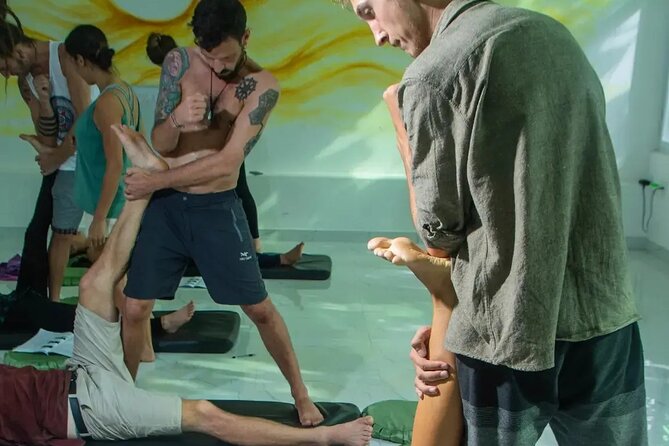
- Seven days of Thai yoga massage training: Learn the basic sequence and extra techniques in a structured workshop.
- Five to six hours each day: Expect a serious course, not a short holiday class.
- Raj and his teaching team: Instruction may include Raj, his sister, and his brother, with time for questions and corrections.
- Yoga, meditation, and nadis: The course links massage movements with breath, mindfulness, and traditional energy lines.
- Books and certificate included: You leave with printed learning material and a certificate, along with drinks and refreshments.
- Maximum group size of 20: The class can be social, though group size may vary, especially outside the busiest season.
What This Seven-Day Course Is Really About
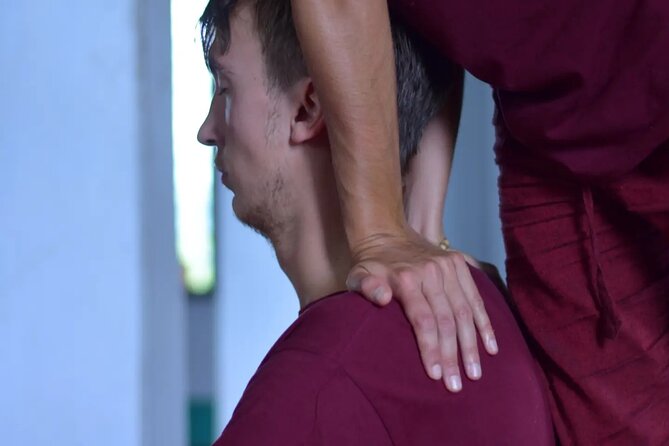
Thai yoga massage is often described as assisted stretching combined with pressure along traditional energy lines. Here, the course treats it as a practice of attention as much as a set of massage techniques. You learn to notice breath, body movement, posture, pressure, and your own state of mind while working with another person.
That makes this different from booking a one-hour massage. You are not simply receiving treatment. You are learning how to give it, how to use your body while working, and how meditation can affect the quality of your touch.
The stated schedule gives you five to six hours of Thai massage, yoga, and meditation each day. That is enough time to repeat movements and build a basic foundation, but it also means you should come ready to concentrate. You may find the work physically tiring, especially when practicing the same sequence several times.
The course is suitable for people who want a practical introduction to Thai massage for personal use, family, or community work. It is also aimed at people interested in yoga, healing practices, breath awareness, and meditation. You do not need to arrive as a trained massage professional, since the class begins with fundamental principles and techniques.
More Yoga and Wellness Retreats in Nepal
- 21 days Himalayan yoga retreat in Nepal in Kathmandu
★ 5.0 · 28 reviews - 10 Days Ayurveda & Yoga Retreat in Kathmandu, Nepal
★ 5.0 · 24 reviews - 21 Day Ayurveda & Yoga Retreat in the Himalayan country, Nepal
★ 5.0 · 19 reviews
Starting at Karmayogi on Lakeside Road
The meeting point is Karmayogi Yoga Retreat and School, Lakeside Road 6, Pokhara 33700. The listed start time is 12:00 pm, and the activity ends back at the meeting point.
This central meeting arrangement keeps the course simple. You do not have to follow a complicated route between several venues, and public transportation is nearby. The mobile ticket is useful if you are already moving around Pokhara and prefer not to manage printed paperwork.
The title refers to Begnas, but the supplied meeting point is in Pokhara at Lakeside Road. Check the exact location details before setting out, especially if you are staying away from Lakeside or have assumed the course takes place directly beside Begnas Lake.
Because the course runs for a week, your accommodation matters. The price does not include a room, meals, or any travel tickets. You will need to budget for those separately and choose a base that allows you to reach the school by noon without a difficult commute.
How the Seven Days Are Likely to Feel
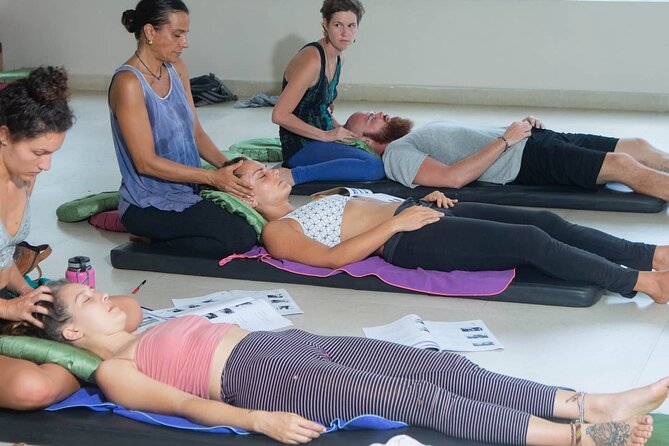
The schedule is described as a seven-day workshop rather than a sightseeing tour. You should think of it as a short training retreat with a fixed daily rhythm, not a series of excursions around Pokhara.
The first stage focuses on the basic ideas behind Thai massage. You learn how the practice uses body movement, breath, meditation, and traditional energy lines called nadis. These concepts give the physical techniques a framework, so you are not simply memorizing where to place your hands.
The central part of the week is hands-on practice. You work through Thai massage movements and learn how to apply them with care. The course covers a full basic sequence, with some additional techniques taught on top of it. Repetition matters here. The first attempt may feel awkward, while later practice gives you a clearer sense of timing and body position.
Yoga is included as part of the training. This is useful because Thai massage often involves stretching and supported movement, and yoga can help you pay attention to alignment and breath. The yoga sessions also give your body a change from practicing massage techniques.
Guided meditation forms another part of the day. The purpose is not simply to sit quietly. The meditation work is meant to help you connect with your inner state and become more aware of your movements while giving massage. If you tend to rush through physical techniques, this element may help you slow down.
By the later days, you should have more time to bring the pieces together: the basic sequence, the pressure and stretching techniques, breath awareness, and a calmer approach to working with another body. The information provided does not give a detailed day-by-day timetable, so you should not expect a published list of exact lessons for each date. The broad pattern is clear, however: massage practice supported by yoga and meditation each day.
Learning With Raj and the Teaching Team
Raj is identified as the main teacher, and the course is also associated with his sister and brother. The teaching style described in the available information is patient and open to questions, which matters in bodywork training. Small corrections in hand placement, posture, or pressure can make a large difference.
You should expect instruction that combines explanation with demonstration and practice. A good Thai massage class needs both. If you only watch, the movements can look easy. Once you try them, you may discover that your balance, pressure, and body position need work.
One useful detail is that the course can operate with a small number of students during the off-season. A previous participant took several courses at the school and was the only student at that time. That is not a promise of a private class, but it suggests that the experience can vary by date. The maximum listed group size is 20, so ask about the expected class size if individual attention is especially important to you.
The teaching team also appears to place value on practice models and supervised work. A participant was used as a model while Raj guided a student through intuitive massage techniques. That points to a learning setup where you can work on another person while receiving direction, rather than practicing only in the air or on diagrams.
Same place, a different way to unwind:
- Whole Day Massage & Spa With Lunch
★ 5.0 · 54 reviews - Shirodhara and Sound Healing Spa Experience in Kathmandu
★ 5.0 · 52 reviews - Pokhara: 5 Day Annapurna Base Camp Trek & Natural Hot Spring
★ 4.9 · 44 reviews - 6 Hours Spa Package in Kathmandu (Massage, Sauna, Steam, Jacuzzi)
★ 5.0 · 43 reviews
Why Yoga and Meditation Matter Here
The strongest feature of this course is the link between massage and awareness. Thai yoga massage is presented as a way to pay attention to breathing, body movement, emotions, and mental fluctuations. That may sound abstract, but it has a practical effect: you learn to notice how your state affects the way you touch and move.
Yoga helps you understand movement through your own body. Meditation helps you keep your attention steady. Massage practice then gives you a way to use that awareness with another person.
I would not book this course if you want only a fast technical certificate. The program has a reflective side, and the training asks you to think about compassion, sensitivity, and care as well as technique. Those ideas may appeal to people already involved in yoga or wellness, but they may feel less useful to someone seeking a strictly clinical massage qualification.
The course information does not claim medical accreditation or a professional license. Treat the certificate as proof of completing this seven-day program, not as a guarantee that you can work in every professional setting. If you plan to use the training commercially, check the rules that apply where you intend to practice.
The Value of $487
At $487 per person, the fee covers seven days of instruction, all fees and taxes, books, a certificate, drinks, and refreshments. That works out to roughly $70 per day before you count accommodation, meals, and transport.
The value is strongest if you want a concentrated week of instruction and intend to keep practicing afterward. Books give you something to refer to after the course, while the certificate can document your participation. The inclusion of refreshments is helpful during long practice days, though it does not replace meals.
The price is less attractive if you are comparing it with a short introductory massage class. This is a week-long commitment, and the five to six hours of daily training account for much of the cost. You should also add seven nights of accommodation, food, local transport, and any travel tickets before comparing the total with other retreats.
The course includes no food or accommodation. That gives you flexibility to choose your own room and meals, but it also means the final cost depends on your choices in Pokhara. If you prefer a single package with lodging, do not assume this fee includes it.
Who Will Get the Most From It
I would consider this course a good match if you:
- Want to learn a complete basic Thai massage sequence rather than sample one short class.
- Enjoy yoga, meditation, breathwork, or other body-awareness practices.
- Plan to practice on yourself, family, friends, or people in your local community.
- Can set aside seven days for a steady, physically active class.
- Appreciate patient instruction and time to ask questions.
- Want a certificate and course book as part of the package.
It may not suit you if you need a formal medical massage qualification, dislike meditation, or want a relaxed holiday with only occasional activities. Five to six hours each day is a real training schedule.
The maximum group size of 20 is reasonable for a workshop, but the amount of personal correction can depend on the actual number enrolled. If you want the smallest possible class, ask about the date you are considering. Off-season attendance may be much lower.
Practical Planning Before You Go
Wear clothing that allows easy movement and stretching. The provided information does not specify a dress code, but a course built around yoga and Thai massage calls for comfortable clothes rather than restrictive travel wear.
Plan to arrive ready for a noon start. Since the course returns to the same meeting point, you can arrange your day around one regular location. Public transportation is nearby, which helps if you are not staying within easy walking distance.
Bring enough time and energy for the full session. The schedule includes massage, yoga, and meditation, so the day may feel varied but still demanding. You will get more from it if you treat the week as training rather than filling spare time between other tours.
Confirmation is provided at booking. The activity accepts a maximum of 20 participants, and most people can take part according to the supplied details. No special accessibility information is provided, so contact the provider directly if you have mobility, health, or participation concerns.
Cancellation is free up to 24 hours before the start time for a full refund. Cancellations or changes made less than 24 hours before the start are not accepted for a refund, and the cut-off follows local time.
Is This Thai Massage Retreat Worth Booking?
I would book it if you want a focused introduction to Thai yoga massage and like the idea of learning through repeated practice, yoga, and meditation. Raj’s patient teaching style, the chance to learn a full basic sequence, and the included books and certificate give the course useful substance beyond a casual wellness session.
I would pause if you are looking for an all-inclusive retreat. The $487 price does not cover accommodation, food, or travel, and the daily five to six hours may leave little room for other plans.
For the right person, this is a practical and thoughtful week in Pokhara. Go with clear expectations: you are paying for serious instruction at Karmayogi, not a resort package. Arrange your own room and meals, confirm the class size, and allow yourself enough time to practice. If that sounds like the kind of week you want, this course offers a solid starting point for learning Thai massage.
FAQ
Where does the Thai massage training take place?
The meeting point is Karmayogi Yoga Retreat and School, Lakeside Road 6, Pokhara 33700, Nepal.
How long is the experience?
The training lasts approximately seven days.
What time does the course begin?
The listed start time is 12:00 pm.
Where does the activity end?
The activity ends back at the meeting point at Karmayogi Yoga Retreat and School.
How many hours of training are scheduled each day?
Participants practice Thai massage, yoga, and meditation for approximately five to six hours each day.
Who teaches the course?
Raj is identified as the main teacher. His sister and brother may also be involved in the teaching team.
What does the course cover?
The course covers traditional Thai massage techniques, a basic massage sequence, additional techniques, traditional energy lines called nadis, yoga, meditation, breath awareness, and body movement.
Are food and accommodation included?
No. Food and accommodation are not included in the price.
What is included in the $487 price?
The price includes fees and taxes, books, a certificate, drinks, and refreshments.
Can I cancel for a full refund?
Yes. You can cancel at least 24 hours before the experience start time for a full refund. Cancellations or changes made less than 24 hours before the start are not accepted for a refund.
More Week-Long Trips in Nepal
- Pokhara: 7-Day Annapurna Base Camp Trek & Natural Hot Spring
★ 5.0 · 11 reviews - 7-Day TaiChi & Qigong Wellness Retreat in China
★ 5.0 · 20 reviews - Bali: 7 Day Solo Traveler’s Yoga Retreat In Ubud
★ 5.0 · 3 reviews
Just added around Nepal
- Kathmandu: Full-Day Yoga, Body Massage and Pedicure Package★ 5.0 · 3 reviews
- Kathmandu: Spa Package with Massage, Facial and Bath★ 4.1 · 11 reviews
- 10 Days Ayurveda & Yoga Retreat in Kathmandu, Nepal★ 5.0 · 24 reviews
- 21 Day Ayurveda & Yoga Retreat in the Himalayan country, Nepal★ 5.0 · 19 reviews
- 21 days Himalayan yoga retreat in Nepal in Kathmandu★ 5.0 · 28 reviews
- Shirodhara and Sound Healing Spa Experience in Kathmandu★ 5.0 · 52 reviews
- 6 Hours Spa Package in Kathmandu (Massage, Sauna, Steam, Jacuzzi)★ 5.0 · 43 reviews
- Whole Day Massage & Spa With Lunch★ 5.0 · 54 reviews
More spa days in Nepal.
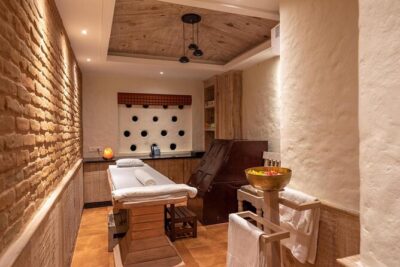
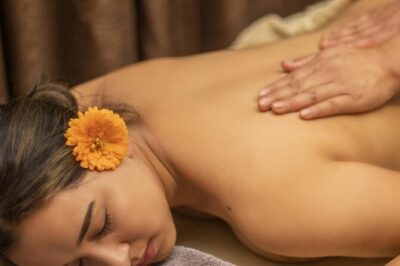
Shirodhara and Sound Healing Spa Experience in Kathmandu
Read our review →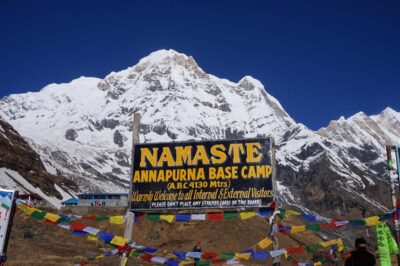
5 Day Annapurna Base Camp Trek & Natural Hot Spring
Read our review →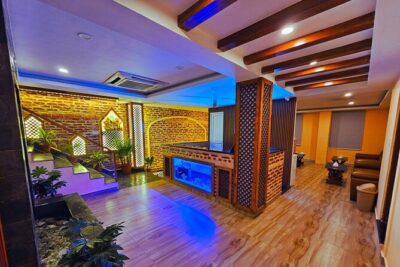
6 Hours Spa Package in Kathmandu (Massage, Sauna, Steam, Jacuzzi)
Read our review →
21 days Himalayan yoga retreat in Nepal in Kathmandu
Read our review →
10 Days Ayurveda & Yoga Retreat in Kathmandu, Nepal
Read our review →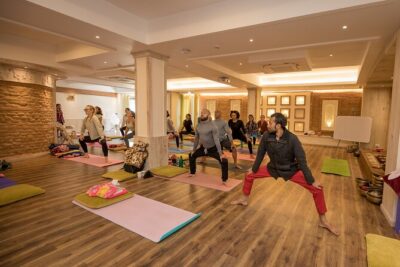
21 Day Ayurveda & Yoga Retreat in the Himalayan country, Nepal
Read our review →Other lists this one is on